
Samsung Files Patent to Flag AI/ML Traffic as High-Priority in 5G and 6G
As AI inference moves off the device and onto the network, someone has to tell the cellular stack which packets actually matter. Samsung's new patent is a proposal to do exactly that.
What Samsung's AI traffic priority signal actually does
Imagine your phone is running an AI feature — say, real-time translation or a location-aware assistant — that needs to send data to a network server right now to work correctly. Under today's cellular systems, that packet waits in line like everything else: your text message, a background app sync, a software update. The network has no idea some of those packets are time-sensitive AI workloads.
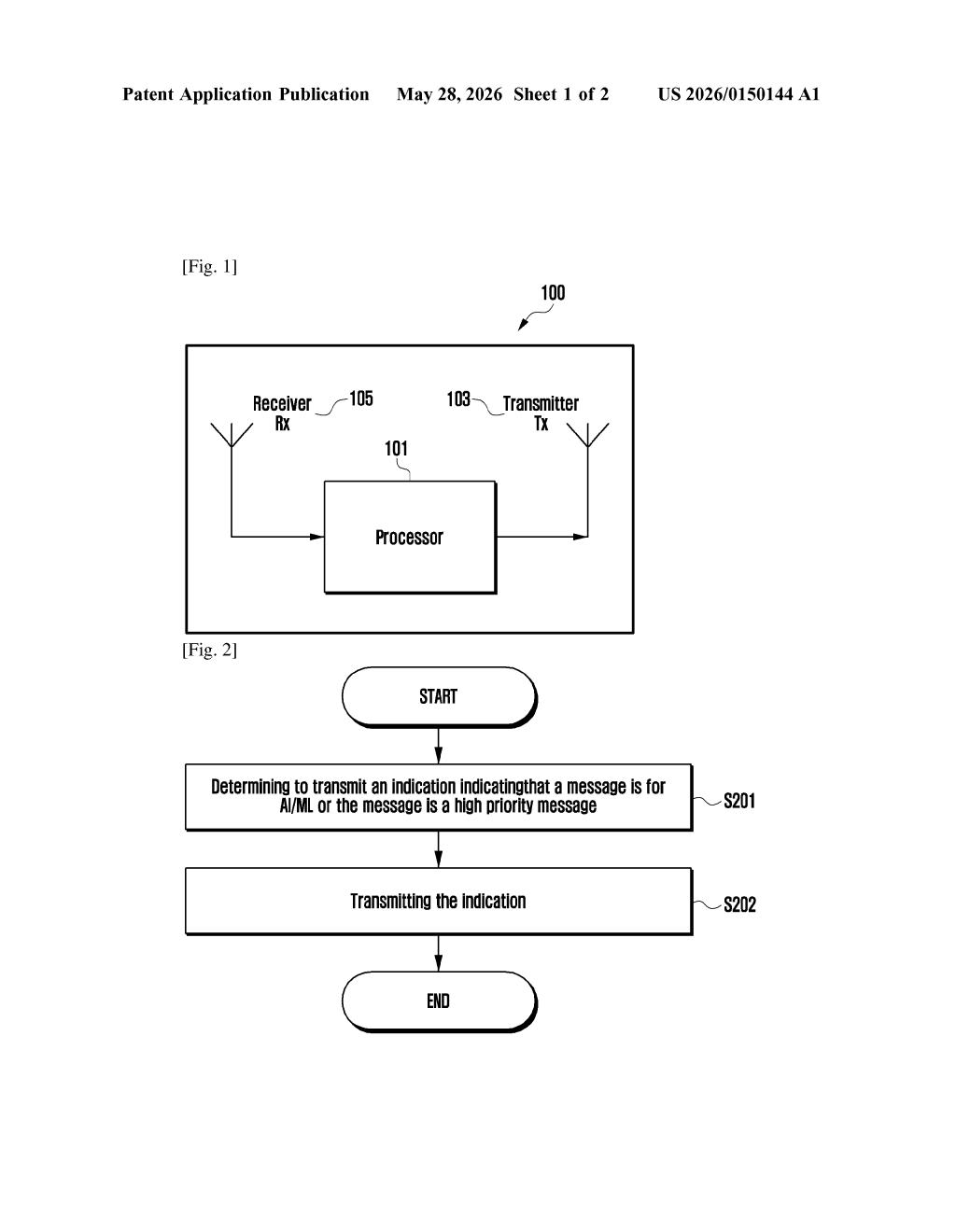
Samsung's patent proposes a simple fix: let your phone attach a priority label to outgoing messages so the network knows to treat them differently. Specifically, it targets AI and Machine Learning (AI/ML) traffic, allowing a device to say "this message is for an AI/ML task" or "this is high priority" — or both — before the network processes it.
The label travels inside standard cellular control messages (the kind your phone already sends to manage its connection), so it doesn't require rebuilding the entire network stack. It's less a new technology and more a new vocabulary word added to the language phones and towers already speak.
How the NAS message carries the AI/ML priority flag
The patent describes a mechanism for a User Equipment (UE) — meaning your phone or any cellular-connected device — to include a priority indicator inside uplink messages sent to the network.
The priority indication can carry two distinct signals:
- A flag that the data is high priority in general
- A flag that the data is specifically AI/ML-related, meaning it feeds into or results from an artificial intelligence or machine learning process
These flags ride inside existing NAS (Non-Access Stratum) messages — the control-plane signaling layer that sits above the raw radio protocol and handles things like session management and mobility. Specific message types named include Control Plane Service Request (CPSR) and UL NAS Transport messages. NAS is roughly the "conversation layer" between your phone and the core network, as opposed to the lower-level radio handshake.
The payload being prioritized can include location data (LPP — LTE Positioning Protocol messages), session management messages (5GSM), and even SMS. The breadth of supported payload types suggests this is designed as a general-purpose priority channel, not a narrow fix for one use case.
What this means for AI workloads running over 5G
As cellular networks take on more AI inference tasks — think network-side processing for AR, autonomous vehicles, or industrial robotics — quality-of-service signaling becomes a bottleneck. Today's 5G QoS framework wasn't designed with AI/ML workloads in mind, and treating a model inference request the same as a background ping introduces latency that breaks real-time applications. Samsung's proposal would give the network a heads-up before the data even arrives at the scheduler.
For you as a user, the practical upshot is that AI-driven features on your device — especially ones that rely on network-side compute — could become more responsive if this kind of signaling becomes standard. The broader significance is that Samsung is pushing to get AI-aware priority into 3GPP standards (the body that governs 5G/6G specs), which is where the real battle for this kind of feature is fought.
This is a narrow but strategically sensible standards-positioning patent. The first independent claim is almost comically broad — "transmitting a message with an indication of priority" — which suggests Samsung is staking out territory in an emerging 6G standards discussion rather than protecting a finished invention. It's not exciting engineering, but in the standards game, filing early matters.
There are more where this came from
We read every patent application Big Tech publishes and send you the ones worth knowing. Plain English, free, every week.
Want this weekly breakdown for a company we don't cover? Patentlyze Pro →