
Nvidia Patents an AI System for Building Realistic Worlds to Train Other AI
Training AI in the real world is expensive and slow. Nvidia's new patent describes a system where neural networks generate entire simulated environments on the fly, pulling from stored knowledge about the objects inside them.
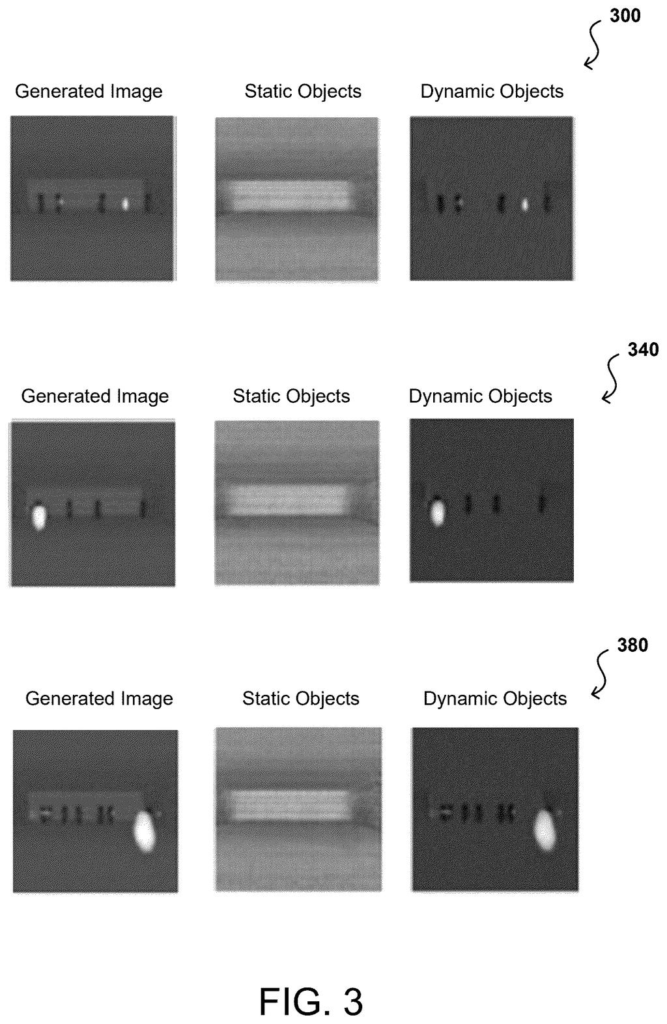
How Nvidia's AI builds fake worlds for robot training
Imagine you're trying to teach a self-driving car how to handle a snowy intersection. Filming every possible weather condition, time of day, and traffic pattern in the real world would take years. So instead, you build a virtual world and run the car through millions of scenarios there.
That's the core idea behind this Nvidia patent. It describes using neural networks (the same type of AI behind image generators and chatbots) to automatically build and populate simulated environments. The system leans on stored information about objects in the scene, so it can place and render them in ways that feel realistic without needing humans to build each scenario by hand.
For you, the end result would be AI systems that get trained faster, on a much wider range of situations, before they ever interact with the real world.
How the neural network pulls from stored object data
The patent describes a system where one or more neural networks take on the job of generating a simulated environment from scratch. Rather than relying on hand-crafted 3D assets built by human designers, the system draws on stored information associated with objects inside the simulation, think of it as a database of how things look, move, and behave.
The neural networks use that stored data to decide how to render and place objects in a scene. This is related to a broader field called neural rendering, where AI models learn to produce images or scenes by understanding the underlying structure of objects rather than copying pixels directly.
- The system can generate environments based on partial or varied inputs, making each simulation somewhat unique
- Object-level data storage means the AI can handle individual elements (a car, a pedestrian, a traffic light) with their own properties
- The approach is designed to scale across many different scenarios without manual rebuilding
The practical goal is automated, high-volume simulation: producing training environments for AI systems (like autonomous vehicles or robotic arms) far faster than traditional game-engine or graphics-pipeline workflows allow.
What this means for AI training and simulation costs
Training AI on real-world data alone is slow, costly, and sometimes dangerous. A system that can automatically generate believable simulated environments gives AI developers a much larger and more varied training set without sending test vehicles into actual traffic or building physical test facilities.
For autonomous vehicles and robotics, this matters a lot. The rarest, most dangerous edge cases (a child running into the road, black ice on a curve) are exactly the scenarios that are hardest to capture in the real world and most important for an AI to have seen. a growing pile of Nvidia simulation filings suggests the company is treating synthetic training data as a core piece of its AI infrastructure, not a shortcut.
Nvidia's 62nd filing we've tracked in our self-driving sensing watch since May builds on earlier work like a blind-spot workaround and a door-detection application.
Teaching a robot or self-driving car to handle emergencies means exposing it to thousands of dangerous situations before it ever faces one in the real world. Arranging those situations physically is slow, expensive, and often too dangerous to stage at all. That gap between what these systems need to learn and what we can safely teach them is one of the most stubborn costs in building AI that works outside a lab.
Nvidia's patent describes using neural networks to build practice environments automatically, pulling from stored descriptions of the objects inside them. The core legal claim was canceled before the patent published, which limits what is actually protected here.
The underlying problem, however, does not shrink because one claim was dropped. Every company trying to put AI into cars, warehouses, or hospitals faces the same bottleneck, and the size of the problem is large enough that even a partial solution carries real weight.
There are more where this came from
We read every patent application Big Tech publishes and send you the ones worth knowing. Plain English, free, every week.
The drawings
46 drawing sheets from US 2026/0278952 A1 · click any drawing to enlarge


Want this weekly breakdown for a company we don't cover? Patentlyze Pro →