
Microsoft Patents a System to Stop Faulty Data Requests From Leaking Private Information
Every time a database query fails, the error message it spits out can contain private information. Microsoft has filed a patent for a system that catches those failures before they happen, and sanitizes the error messages when they do.
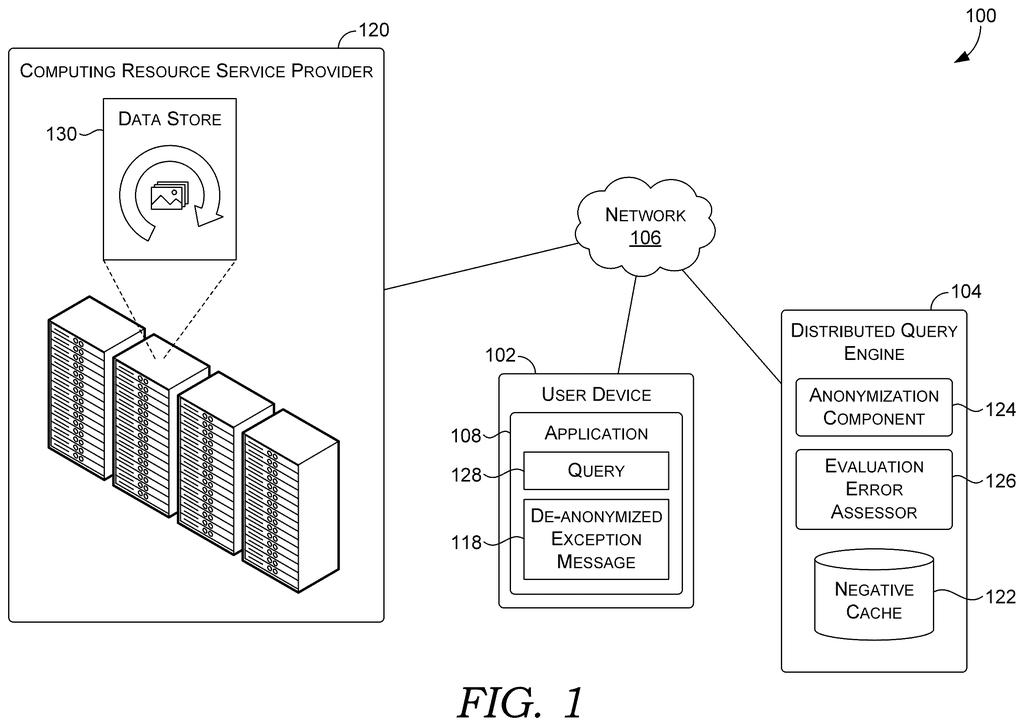
How Microsoft hides your data inside query error messages
Imagine you run a search on a large website and something goes wrong behind the scenes. The system throws an error, and buried in that error message is a piece of your private data, like your account name or a value you typed into a form. That kind of leak is small but real, and it happens constantly in large-scale software systems.
Microsoft's patent describes a way to handle this more carefully. When a query comes in, the system strips out any sensitive values and replaces them with generic placeholders before checking whether that type of query has failed before. If the system already knows this category of query will fail, it blocks it immediately. When it sends back an error message, it swaps the real values back in, so you still get a useful response, but the sensitive data never traveled through the parts of the system that log and cache everything.
There's also a built-in escape valve: the system lets a small percentage of previously-blocked queries through anyway, just to check whether the situation has changed and the query might now succeed.
… anonymizing the AST to generate an anonymized AST by at least replacing the set of variables and the set of constants with a set of values …
Translation: The system strips out the original variables and constants to protect sensitive data.
How the negative cache strips and restores sensitive values
The core idea is a negative cache, a list of query patterns that are known to fail. Rather than running a doomed query all the way through an expensive distributed database and getting back an error, the system catches it early.
Here's how the pieces fit together:
- When a query arrives, the engine parses it into an abstract syntax tree (AST), essentially a structured diagram of what the query is asking for, broken into variables and rules.
- The AST is then anonymized: real values (names, IDs, search terms) are replaced with generic placeholders, and a private lookup table maps each placeholder back to the original value.
- The anonymized structure is used to generate a cache key, a fingerprint of the query's shape. If that fingerprint matches something already in the negative cache, the system skips execution entirely.
- When it sends back an error message, it uses the private lookup table to re-insert the original values, so the error is still meaningful to whoever sent the query.
A block ratio controls how strict the system is. Set it to, say, 5%, and one in twenty blocked-pattern queries still gets sent through, giving the system a chance to learn whether the failure is still valid or whether the negative cache entry should be removed.
… input queries are anonymized by replacing sensitive information with placeholders, and a mapping table is generated to enable the sensitive information to be restored in the exception messages …
Translation: Placeholders hide sensitive data until it needs to be safely put back into an error message.
What this means for cloud database privacy at scale
For large cloud platforms, database queries fail at enormous scale, and each failure is a small opportunity for private data to appear somewhere it shouldn't: in logs, in monitoring dashboards, in error-tracking tools. This patent targets that gap directly, building privacy handling into the failure path rather than treating it as an afterthought.
For everyday users, the effect would be invisible but meaningful. Your search terms, account details, or form inputs would be less likely to show up in a system log the next time a server hiccups. For the engineers running those systems, several Microsoft filings on distributed query infrastructure this year suggest the company is treating query reliability and data privacy as a combined engineering problem rather than two separate ones.
Microsoft's eighth filing we've tracked since August in our on-device AI privacy watchlist builds on earlier applications like one adjusting its own workload and one hiding your voice identity.
Nothing described here requires new hardware or new infrastructure. It is purely a change to how a query engine behaves internally, which means a team could bolt this onto an existing cloud data service without rebuilding anything around it.
The anonymization approach is the smart design choice: instead of wiping sensitive details out of error messages (which makes them useless for debugging), it keeps a private translation table so the final message is still readable. That is a real engineering trade-off, not just a compliance gesture.
The trickiest part to ship well is the mechanism that decides what percentage of known-bad queries to let through anyway, then uses those results to update the cache. That self-correcting loop looks clean on paper, but getting it stable enough to trust in a live service is where the real implementation work lives.
There are more where this came from
We read every patent application Big Tech publishes and send you the ones worth knowing. Plain English, free, every week.
The drawings
8 drawing sheets from US 2026/0278144 A1 · click any drawing to enlarge


Want this weekly breakdown for a company we don't cover? Patentlyze Pro →