
Qualcomm Patents a Way to Train AI on Your Phone Without Sharing Your Data
AI models usually get smarter by consuming huge datasets on central servers. Qualcomm's new patent describes a way to teach AI using data that never leaves your phone at all.
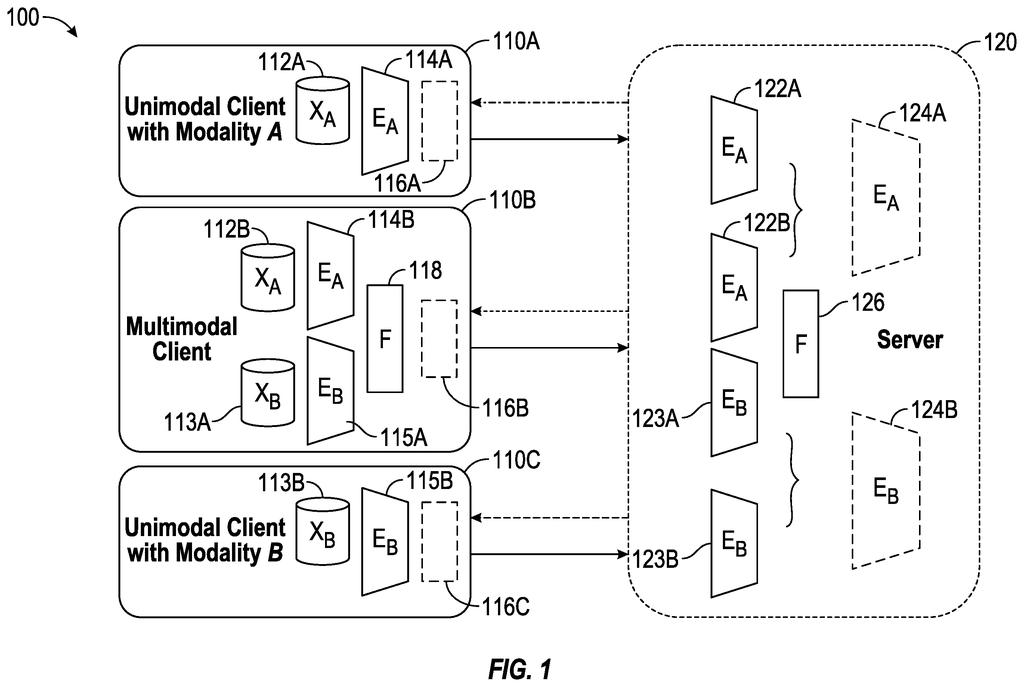
How Qualcomm's on-device AI training actually works
Every time your phone recognizes a face, transcribes your voice, or identifies a song, it's using an AI model trained somewhere far away on other people's data. That works, but it means your photos, audio clips, and text messages can't contribute to making the AI better without being sent to a server first.
Qualcomm's patent describes a different setup. A central server shares a rough blueprint of an AI model with many devices. Each device then privately improves its own copy using whatever data it has locally, whether that's photos, audio, or text, and sends only the updated model weights back, not the underlying data. The central server combines all those updates into a better shared model.
The twist here is that the training process is designed to work across different types of data at once. One phone might refine the image-recognition part of the model while another refines the voice part. The system is built so those separate improvements can still strengthen the same shared AI.
receive, at a local device from a server, information defining a global machine learning model, the global machine learning model comprising a plurality of modality-specific encoders …
Translation: Your phone downloads the basic AI blueprint from a central server.
How each device refines its own piece of the shared model
The patent covers a training method that sits at the intersection of two ideas: federated learning (training AI across many devices without centralizing raw data) and multimodal learning (training a single AI to understand multiple types of data, like images, audio, and text).
The central model is built from several modality-specific encoders, think of each encoder as a specialist translator that converts one type of raw input (a photo, a sound clip, a sentence) into a compact internal representation the AI can reason about. The core innovation is that devices don't need to have all data types present to contribute to training.
Refinement on each device uses a technique called contrastive learning (a method where the AI learns by comparing things that should match against things that shouldn't, for example, pairing a photo of a dog with the word "dog" and pushing them close together in the model's internal space, while pushing unrelated pairs apart). This cross-modality contrastive signal is what allows image specialists and audio specialists on different devices to still pull the shared model in a coherent direction.
- Server distributes a global model with multiple specialist encoders
- Each device trains its relevant encoder(s) locally using its own data
- Updated encoder weights are sent back, not the raw data
- Server aggregates updates into an improved global model
The one or more modality-specific encoders of the global machine learning model are refined based on contrastive learning with modality-specific data at the local device.
Translation: The phone improves the AI using your personal data without sending it anywhere.
What this means for AI that learns from your personal data
For you as a user, the practical promise is an AI that gets better at understanding your photos, voice, and messages without your personal content ever leaving your device. That's a meaningful shift from today's norm, where improving AI usually means funneling user data to the cloud.
For Qualcomm, whose chips power a large share of Android phones and connected devices, Qualcomm's bet on on-device AI training makes strategic sense. If powerful AI training can happen on-chip without a server round-trip, that's an argument for buying better hardware. The harder question is whether the resulting AI models are actually as accurate as ones trained the traditional way. On-device federated training is still a research area with real limitations, and this patent describes an architecture, not a guarantee of performance.
Qualcomm's 14th filing we've tracked since July in our on-device AI privacy watchlist builds on earlier work like stopping silent recording and learning your phone's location.
The person who would notice this working is someone whose phone learns their accent, recognizes their kids' faces, or adapts to their writing style, all without ever triggering a privacy warning. That is a real and useful thing, and most AI personalization today either does not happen at all or happens on someone else's server.
Getting many phones to each train a small piece of a shared model, in parallel, without the pieces falling apart, is a hard problem that this patent takes seriously. The architecture described here is a structured attempt to hold that together across different types of personal data, like voice, images, and text, at the same time.
For anyone who has grown wary of what apps do with personal information, a system that keeps raw data on the device is a concrete protection, even if the gap between a well-designed patent and something you can actually download remains wide.
There are more where this came from
We read every patent application Big Tech publishes and send you the ones worth knowing. Plain English, free, every week.
The drawings
7 drawing sheets from US 2026/0278385 A1 · click any drawing to enlarge


Want this weekly breakdown for a company we don't cover? Patentlyze Pro →