
Qualcomm Patents a Way for Phones to Tell Networks How Much AI They Can Handle
Every phone on a cell network is different, yet networks often push the same AI model to all of them. Qualcomm's new patent would let your phone speak up and say exactly how compressed that model needs to be before it can run.
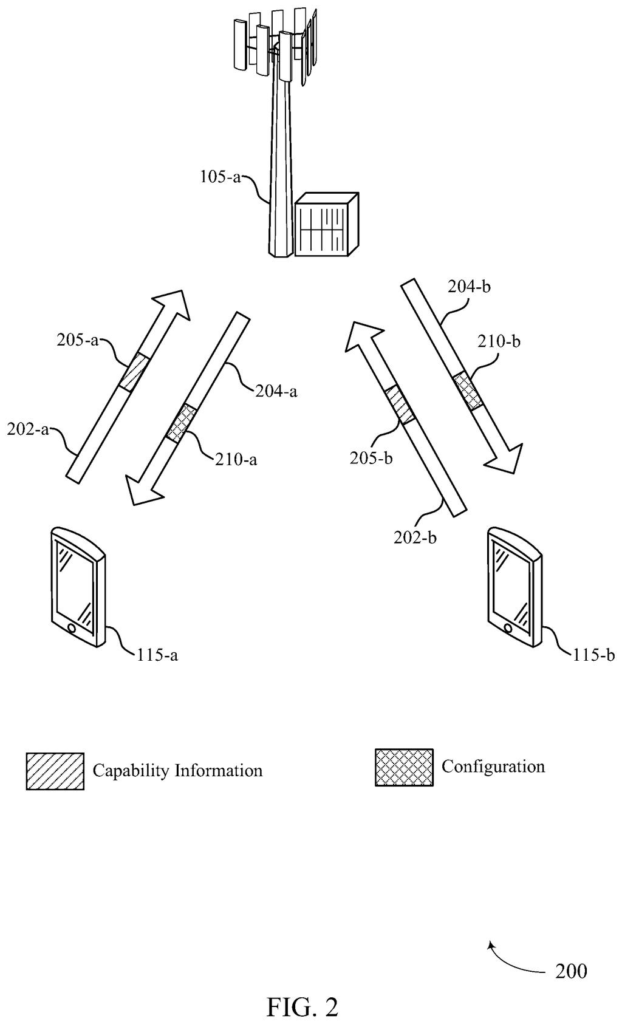
How Qualcomm's phone-to-tower AI sizing check works
Every time your phone connects to a cell tower, chips on both ends are doing heavy math to figure out the best way to send and receive a signal. Some of that math now involves small AI models that help predict signal quality and steer antennas. The problem is that not every phone has the same horsepower to run those models.
Qualcomm's patent describes a system where your phone sends a message to the network declaring exactly what kind of AI model compression it can handle. Think of compression like resizing a photo: a smaller file takes less memory but may lose some detail. Your phone tells the tower how small the AI model can safely go before it stops working well.
The tower then sends back either a compressed model or instructions for how to compress the one your phone already has. The result is that your phone runs the right-sized AI for estimating signal strength and picking the best antenna beam, which matters for call quality, data speed, and battery life in 5G networks.
transmit a first message indicating a capability of the UE to support one or more quantization schemes for a machine learning model; receive a second message indicating whether the machine learning model is configured in accordance with the one or more quantization schemes based at least in part on the capability of the UE; …
Translation: The phone tells the network what AI workload it can handle, and the network responds accordingly.
How the UE capability message shapes the quantized model
The patent centers on a two-message handshake between a UE (user equipment, meaning your phone or any wireless device) and a network entity (the base station or a network controller).
- The phone transmits a capability message listing which quantization schemes it supports. Quantization is the process of compressing an AI model by reducing the numerical precision of its internal values, similar to switching from high-resolution audio to a compressed MP3 file. Different schemes represent different levels of compression and different formats.
- The network reads that capability list and responds with either a pre-compressed (quantized) model or a configuration telling the phone how to compress the model itself.
- The phone then uses that model to perform channel estimation, which means predicting how the wireless signal will behave so it can report back useful data or pick the best antenna direction for beam management.
The claim covers the whole apparatus: processor, memory, and the instruction set that drives this exchange. The key technical novelty is making the quantization decision a negotiated outcome rather than a fixed setting, so the network can serve hundreds of different device types without degrading AI accuracy on capable phones or crashing it on weaker ones.
The UE may perform one or more channel estimations, such as for beam management or channel state information (CSI) reporting, using an ML model with one or more quantization schemes.
Translation: The phone uses its specially adjusted AI to manage cellular signals and connections efficiently.
What this means for AI-driven 5G signal quality
As 5G and future networks lean more heavily on AI for tasks like beam steering and interference prediction, the mismatch between powerful base-station hardware and the wide range of consumer phones becomes a real bottleneck. A model that runs fine on a flagship phone may be too large for a mid-range device, and sending the wrong model wastes bandwidth, drains battery, and can cause estimation errors that ripple into slower speeds for everyone on that cell.
Qualcomm sits at the center of the chip market for 5G modems, so a protocol it proposes here has a plausible path into standards bodies like 3GPP. The filing adds another data point to the growing archive of plain-English patent summaries tracking how chip makers are embedding AI decision-making into wireless infrastructure layer by layer.
Qualcomm's 33rd filing we've tracked since July in the AI chip wars watchlist adds to a run that includes one on shared memory processing and a low-power video filter.
The problem this patent solves is real and costly. Networks that cannot match an AI model's size to each phone's power either slow down for the weakest devices or waste resources on average ones.
That waste shows up as worse signal quality across busy cell towers, and it grows as AI models get bigger in future networks. Qualcomm's fix, a two-message back-and-forth where the phone and network agree on model size, fits the scale of the problem well. It reads more like a committee compromise than a bold new idea, but it addresses what matters.
There are more where this came from
We read every patent application Big Tech publishes and send you the ones worth knowing. Plain English, free, every week.
The drawings
21 drawing sheets from US 2026/0246665 A1 · click any drawing to enlarge


Want this weekly breakdown for a company we don't cover? Patentlyze Pro →
Be the first to weigh in