
Nvidia Patents an AI That Cleans Up Errors in Quantum Computer Signals
Quantum computers are extremely sensitive to interference, and even tiny amounts of noise can corrupt a calculation entirely. Nvidia is patenting a way to use a machine learning model to undo that damage before it throws off the result.
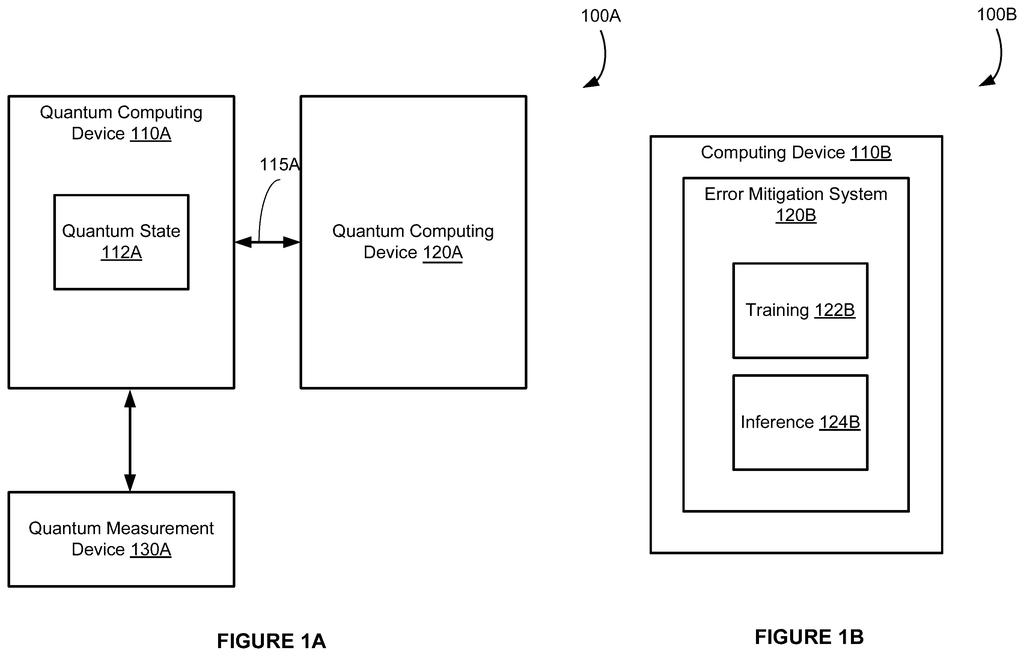
What Nvidia's quantum noise cleaner actually does
Ever tried to listen to a radio station that's just slightly out of range? You can hear the song, but there's enough static that you keep mishearing lyrics. Quantum computers face a much worse version of that problem: the signals they use to carry information get distorted by environmental interference, and even a small amount of distortion can ruin a calculation.
Nvidia's patent describes a system that trains an AI model to recognize what a quantum signal should look like, even after interference has corrupted it. The model learns the pattern of errors a particular channel introduces, then runs the signal through a process that works backward to reconstruct the original, clean version.
The corrected signal can then be fed into a quantum computing system to perform actual calculations, as if the noise never happened. It's similar to how noise-canceling headphones learn the profile of background sound and subtract it, except here the target is quantum information, not audio waves.
… trained to predict the original quantum state in order to perform error mitigation by simulating an inverse of the non-unitary quantum communication channel to reverse one or more errors caused by the non-unitary quantum communication channel; …
Translation: The AI fixes quantum errors by running the noise process in reverse.
How the ML model reverses a noisy quantum channel
The patent targets a specific problem: non-unitary quantum communication channels (meaning channels that don't just transform a quantum state cleanly, but also add errors that are hard to reverse with standard math). Classical error correction often relies on redundancy, but quantum mechanics doesn't allow you to simply copy a quantum state and compare versions, so the usual tricks don't apply.
Instead, Nvidia's approach feeds a description of the noisy quantum state into a machine learning model that has been trained to predict what the original, pre-noise state looked like. The model effectively learns to simulate the inverse of the channel, meaning it figures out what transformation the channel applied and runs it in reverse.
The output is a predicted reconstruction of the original quantum state. That reconstruction is then used to drive at least one of two things:
- Error mitigation: reducing the impact of noise on a computation already in progress
- Quantum state preparation: setting up the starting conditions for a new quantum computation more accurately
The training process is the key design bet here. The model has to learn the noise profile of a specific channel well enough to invert it, which means it needs representative training data from that channel. The patent doesn't restrict the ML architecture, which leaves room for the approach to be adapted as quantum hardware evolves.
… providing to a machine learning model, input data indicative of an original quantum state of a quantum system that is modified by an amount of noise added by a non-unitary quantum communication channel.
Translation: The system feeds noisy quantum data into an artificial intelligence model.
What this means for quantum computing reliability
Quantum computers are still fragile. Error rates are one of the biggest obstacles between today's experimental machines and ones that can solve real-world problems reliably. Any technique that reduces the damage noise does to a computation, without requiring perfect hardware, moves the whole field forward.
For Nvidia, which already sells GPU hardware used to simulate quantum systems classically, this patent extends the company's footprint into the software layer that would sit between quantum hardware and practical applications. If AI-driven error mitigation becomes a standard part of quantum computing pipelines, Nvidia's long bet on quantum-adjacent software could give it a meaningful position in an industry that's still finding its footing.
Nvidia's 45th filing we've tracked in AI training and infrastructure since May builds on earlier applications like splitting AI steps across chips and multiplying robot training videos.
The AI model in this design has to learn the specific error patterns of one particular piece of quantum hardware, which means a new machine or even a shift in operating temperature could require retraining from scratch. That is a real fragility: the whole approach depends on the noise being consistent and predictable, and quantum hardware is famously sensitive to its surroundings.
There is also a compounding risk built in. A model that corrects errors with high accuracy still introduces its own small mistakes, and those stack on top of the original ones rather than replacing them. The bet is that the AI's errors are smaller than the ones it removes, which is reasonable but not guaranteed.
That trade reads as worth it given where the technology stands. Waiting for hardware that solves this cleanly on its own could take years, and imperfect help applied consistently often beats elegant help that does not exist yet.
There are more where this came from
We read every patent application Big Tech publishes and send you the ones worth knowing. Plain English, free, every week.
The drawings
18 drawing sheets from US 2026/0278451 A1 · click any drawing to enlarge


Want this weekly breakdown for a company we don't cover? Patentlyze Pro →