
Apple Patents a Way to Fix What Wearable Cameras See Versus What Your Eyes See
Your eye and a camera lens don't sit in the same place, so what the camera captures and what looks natural to your eye aren't quite the same thing. Apple has filed a patent for a system that figures out exactly how far objects are and how far your eye is from the screen, then reshapes the camera image on the fly so it lines up with your real perspective.
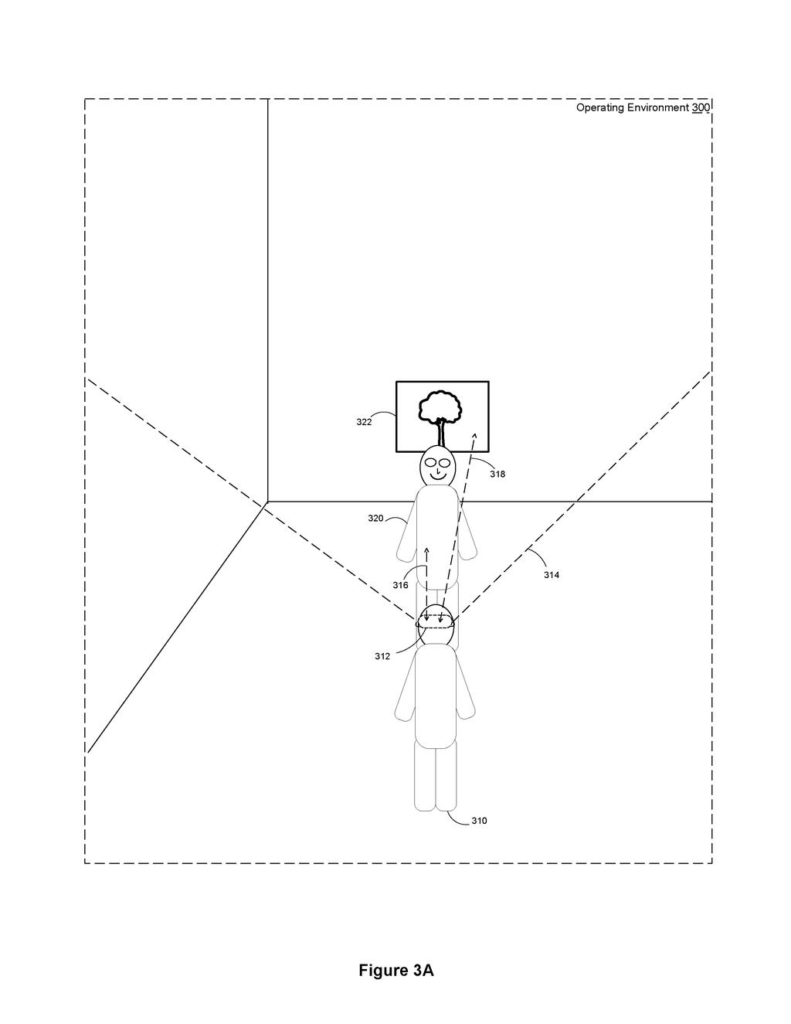
What Apple's eye-distance image warp actually does
Imagine you're wearing a headset that shows you the world through a tiny camera. The camera sits a few centimeters away from your actual eye, and that small gap creates a subtle mismatch: objects look slightly "off" because the camera's point of view isn't your point of view. The further away the camera is from your eye, the worse it gets, especially for objects that are close to you.
Apple's patent describes a system that measures two things: how far each object in the scene is from the camera, and how far your eye is from the display screen. It uses those two numbers together to calculate a warp map, basically a set of per-pixel instructions for how to stretch or shift the image so it matches what you'd naturally see if your eye were the camera.
The device then applies that warp before it shows you the image, so what appears on screen aligns with your real perspective. The system can also adjust other settings on the device, like zoom level or rendering behavior, based on the same map.
… determining, based on an estimated eye location of an eye of a user when the electronic device is worn by the user, a second field of view from the estimated eye location that includes the object and is different from the first field of view …
Translation: It calculates what your actual eyes would see instead of what the camera lens sees.
How the device builds a warp map from depth and eye position
The patent describes a process with four main steps running on an electronic device (a headset or smart glasses) with a camera and a display:
- Capture: The camera grabs an input image from its own angle, which the patent calls the "first field of view."
- Estimate eye position: The device figures out roughly where your eye is when the device is worn. That gives a "second field of view", what you'd see if your eye were the camera.
- Build a warp map: The system calculates a distance warp map using two inputs: how far the camera is from the object in the scene (depth information), and how far your eye is from the display screen (the offset value). The function that combines them produces per-pixel instructions for reshaping the image.
- Display the warped image: The reshaped image is shown on the display facing your eye, correcting for the parallax-like mismatch between camera position and eye position.
The depth measurement can come from a depth sensor, stereo cameras, or software-based depth estimation. The eye-distance value can be fixed (a typical user estimate) or measured in real time. The patent also notes that the resulting warp map can set other "operational parameters" on the device, meaning it could influence rendering quality, field-of-view boundaries, or other display settings beyond simple pixel shifting.
… determining a distance warp map for the input image based on a function of the depth information and a first offset value characterizing an estimated distance between eyes of a user and the display device …
Translation: It creates a digital map to adjust the picture based on how far your eyes are from the screen.
What this means for Apple Vision Pro and future headsets
For anyone who has tried a camera-based mixed-reality headset, the slight wrongness of passthrough video is one of the first things you notice. Objects close to you look subtly displaced, and the world doesn't quite feel real. This kind of geometric correction is a direct attempt to close that gap, making passthrough video feel more like actually looking through a window.
The engineering matters especially at short distances: the closer an object is, the bigger the angular mismatch between camera and eye, so the warp has to do more work. Apple has been filing around display and spatial perception corrections since at least 2023, and this filing fits that pattern. For a product like Apple Vision Pro, where passthrough fidelity is a core selling point, getting the geometry right is table stakes.
Apple's 51st filing we've tracked since May joins earlier applications like guiding users through spaces and room scan completion in our Apple AR glasses watchlist.
The tradeoff at the center of this patent is speed versus accuracy. Computing a per-pixel warp map that accounts for both scene depth and eye position takes real processing time, and any delay between capturing the real world and displaying it creates latency that breaks the illusion of presence. Apple's claim is that the math is simple enough to run fast, but the patent doesn't specify how fast, and that gap matters a lot in practice.
There's a second cost: the warp map is only as good as the depth estimate. If the depth sensor reads an object's distance incorrectly, the correction pushes pixels in the wrong direction, which could look worse than no correction at all. Depth sensing in low light or on transparent surfaces is notoriously unreliable, and the patent doesn't address what happens when the depth data is noisy.
That said, the underlying problem is real and the approach is sensible. Getting camera-to-eye geometry right is one of the unglamorous but genuinely important steps in making passthrough headsets feel natural rather than like watching a video of the world. Whether the real-time performance holds up in hardware is the open question.
There are more where this came from
We read every patent application Big Tech publishes and send you the ones worth knowing. Plain English, free, every week.
The drawings
7 drawing sheets from US 2026/0278732 A1 · click any drawing to enlarge


Want this weekly breakdown for a company we don't cover? Patentlyze Pro →