
Apple Patent Reveals Single Knob That Adjusts Both VR Lenses Simultaneously
Adjusting a VR headset usually means fiddling with each lens separately until your eyes stop aching. Apple's new patent describes a mechanism that moves both lenses simultaneously with a single control.
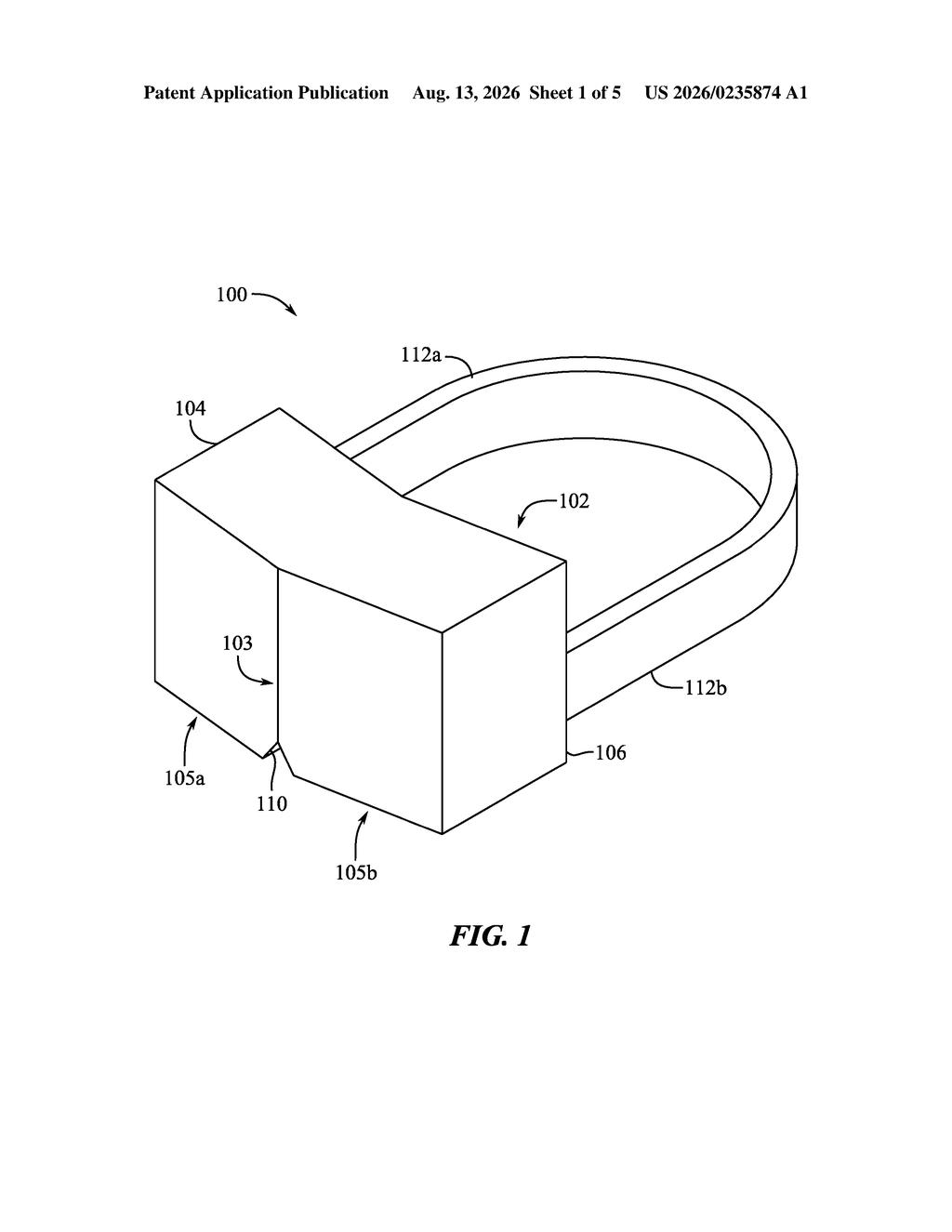
What Apple's linked-lens headset adjustment actually does
Every time you put on a VR headset, you're likely nudging one lens, then the other, trying to line them up with your eyes. That manual back-and-forth is one of the most annoying parts of using any headset today.
Apple's patent describes a frame with two separate optical modules, one for each eye, connected by a physical linking piece. When you turn a single adjustment mechanism on one side, it pushes or pulls both modules at the same time, keeping them symmetrically positioned relative to each other. You make one move instead of two.
The result is that the distance between the lenses, what opticians call the interpupillary distance, can be set in a single gesture. That matters because if your lenses are even a few millimeters off from where your pupils actually sit, you get eye strain, blurry edges, or a headache after a short session.
… the adjustment mechanism is configured to simultaneously adjust a position of the first optical module and a position of the second optical module relative to each other.
Translation: A single control moves both lenses at the same time to help users find the right focus.
How the motion transfer member moves both modules at once
The patent describes a head-mountable display device with a frame that holds two separate optical modules, one per eye. A single adjustment mechanism is directly coupled to the first module, and a motion transfer member (essentially a physical linkage, like a rod or rack-and-pinion rail) connects that mechanism to the second module.
When the adjustment mechanism moves the first optical module inward or outward, the motion transfer member carries an equal-and-opposite movement to the second module. The two modules shift simultaneously, staying synchronized throughout the adjustment range.
Key components the patent spells out:
- A frame that acts as the structural housing
- Two optical modules, each containing the lens and display stack for one eye
- An adjustment mechanism coupled to the first module (the user-facing control)
- A motion transfer member that extends between both modules and transmits movement mechanically
The claim is deliberately hardware-agnostic: it does not specify whether the adjustment mechanism is a dial, slider, or motor. That flexibility suggests Apple could implement this as a passive manual control or as part of a motorized, software-driven lens calibration system.
The motion transfer member can be coupled to the adjustment mechanism and the second optical module. The motion transfer member can extend between the first optical module and the second optical module.
Translation: A physical link connects the two lenses so that turning one knob shifts both of them.
What this means for the comfort of future Apple headsets
Interpupillary distance (the gap between your pupils) varies from about 54 mm to 74 mm across adults, and getting it wrong is one of the main reasons people find VR uncomfortable. A linked adjustment mechanism removes one step from the setup process and reduces the chance that a user sets the two lenses unevenly, which is surprisingly easy to do when adjusting them independently.
For Apple, which has positioned the Vision Pro as a precision optical device, this kind of mechanical refinement fits a pattern of investing in the physical ergonomics of the headset, not just the software. The AR and VR space is full of new Big Tech patents chasing the same goal: making headsets feel less like lab equipment and more like something you'd actually wear for an hour.
The engineering trade here is real: a rigid mechanical linkage between the two modules means the adjustment ratio is fixed, with both lenses moving by the same amount in mirror symmetry. That works for the average user, but anyone with an asymmetric interpupillary distance (more common than most people realize) may still need a secondary fine-tuning option the patent does not describe. Apple is betting that a fast, symmetrical single-control adjustment covers enough of the user population to justify the mechanical complexity of the linkage. That reads as a reasonable trade for a consumer device, though the missing per-eye override is the gap to check if the system ships.
There are more where this came from
We read every patent application Big Tech publishes and send you the ones worth knowing. Plain English, free, every week.
The drawings
5 drawing sheets from US 2026/0235874 A1 · click any drawing to enlarge


Want this weekly breakdown for a company we don't cover? Patentlyze Pro →
Be the first to weigh in