
Nvidia Patents a Training Method That Keeps AI Focused Without Losing Prior Knowledge
Teaching an AI to get better at one thing usually makes it worse at everything else. Nvidia just filed a patent for a training technique designed to fix that tradeoff by having the AI essentially tutor a copy of itself.
What Nvidia's corrective distillation actually does for AI
Today's AI models face a real problem: every time engineers train a model to get better at a specific task, it can start to forget the broader knowledge it already had. Think of it like cramming for a chemistry exam and suddenly blanking on history you knew cold.
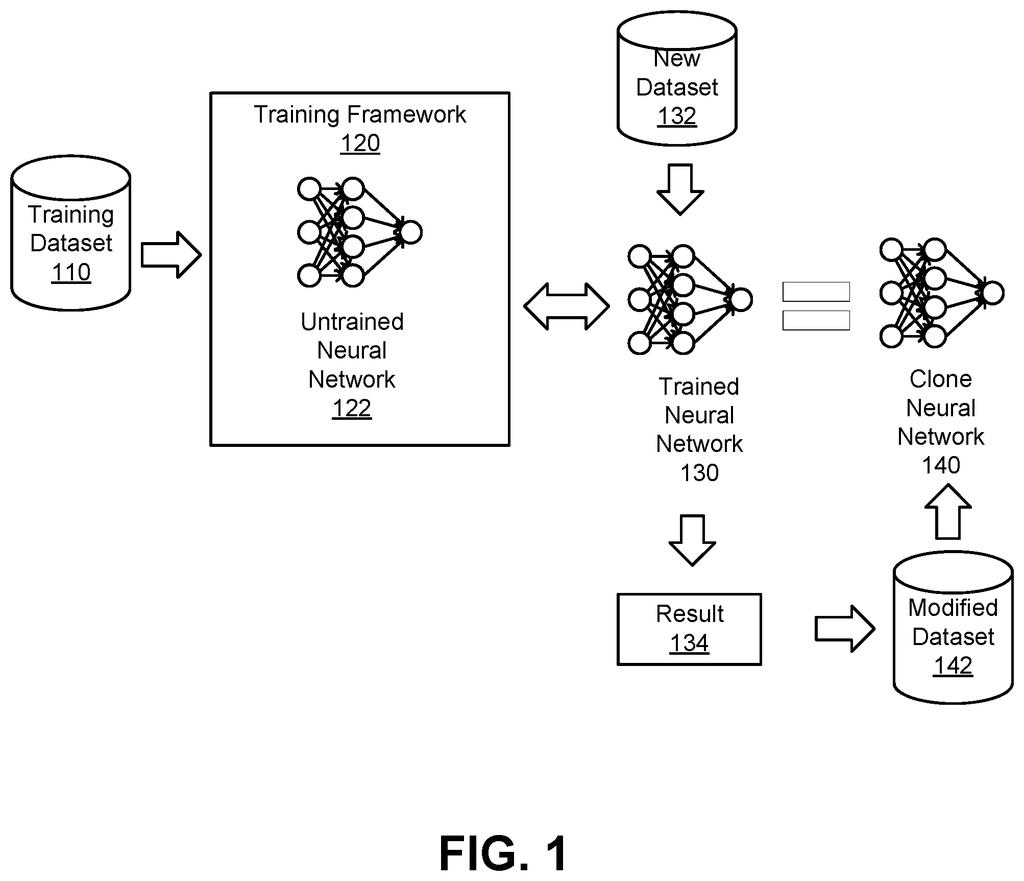
Nvidia's new patent describes a system where the AI model creates an exact copy of itself before any new training begins. That copy learns from a carefully adjusted version of the original model's own answers, designed to fix mistakes without overwriting everything the model already knows well.
The result is an AI that can get sharper on specific topics while staying reliable across everything else. For you as an end user, that could mean an AI assistant that handles your niche requests better without randomly fumbling questions it used to answer easily.
clone a first neural network to generate a second neural network; generate a distribution corresponding to one or more probabilities of one or more results generated by the first neural network in response to an input; …
Translation: The system copies an existing AI model and maps out all the likely answers it gives to a specific prompt.
How the clone network and modified probabilities work together
The patent describes a technique Nvidia calls corrective distillation. It works in a few steps:
- Clone the model: Before any new training, the system makes an exact copy (a "clone") of the original neural network.
- Generate a probability distribution: The original model looks at an input and produces a probability map, essentially a ranked list of how likely each possible answer is. This is standard in AI, where models don't just pick one answer but score all of them.
- Apply a correction function: A mathematical adjustment (the distribution correction function) tweaks those probabilities to reduce the influence of answers the original model was getting wrong, while preserving confidence in answers it was getting right.
- Train the clone on the corrected data: The copy network learns from this adjusted version of the original's outputs, absorbing targeted improvements without being exposed to the original's errors.
The goal is to solve what researchers call catastrophic forgetting, where fine-tuning a model on new data wipes out old knowledge. By using the original model's own outputs as a filtered teaching signal, the clone is steered toward better behavior rather than just different behavior.
… facilitating an increase in domain-specific knowledge while also preventing degeneralization.
Translation: This allows the AI to learn new specialized skills without forgetting what it already knows.
What this means for AI assistants and specialized AI tools
For anyone using AI tools at work or at home, the practical failure this patent addresses is one you may have already noticed: AI models that seem to get worse at everyday questions after a company updates them to handle some new specialty. That degradation is not random; it is a known side effect of how AI training works today.
If Nvidia's approach proves out, Nvidia's track record in AI training patents suggests the technique could eventually show up in the infrastructure that powers commercial AI products. Nvidia's track record in AI training patents means developers building on Nvidia hardware could train more reliable specialized models faster, which eventually reaches users as AI tools that hold up better over time.
Nvidia's 46th filing we've tracked in AI training & infrastructure since May adds to a run that includes one on quantum signal cleanup and splitting AI across chips.
If you have ever noticed a familiar app get worse at something it used to do well after an update, this patent describes a fix for exactly that frustration. Nvidia's approach lets a model study its own mistakes and correct them before those corrections erase what it already knows, the way cramming for one test can make you forget another.
The practical promise is software that gets sharper over time without becoming unreliable in ways you cannot predict. A photo editor that learns your style, a voice assistant that adapts to your speech, a creative tool that improves on feedback would all benefit from training that does not break what already works.
Whether this reaches a shipping product depends on whether it proves faster and cheaper than methods engineers already use. But the goal it describes, a model that corrects itself without regressing, is exactly what separates tools people trust from tools people eventually abandon.
There are more where this came from
We read every patent application Big Tech publishes and send you the ones worth knowing. Plain English, free, every week.
The drawings
27 drawing sheets from US 2026/0278346 A1 · click any drawing to enlarge


Want this weekly breakdown for a company we don't cover? Patentlyze Pro →