
Apple Patents a Laptop With Touch Screens Built Into Both Sides of the Keyboard
Apple has filed a patent for a laptop that hides two interactive displays beneath the areas where your hands rest on either side of the keyboard. The concept replaces dead palm-rest space with touch-sensitive screens you can actually use.
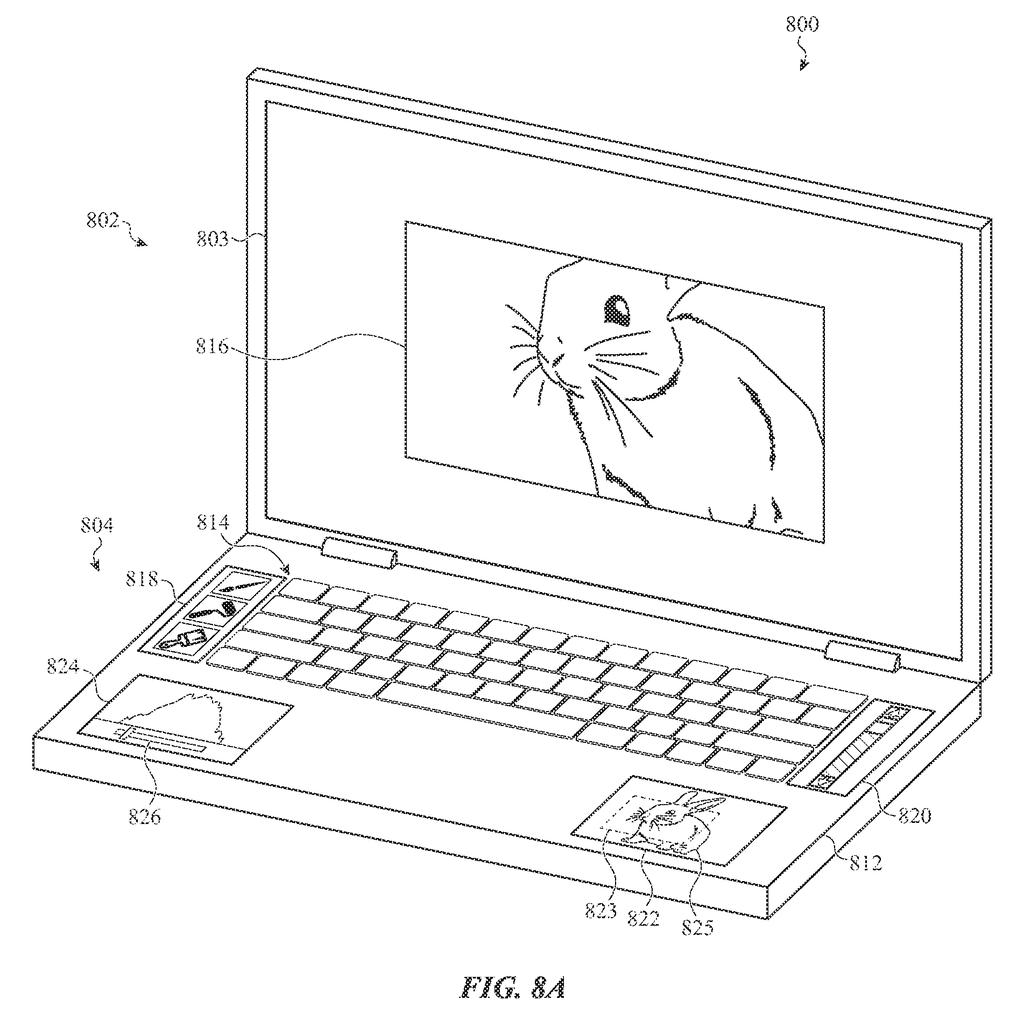
What Apple's dual-palm-rest display idea actually does
Imagine sitting down with a laptop and noticing that the flat, empty areas to the left and right of the keyboard are now glowing with controls, color swatches, or shortcuts, all touch-sensitive, all right under your fingertips.
That is what Apple is describing here. The idea is to place a display on each side of the keyboard, covered by a clear surface that doubles as a touch pad. You still get a normal keyboard in the middle, but the blank zones on either side become active, interactive screens.
Think of it like a Touch Bar that went wide and grew to fill the whole palm rest. The displays could theoretically show anything a developer wanted to put there: media controls, drawing tools, app shortcuts, or dynamic trackpad regions. Apple is not saying what it would display, only that the hardware would support it.
… a light-transmissive cover defining: a first touch-sensitive input region along a first side of the keyboard; and a second touch-sensitive input region along a second side of the keyboard; …
Translation: A see-through cover creates touchscreens flanking the keyboard.
How the displays sit under a see-through cover
The patent describes a laptop base with three input zones instead of the usual one or two.
- A standard physical keyboard sits in the center.
- A first display runs along one side of the keyboard (likely the left palm rest), covered by a light-transmissive (clear) surface that also acts as a touch-sensitive layer.
- A second display mirrors that setup on the other side (the right palm rest), again with its own touch-sensitive clear cover.
The key engineering choice here is the light-transmissive cover, a surface clear enough to let the display underneath show through, but durable and smooth enough to rest your hands on and tap or swipe. This is similar in concept to the glass trackpad surface on current MacBooks, except the screen beneath it can now show dynamic content rather than a static gray pad.
The patent does not specify what the displays would show or how software would control them. It establishes the physical architecture: a laptop base where previously inert palm-rest zones become live, interactive display surfaces on both sides of the keyboard.
What this means for the future of MacBook input
The standard laptop design has barely changed in 30 years. The keyboard sits center, the trackpad sits below it, and the palm rests on either side do nothing. Apple already experimented with replacing the function-key row with a touch strip (the Touch Bar, retired in 2023), so the company clearly has an interest in rethinking static input zones.
If this design ever shipped, it would mean your laptop's surface could reconfigure based on what app you have open, a color wheel appearing under your left hand when you open a photo editor, for example. The practical impact depends entirely on software, but the hardware foundation described here is a meaningful expansion of what a laptop surface could be.
Apple's 34th filing we've tracked in our Display coverage since May adds to a run that includes hiding a camera in the screen and controlling each LED individually.
Laptop keyboards leave the flat areas beside and below them completely blank, and that dead space has frustrated designers, musicians, and video editors for decades. Buying separate physical control panels to compensate is expensive, bulky, and breaks the whole point of a portable machine.
Putting live, touch-sensitive screens into those palm-rest areas is a direct answer to that cost, and the scale feels proportionate. Two full display surfaces give working hands something substantial to interact with, not a narrow afterthought strip.
Whether the idea earns its place depends entirely on whether software actually fills those screens with useful controls, because beautiful hardware that apps ignore is just an attractive surface. That software question is the real test.
There are more where this came from
We read every patent application Big Tech publishes and send you the ones worth knowing. Plain English, free, every week.
The drawings
15 drawing sheets from US 2026/0277348 A1 · click any drawing to enlarge


Want this weekly breakdown for a company we don't cover? Patentlyze Pro →