
Meta Patents a Point-and-Click Remote for Your Entire Smart Home
What if you could control any smart device in your home just by pointing at it, the way you'd click a link on a screen? Meta has filed a patent for exactly that kind of handheld pointer.
What Meta's spatial mouse actually does in your living room
Imagine you're sitting on your couch and you want to dim the lamp across the room. Instead of opening an app, asking a voice assistant, or getting up, you pick up a small handheld device, point it at the lamp, and click. The lamp dims.
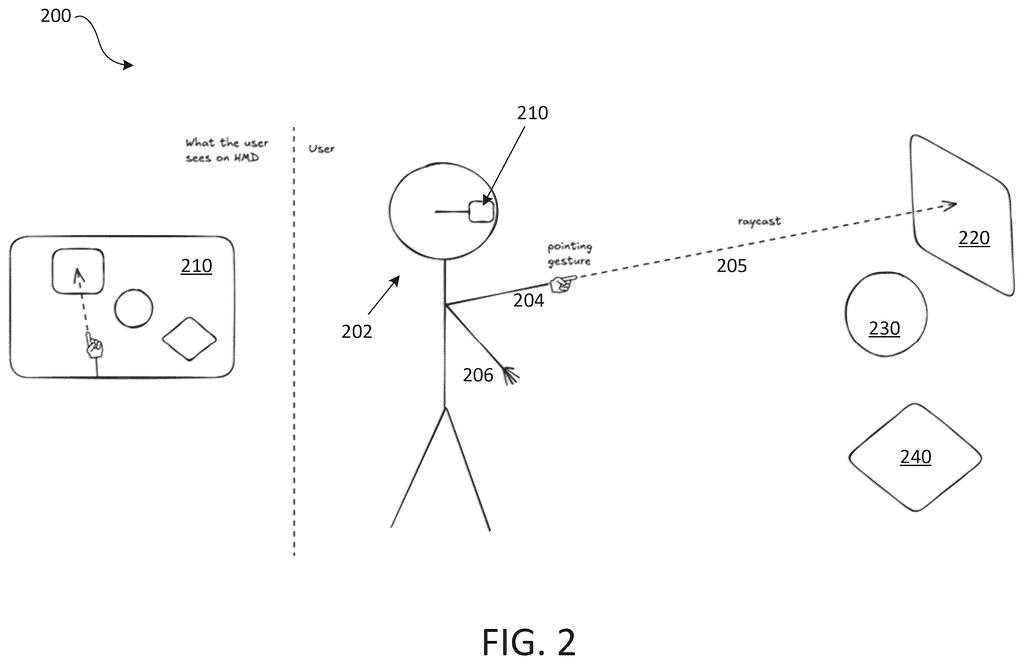
That's the core idea behind this Meta patent. The device, which Meta calls a spatial mouse, uses sensors to figure out what physical object you're pointing at, whether that's a light, a speaker, or a thermostat. Once it recognizes the object, it draws a visual highlight around the specific part you're targeting, so you know the system has locked on before you act.
The command that fires when you click depends entirely on the object recognized. Point at a TV and the options might be volume or power. Point at a door lock and it might be lock or unlock. The interface, in theory, comes to the object rather than the other way around.
… render, responsive to the recognition of the at least one object, a visual indicator extending from the spatial mouse to an intersection point on the at least one object; highlight a part of the at least one object associated with the intersection point …
Translation: It draws a laser line from your remote to whatever you point at and highlights the exact spot.
How the device identifies objects and highlights what you're pointing at
The patent describes an apparatus packed with sensors that feed data to a processor. That processor does three things in sequence: it identifies the physical object you're pointing at, it figures out exactly which part of that object your pointer is aimed at, and then it runs an appropriate command.
The object-recognition step uses sensor fusion (combining data from multiple sensors, probably including a camera and possibly depth or infrared) to distinguish, say, a light switch from a thermostat from a speaker. This is harder than it sounds because a real room is cluttered and objects aren't always neatly separated.
Once an object is recognized, the system renders a visual indicator, described in the claim as a line extending from the device to the intersection point on the object. It also highlights the specific sub-region of the object the pointer is touching, by visually segmenting that part from the rest. Think of it as a cursor that physically reaches across the room.
- Sensors detect the pointed-at object in the environment
- Processor recognizes the object and the specific area targeted
- A visual line and highlight confirm what the system has locked onto
- A command executes based on that recognized object
A system of the subject technology includes an apparatus including a number of sensors to detect one or more objects pointed to by a spatial mouse.
Translation: Sensors track whatever device you are holding so it knows what you are aiming at.
What this means for smart home control and AR glasses
The practical appeal is real: voice assistants require you to remember device names, apps require you to unlock your phone, and wall switches require you to get up. A point-and-click model maps onto something people already understand intuitively, the mouse pointer, and applies it to the physical room around them.
This patent also fits neatly into the broader story of wearable and AR computing. If you're wearing a headset or glasses that can overlay graphics on your view, the visual indicator described here, that line from device to object, becomes something you'd actually see floating in space. Meta keeps filing on physical-world interaction for AR contexts, and this spatial mouse reads as one more piece of that input puzzle.
Meta's 151st filing in our Meta coverage since May joins earlier applications like typing on flat surfaces and full-hand motion tracking as the company keeps exploring how people interact with AR hardware.
The tradeoff at the center of this design is precision versus setup cost. A point-and-click model only works if the object-recognition system is reliable enough that you never accidentally dim the wrong light or trigger the wrong appliance. That bar is high in a messy real home with overlapping objects, inconsistent lighting, and devices that look alike.
Meta is betting that sensor fusion plus visual confirmation (the highlight and the line) gives users enough feedback to catch errors before they click. That's a reasonable answer, but it shifts work onto the display side: the visual feedback only helps if you can see it clearly, which pushes you toward a paired headset rather than a standalone device.
As a standalone remote, this is a clever but niche idea. Paired with AR glasses, where the visual indicator appears layered over your actual view of the room, it becomes a genuinely different model for how you interact with your home. The patent covers both cases, but the second one is clearly where the design earns its keep.
There are more where this came from
We read every patent application Big Tech publishes and send you the ones worth knowing. Plain English, free, every week.
The drawings
6 drawing sheets from US 2026/0288246 A1 · click any drawing to enlarge


Want this weekly breakdown for a company we don't cover? Patentlyze Pro →
Be the first to weigh in