
Qualcomm's New Patent Keeps Nearby Wireless Devices From Cutting Off Each Other's Signal
When two devices try to talk to each other on the same wireless channel, they can easily step on each other's signal. Qualcomm has filed a patent for an AI system that watches what's happening on that shared channel and adjusts each device's settings to avoid the collision.
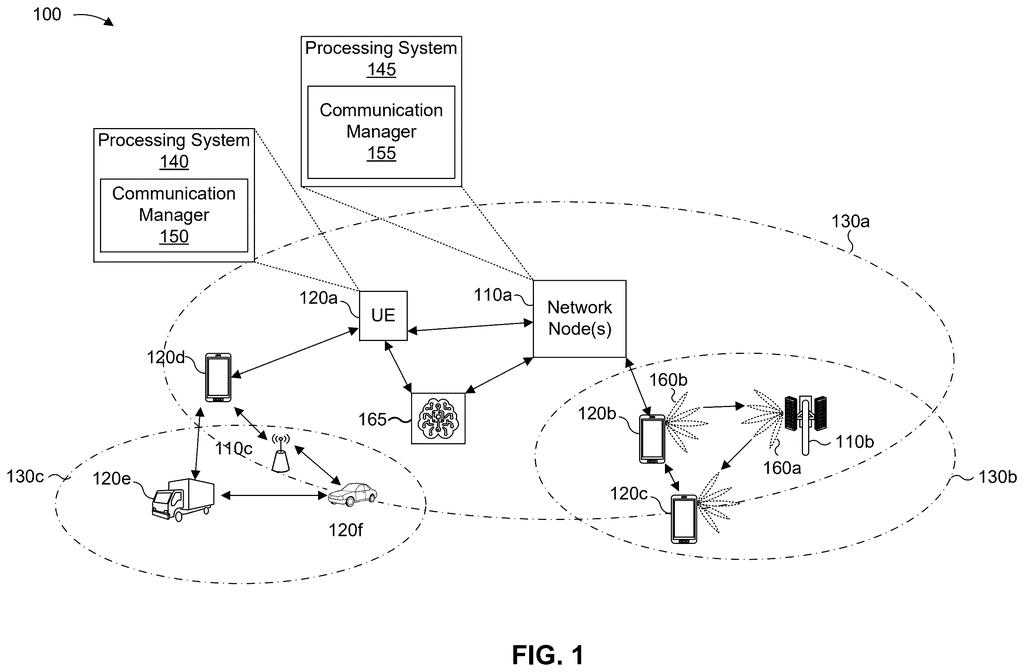
How Qualcomm's AI keeps device-to-device signals from colliding
A pair of wireless earbuds and a smartwatch both try to send data at the same time, using the same slice of radio spectrum. Neither knows the other is there, so their signals crash into each other and both connections get choppy.
Qualcomm's patent describes a system where each device runs a small AI model that watches how the shared channel is behaving and picks the best transmission settings for that moment. If conditions change, the AI updates its options and picks again. The goal is to let devices that weren't originally designed to share a channel do so without fighting over it.
This matters most in scenarios where multiple wireless technologies are crammed into the same frequency range, think cars talking to roadside sensors while Bluetooth devices are also operating nearby. The AI handles the coordination that used to require a central network.
select, in accordance with an artificial intelligence/machine learning (AI/ML) model, a sidelink parameter value for sidelink communication with a second UE using a first radio access technology (RAT) over a wireless channel shared by the first RAT and one or more second RATs …
Translation: An AI model helps devices pick the right settings to share wireless channels smoothly.
How the AI model picks and updates its radio settings
The patent focuses on what the wireless industry calls sidelink communication, which is when two devices talk directly to each other rather than routing everything through a cell tower or router. This is common in connected vehicles, industrial sensors, and some wearables.
The problem is that these device-to-device links often have to share a radio channel with other wireless technologies, a situation called multi-RAT co-channel coexistence (RAT stands for Radio Access Technology, meaning any wireless standard like 5G, Wi-Fi, or DSRC used in cars). When multiple standards share the same channel, they can interfere with each other.
Qualcomm's solution is an AI/ML model running on the device itself. The model chooses a sidelink parameter value, essentially a configuration setting like transmission timing or signal strength, from a list of candidates. It also picks the right synchronization reference offset, which is the timing alignment that keeps the device's transmissions from overlapping with other signals.
Critically, the system is not static. As the device takes measurements of actual channel conditions, it narrows or expands the list of candidate settings. Over time, the AI learns which settings work in the current environment and stops wasting time considering ones that don't.
The sidelink parameter value is selected from a range of candidate parameter values associated with multi-radio access technology co-channel coexistence or a synchronization reference offset.
Translation: The settings prevent devices using different wireless tech from interfering with each other.
What this means for connected cars and wearables
The spectrum crunch problem is real and getting worse. As more devices go wireless, every frequency band gets more crowded, and the traditional fix of giving each technology its own lane is running out of road. A system that lets devices negotiate shared spectrum without central coordination is a meaningful step toward making dense wireless environments actually work.
For everyday users, the clearest application is connected vehicles. Cars need to communicate with each other and with road infrastructure in real time, but they operate alongside consumer devices running entirely different wireless standards. Qualcomm's track record in wireless coexistence patents suggests this is part of a broader effort to make that messy real-world environment manageable. If the approach works at scale, it could reduce dropped connections and latency in exactly the high-stakes settings where reliability matters most.
Qualcomm's 435th filing in our Qualcomm coverage since May continues a run of wireless-link work, joining the Bluetooth audio tweak and the Wi-Fi handoff hold.
The problem this patent attacks is not hypothetical. Spectrum congestion causes real, measurable degradation in wireless performance, and it gets harder to manage as the number of connected devices grows. Device-to-device communication specifically suffers because it lacks the coordination infrastructure that traditional cell networks provide.
That said, the solution described here is fairly incremental. Using an AI model to select from a range of pre-defined settings, then updating that range based on measurements, is a sensible approach, but it is not a departure from how adaptive wireless systems already work. The AI layer adds flexibility, but the underlying idea of monitoring channel conditions and adjusting accordingly is well-established.
The filing reads as solid engineering work in a genuinely congested space, more optimization than transformation. Whether it produces a real-world improvement depends entirely on how well the AI model generalizes across the chaotic range of real environments it will encounter.
There are more where this came from
We read every patent application Big Tech publishes and send you the ones worth knowing. Plain English, free, every week.
The drawings
7 drawing sheets from US 2026/0292479 A1 · click any drawing to enlarge


Want this weekly breakdown for a company we don't cover? Patentlyze Pro →
Be the first to weigh in