
Sony Patents a Physical Reaction Button Built Into Game Controllers
Sony has filed a patent for a dedicated button on a game controller that does one thing: tell the game you liked what just happened. Think of it as a physical like button for your gaming session.
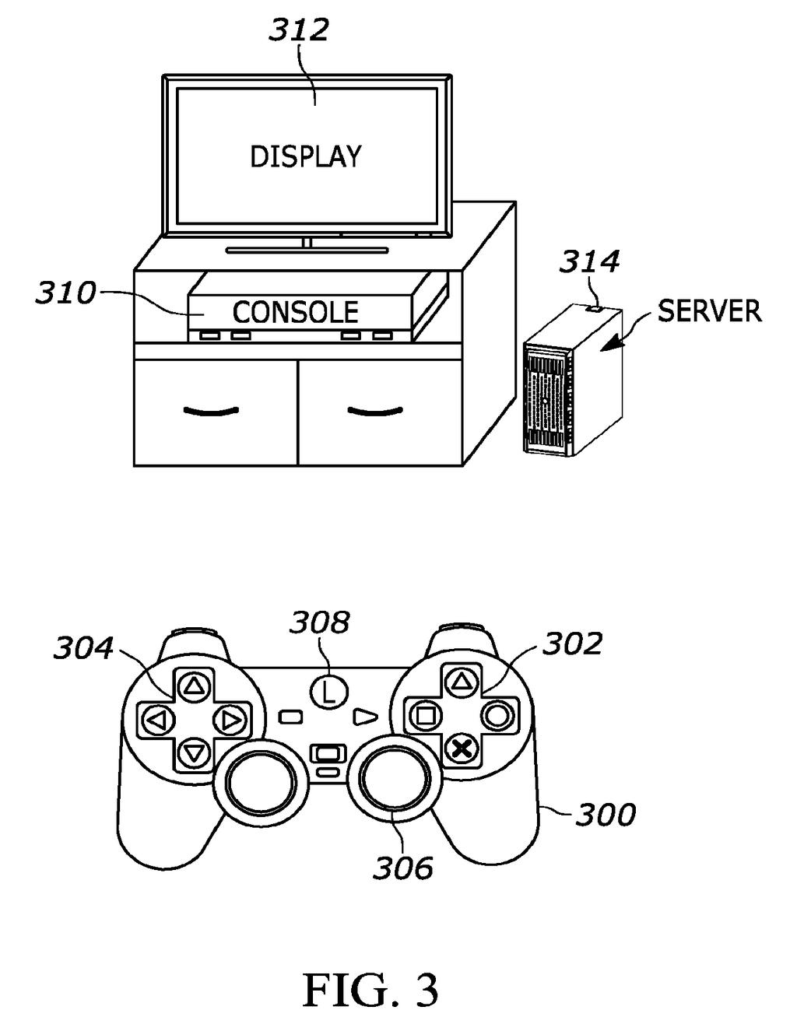
What Sony's in-game reaction button actually does
You're deep in a multiplayer game and something amazing happens. A teammate pulls off an incredible move, or the story hits a perfect moment, and you want to react. Right now, doing that means stopping what you're doing, navigating a menu, or just typing in a chat box. Sony's patent describes a simpler answer.
The idea is a physical button on the controller assigned to send a reaction, such as a thumbs-up or a cheer, directly to the screen as a visual pop-up. Press it, and a first-person reaction UI appears on the display. No menus, no pausing, no fumbling.
Critically, that same button can still serve another function inside the game itself, so it doesn't waste a precious input slot. Sony is essentially proposing that social expression deserves its own dedicated hardware real estate, the same way a camera has a shutter button.
… receiving an input signal registering an indication of a reaction, the input signal generated by manipulation of a physical button on the controller by a user …
Translation: The system detects when a user presses a dedicated button to show how they feel.
How the controller button triggers an on-screen UI reaction
The patent describes a system where a game controller includes a physical button specifically mapped to generate a reaction signal. When a player presses it, the game's software receives an input registering an "indication of a reaction" and responds by displaying a first user interface (UI) on screen showing that reaction visually.
The patent is intentionally broad about what the reaction itself looks like. It could be a like icon, an emoji, a text pop-up, or any other visual indicator. The system just requires that pressing the button causes something to appear on the display confirming the reaction was registered.
One notable detail: the patent specifies that the physical button has at least one other function for controlling the game simulation. This means Sony isn't proposing a controller with an entirely new dedicated button; instead, the reaction function could be layered onto an existing button, perhaps through a long press or context-sensitive assignment, without permanently sacrificing a standard game control.
The broader system involves:
- A controller with a mapped physical button
- A display running the game simulation
- A software layer that interprets the input signal and renders the reaction UI on screen
… a first user interface (UI) comprising a visual indication of the reaction is presented on the display …
Translation: The game then displays an on-screen icon showing the user's reaction.
What this means for social features on PlayStation
For PlayStation users, this could mean social features that feel as natural as pressing a jump button rather than stopping play to open a menu. Gaming is already deeply social, and platforms compete hard on how well they let players connect in the moment. A hardware-level shortcut for expressing reactions removes real friction from that interaction.
The dual-function clause is what makes this practically possible. Game controllers have a fixed number of buttons, and players expect every one of them to do something in-game. By letting a button serve both roles, Sony sidesteps the hardware cost of adding a new dedicated input. Whether this lands on a future PlayStation controller revision or stays a software-mapped feature is an open question the patent doesn't answer.
Reacting to a great moment in a game, whether a teammate's clutch save or a plot twist, currently means stopping to dig through menus or fumbling for an emote, which kills the moment entirely. That friction is small but constant, and it erodes the social texture that makes gaming feel alive rather than solitary.
A single dedicated button is a proportionate answer to that problem. It is low-cost to press, requires no navigation, and keeps both thumbs where they belong during play.
Whether players will actually reach for it when stakes are high remains an open question, but the problem it targets is real enough that even a partial solution has value.
There are more where this came from
We read every patent application Big Tech publishes and send you the ones worth knowing. Plain English, free, every week.
Want this weekly breakdown for a company we don't cover? Patentlyze Pro →
Be the first to weigh in