
Sony Patents a System That Picks the Right Warning Sound for Each Nearby Danger
Your car already beeps when something gets too close, but Sony wants those alerts to tell you more: not just that something is there, but what it is and how dangerous it's about to become.
How Sony's danger-rated audio alerts would work in your car
Today's driver-assist warning systems are blunt instruments. A reversing camera beeps when you get close to something, but it usually doesn't distinguish between a slow-moving child and a fast-approaching cyclist, and it definitely doesn't predict where either one is going next.
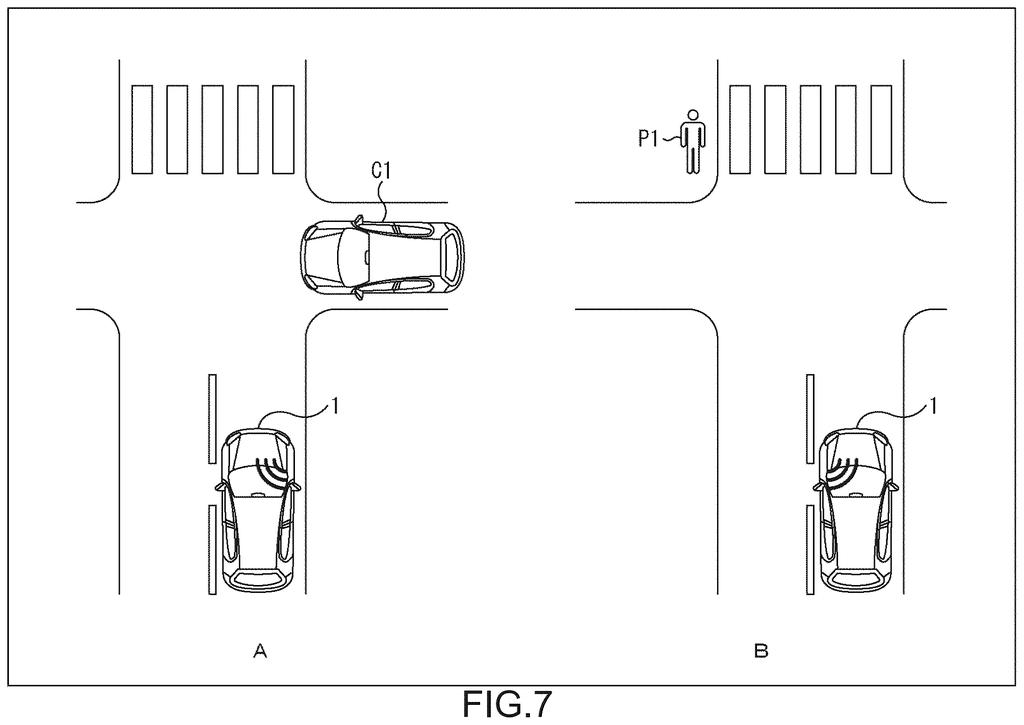
Sony's patent describes a system that watches the objects around a moving vehicle, predicts their future paths, and calculates how dangerous each one actually is. Based on that danger score, it plays a notification sound that's specific to the type of object, not just how near it is. A pedestrian stepping off a curb could trigger a different tone than a car pulling out of a driveway, even at the same physical distance.
The idea is that audio alerts matched to context give you a split-second more information to act on, rather than a single generic beep that leaves your brain to sort out the rest.
a prediction unit which predicts movement information indicating a future movement of an object around a moving body …
Translation: The system forecasts where nearby pedestrians or cars are heading.
How the system predicts movement and controls alert sounds
The patent outlines three core components working in sequence.
First, a prediction unit takes sensor data about objects near the vehicle and forecasts where those objects are going to move next. This is essentially a short-horizon trajectory estimate: the system is not just noting where a cyclist is right now, but projecting where they'll be in the next one to three seconds.
Second, a calculation unit converts that predicted movement into a degree of danger. The closer an object's predicted path comes to the vehicle's own path, the higher its danger score. Speed, direction, and object type all feed into this score.
Third, a presentation control unit decides what sound to play. Critically, the sound is tied to the type of object (pedestrian, cyclist, another vehicle) rather than being a one-size-fits-all beep. The volume, urgency, or tone of the alert can scale with the danger score.
- Objects are classified by type
- Each type gets its own associated notification sound
- The intensity or character of that sound changes with the calculated danger level
… controls, on the basis of the degree of danger, a notification sound that is presented to a user of the moving body and that corresponds to a type of the object …
Translation: It adjusts warning noises based on how urgent the threat is and what kind of hazard it is.
What this means for drivers relying on audio safety cues
Driver alerts that don't distinguish between low-stakes and high-stakes situations are a real problem. Alert fatigue is well-documented: when a system cries wolf repeatedly, drivers start ignoring it. A system that ties sound design to both object type and predicted danger could reduce that fatigue by giving you only the alert that matches the actual situation.
For assisted-driving systems and electric vehicles (which are quieter and so demand more from artificial alerts), this kind of context-aware audio design matters more than it might seem. Sony's bet on automotive sensing and in-vehicle experience spans both its camera sensor business and its Honda partnership, so filings in this space fit a clear pattern. If this approach makes it into production hardware, the most immediate beneficiaries are city drivers navigating dense, unpredictable pedestrian traffic.
Sony's 26th filing we've tracked since July in the self-driving sensing race adds to earlier applications like a two-pass LiDAR read and a bidirectional depth scan.
Undifferentiated warning sounds in cars cause real harm. A driver who hears the same beep for a parked bollard and a child darting into the road has to do extra mental work to decide how urgently to respond, and in traffic that gap in processing time costs lives.
Sony's approach ties the alert sound to the specific type of object detected and adjusts it based on how dangerous that object's predicted movement looks. That logic matches the scale of the problem well: differentiated, graded warnings could meaningfully reduce the moment between perceiving a threat and acting on it.
The open question is whether the sensors feeding this system can reliably tell a cyclist from a pedestrian in rain, at night, on a cluttered street corner. The idea is sound; everything rides on the accuracy of the underlying detection.
There are more where this came from
We read every patent application Big Tech publishes and send you the ones worth knowing. Plain English, free, every week.
The drawings
10 drawing sheets from US 2026/0285347 A1 · click any drawing to enlarge


Want this weekly breakdown for a company we don't cover? Patentlyze Pro →
Be the first to weigh in