
Sony Patents a Way to Patch Video Games Without Stopping the Session
You know that moment when a game update drops and you have to close everything, wait for it to install, and restart from scratch? Sony is working on a way to skip all of that by patching the game code while you're still playing.
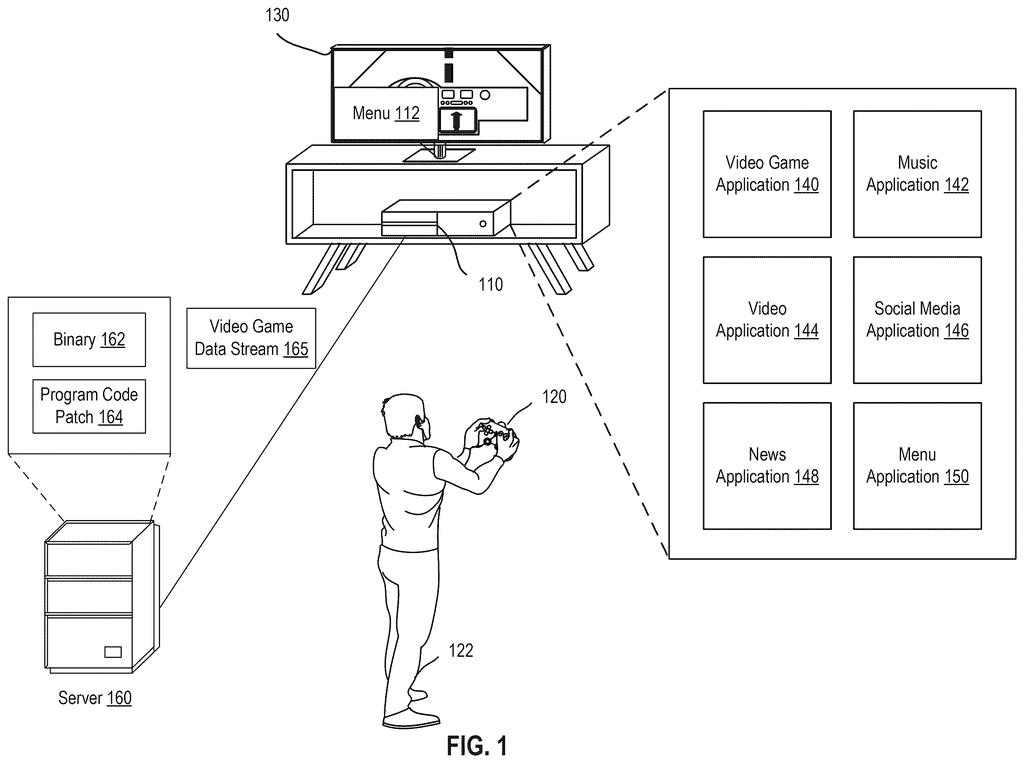
What Sony's mid-session game patching actually does
You're deep into a raid, 90 minutes in, right at the final boss, and then a notification pops up: a game update is ready to install. Right now, that usually means quitting, waiting, and starting over. Sony's patent describes a system that would let the update happen in the background while the game keeps running.
The core idea is that a video game's code is made up of separate, modular pieces. Sony's system receives a patch, a replacement piece of code or a brand-new one, and swaps it into the running game without stopping anything. Your session continues; the fix just slots in.
This is different from the kind of small data updates (new skins, map tweaks) that games already handle on the fly. This is about changing the actual instructions the computer is running, which is technically much harder and currently almost never done in consumer games.
… receiving, while the video game application executes, a program code patch that includes a third compiled program code to replace the first or second compiled program code or to be added to the binary; and updating the binary to include the program code patch while the video game application continues to execute.
Translation: Getting and applying code updates while the game is running.
How the binary swap works during live game execution
A compiled game binary is essentially the finished, machine-readable version of a game's source code. When a developer fixes a bug, they normally recompile the whole thing (or at least a big chunk) and push a patch that requires a full restart to take effect.
Sony's patent breaks that binary into addressable segments. The system is structured so that:
- A running game application is built from at least two discrete compiled code blocks
- While the game is executing, a patch arrives containing a third compiled block meant to replace one of the existing blocks or be added alongside them
- The binary is updated in place, with the new code block taking over, all while the game loop keeps ticking
The tricky part this patent addresses is updating compiled program code (the machine instructions themselves, not just config files or assets), which requires careful memory management to avoid crashes. The patent describes receiving and integrating the patch without interrupting execution, implying some form of memory-safe hot-swap or pointer redirection under the hood.
The claim is deliberately broad: the replacement can be a swap of existing code or an addition of entirely new compiled logic, giving developers flexibility in how they ship fixes.
What this means for players waiting on bug fix restarts
For players, the immediate payoff is obvious: no more forced exits in the middle of a session to apply a patch. If a developer finds a critical bug after launch (a game-breaking crash, a multiplayer exploit, a progression blocker), they could push a fix that takes effect without disrupting anyone who is already playing. In live-service games where sessions run for hours and disconnecting costs real progress, that's a meaningful quality-of-life change.
For developers, this opens up faster iteration on live games. Right now, shipping a hotfix means accepting that it will disrupt your entire active player base at once. A system like this could make small, frequent patches far less painful to deploy, Sony's run of live-service platform filings suggesting the company is building infrastructure to support exactly that kind of always-on game operation.
Sony's 512th filing in our Sony coverage since May follows work like the parental controls patent and the 3D depth sensor.
The concrete win for players is simple: no more forced quits mid-session to install a patch. If Sony ships this, a bug fix or update could arrive silently while you keep playing, the same way a website updates without asking you to close your browser.
The moment you'd actually notice it is the moment you don't notice anything at all. No loading screen, no lost progress, no interrupted co-op session with friends. That absence of friction is the whole point.
Whether this becomes a real feature or stays a concept, it names something players have wanted for years: a game that can fix itself around you instead of stopping you to fix itself.
There are more where this came from
We read every patent application Big Tech publishes and send you the ones worth knowing. Plain English, free, every week.
The drawings
7 drawing sheets from US 2026/0273419 A1 · click any drawing to enlarge


Want this weekly breakdown for a company we don't cover? Patentlyze Pro →