
Sony Patents a Dual-Camera System That Measures How Light Filters Through Surfaces
Most cameras treat light as a simple brightness signal. Sony is filing patents around capturing something much more specific: how the orientation of light waves changes depending on their color, all at once.
What Sony's polarized-light camera pair actually does
Light is more than brightness and color. It also has a direction, called polarization, and that hidden property reveals things a regular camera misses entirely, such as reflections, surface textures, and material types.
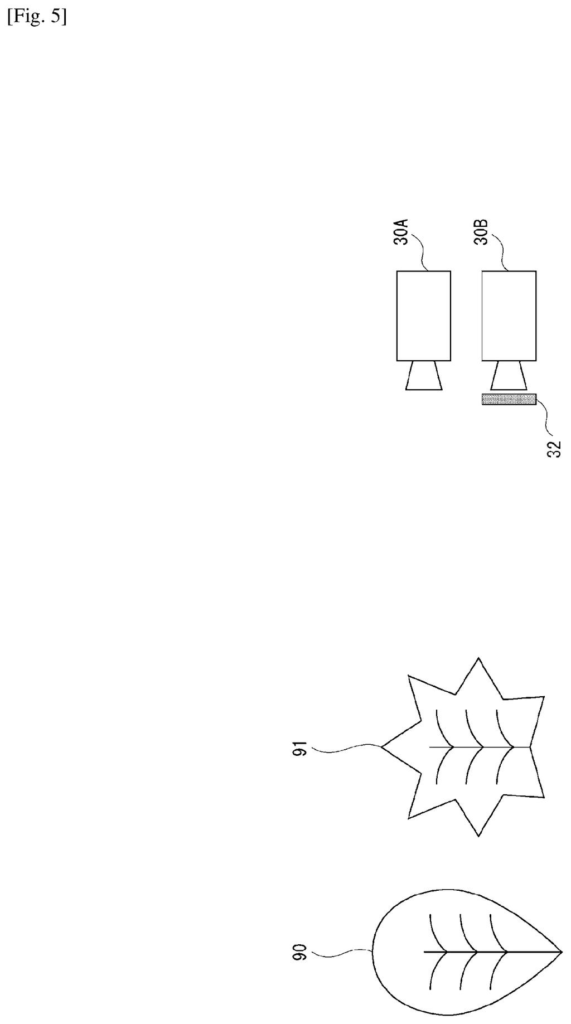
Today, cameras either capture color information or polarization data, but combining both cleanly is hard. Sony's approach uses two cameras side by side: one records a scene normally across many colors, and a second records the same scene through a polarizing filter (similar to polarized sunglasses). By comparing those two feeds, the system can figure out exactly how polarized the light is at each color, producing a rich map of that property.
That map is designed to feed into machine learning systems, giving AI models richer, more physically accurate data to train on. The goal is to make AI better at understanding what objects are made of, not just what they look like.
… generates polarization degree information that indicates wavelength dependency of a polarization degree from first spectroscopic information that is an imaging signal for each of a plurality of wavelength bands from a first spectroscopic camera …
Translation: The system calculates how polarized light changes across different colors using data from two cameras.
How the two cameras split and compare light signals
The core invention is called a spectroscopic information processing unit, which is a calculation layer that sits between two cameras and their output.
The first camera is a spectroscopic camera (one that splits light into many narrow color bands, far beyond red-green-blue). It images a scene without any filter, producing what the patent calls first spectroscopic information. The second camera sees the same scene through a polarizing filter, which only lets through light waves oriented in one direction, producing second spectroscopic information.
The processing unit then compares these two signal sets, band by band across the color spectrum. The ratio between filtered and unfiltered light at each color tells the system the polarization degree at that wavelength, meaning how strongly light is polarized in that particular color range. The full result is a polarization degree map that shows wavelength dependency, not just a single averaged number.
- Camera 1 captures the full unfiltered scene across many color bands
- Camera 2 captures the same scene through a polarizing filter
- The processing unit divides the two signals band by band
- The output is a per-wavelength polarization profile suitable for machine learning input
… second spectroscopic information that is an imaging signal of the plurality of wavelength bands of light received by a second spectroscopic camera via a polarizing filter.
Translation: A second camera captures the same color bands after the light passes through a special polarizing filter.
What this means for AI trained on real-world light data
For AI systems trying to identify materials, detect defects, or understand surfaces, polarization data is extremely useful. A painted surface and a bare metal one can look identical in color but behave completely differently under polarized light. Giving AI models this extra layer of physics-grounded data could make computer vision significantly more reliable in industrial inspection, autonomous vehicles, or medical imaging.
The design choice to split the task across two cameras, rather than one more complicated sensor, keeps the hardware relatively approachable. But it also means the system depends on the two cameras staying perfectly synchronized and aimed at the same scene, which is an engineering constraint worth noting.
Sony adds its 73rd filing to the camera patents we cover since May, extending ideas like a robot's photo angle map and a glare avoidance guide.
Two cameras mounted side by side will always see the scene from slightly different positions, and that gap means their images never line up perfectly. For close objects or anything moving, the mismatch gets worse, and this design depends entirely on comparing those two images pixel by pixel.
What the design buys with that cost is real: different materials bounce colored light back in recognizably different patterns, and capturing that signature could teach AI systems to identify what things are made of, not just what they look like. That is a meaningful upgrade in data quality for industrial or scientific applications.
Whether the trade is worth it depends on implementation details this filing does not provide. The core idea is sound, but the hard engineering problem, keeping two cameras aligned closely enough to make the measurements trustworthy, is left for someone else to solve.
There are more where this came from
We read every patent application Big Tech publishes and send you the ones worth knowing. Plain English, free, every week.
The drawings
12 drawing sheets from US 2026/0287422 A1 · click any drawing to enlarge


Want this weekly breakdown for a company we don't cover? Patentlyze Pro →
Be the first to weigh in