
Sony Patent Fills in Object Shapes Hidden Behind Obstructions in Camera Images
When one object blocks part of another in a photo or live camera feed, a computer often has no idea what's hiding behind it. Sony is patenting a system that fills in those missing shapes automatically, using a library of known object forms.
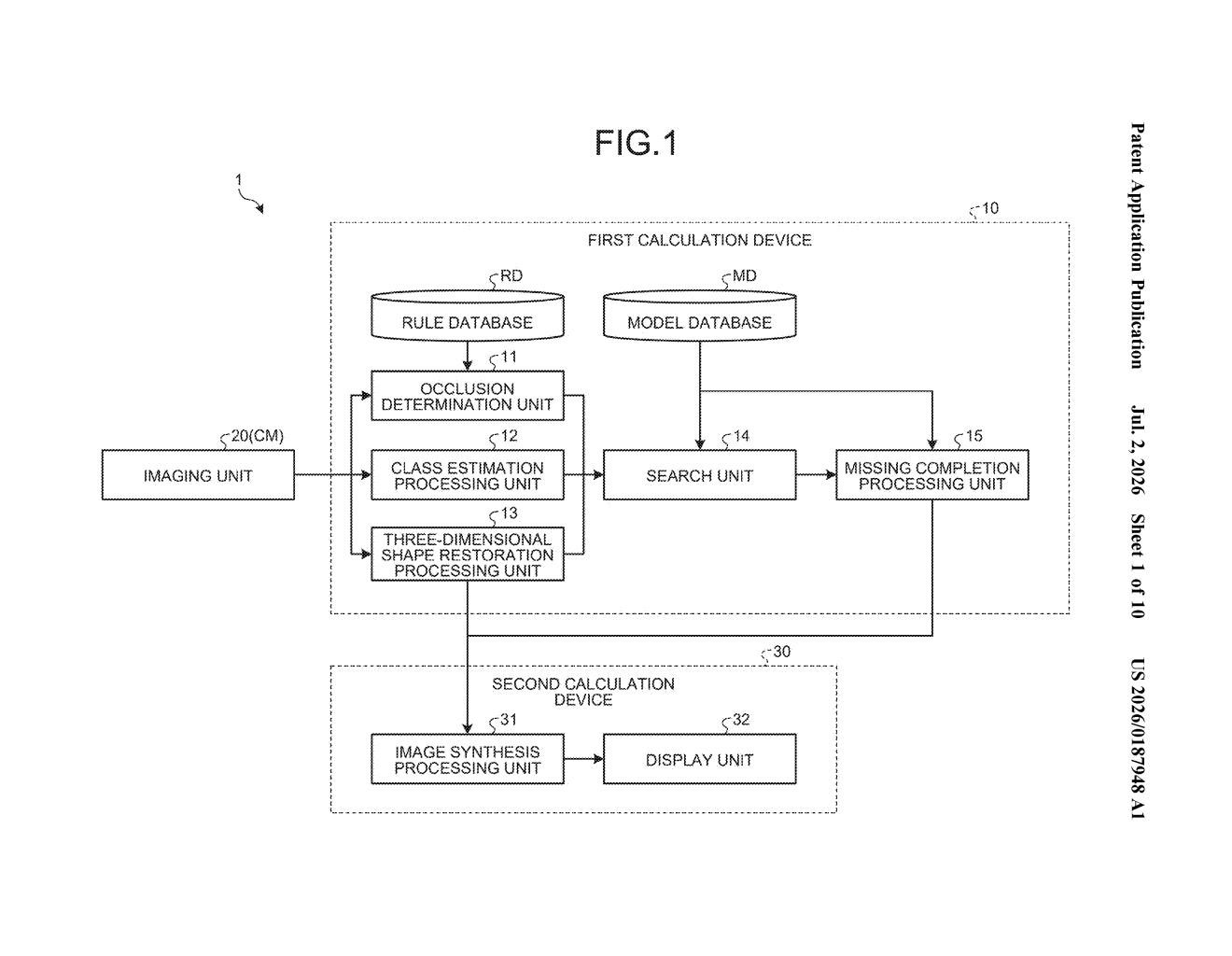
What Sony's hidden-shape completion system actually does
Imagine a security camera watching a parking lot. A pillar blocks part of a car from view, and the camera's software only sees a partial vehicle. For a human, filling in the rest is effortless. For a computer, it's genuinely hard.
Sony's patent describes a system designed to fix exactly that. It first figures out when something in a scene is being partially hidden by another object. Then it looks up what that object is supposed to look like in a built-in shape library, and uses those stored shapes to fill in the missing portion.
The result is that the system can treat a partially visible object as if it were fully visible, which matters a lot for any application that needs to understand the physical world, such as robots, augmented reality headsets, or camera-based sensors in a car.
How Sony matches blocked objects to a shape database
The patent centers on three components working together.
- Occlusion determination unit: This piece of the system decides whether a target object (called the "subject") is being partially blocked by something else in the scene. Occlusion is the technical term for one thing hiding another, like a lamppost in front of a person.
- Model database: A pre-built library of 3D or geometric shapes for known object types. Think of it as a reference book of what common objects look like from all angles.
- Missing completion processing unit: Once the system knows a subject is partially hidden, this component uses the matching shape from the database to reconstruct the invisible portion, essentially making an educated guess about the hidden geometry based on a known template.
The core idea is that if a system already knows what a chair, a car, or a person is supposed to look like, it can intelligently fill in the parts that are out of view rather than simply ignoring them or flagging them as unknown. This is sometimes called amodal completion in computer vision research, meaning the ability to perceive an object as a whole even when parts of it are not directly visible.
What this means for AR, robotics, and computer vision
For any system that needs to make decisions based on a camera feed, partial visibility is a constant problem. A robot arm that can only see half of an object might grip it wrong. An AR headset that doesn't know a chair leg exists behind a table might place a virtual object right through it. Sony's approach of using a shape library to fill in gaps could make these systems more reliable without requiring the camera to physically move to a better angle.
Sony has deep interests in both professional imaging hardware and PlayStation-adjacent spatial computing. A system like this would fit naturally into applications ranging from camera-equipped robots and drones to future mixed-reality devices, where understanding the real-world geometry of a scene is the foundation everything else is built on.
This is a solid, focused patent solving a well-known problem in computer vision. It doesn't reinvent the field, but a reliable shape-completion system baked into Sony's imaging or robotics pipeline would be genuinely useful. The approach of matching against a pre-defined database is practical rather than flashy, which is usually a good sign for something that might actually ship.
Get our take in your Top Stories
Liked this breakdown? Add Patentlyze as a preferred source on Google, and our plain-English take shows up more often in your Top Stories the next time Sony patent news breaks.
There are more where this came from
We read every patent application Big Tech publishes and send you the ones worth knowing. Plain English, free, every week.
Want this weekly breakdown for a company we don't cover? Patentlyze Pro →