
Apple Patents a System for Hiding Private Content in Shared Virtual Spaces
In a shared virtual room, you and a colleague might be looking at the same space, but that doesn't mean you should see the same things. Apple has filed a patent for a system that can show two people the same 3D environment while keeping each person's private content hidden from the other.
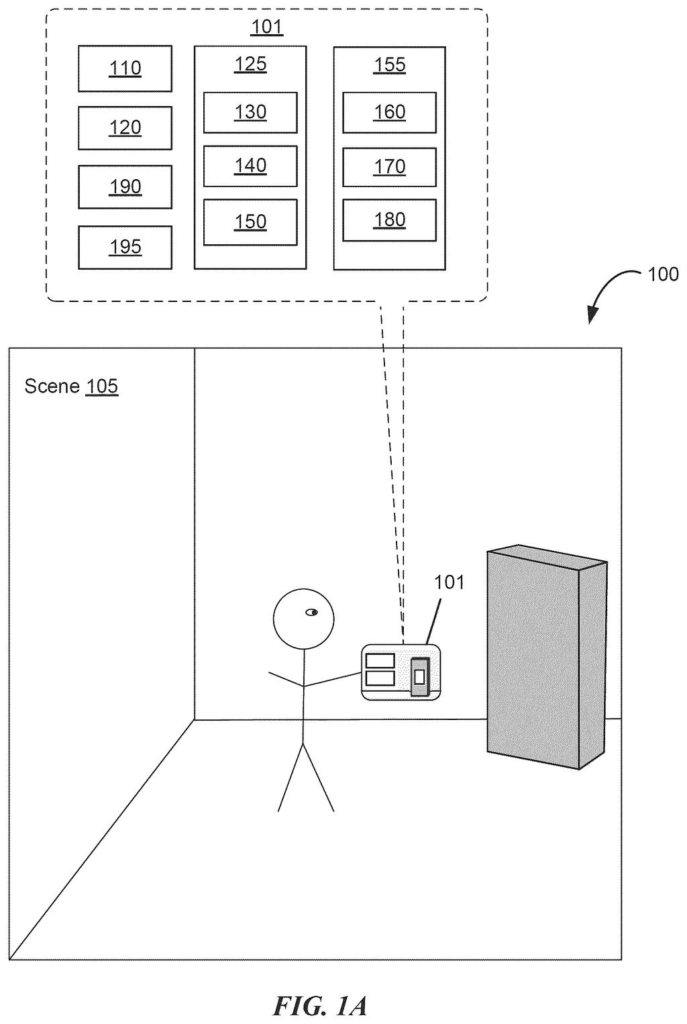
How Apple handles privacy in shared 3D meeting spaces
Two coworkers put on their headsets and step into the same virtual room. From either person's point of view, the room looks consistent: a document floating near your right hand appears, from your colleague's perspective, to be floating near your right hand too. The space is genuinely shared.
But here's the catch Apple's patent addresses: not everything in that space should be visible to everyone. If you open a private file, your colleague sees a placeholder in the right spot but not the actual contents. If you open something meant for both of you, you both see it in full. And if you're the one who triggered the content, you also see the controls to manage it.
It's a privacy layer built directly into the geometry of a shared virtual space, so the location of content is always transparent even when the contents are not.
… displaying a new virtual object corresponding to the respective content in the shared spatial arrangement in the three-dimensional environment …
Translation: New items appear inside the shared virtual room during the session.
How the shared spatial arrangement tracks what each person sees
The patent describes a shared spatial arrangement, a virtual environment in which two or more people participate in a real-time session and all see virtual objects in consistent positions relative to each other. If person A places something to their left, person B sees it to person A's left too. This is the baseline.
On top of that shared geometry, the system applies three distinct display rules based on the nature of the content:
- Private content: The person who does not own the content sees a visual indicator showing where the content is in the space, but the content itself is hidden. Think of it like a sealed envelope hovering in the room.
- Shared content: Both participants see the full content, in the same spatial position, simultaneously.
- Owner-initiated content: The person who opened or triggered the content sees it in full, plus controls (play, close, share, and so on) that the other participant does not see.
The system maintains a mirror-like spatial consistency: the relationship between your viewpoint and a piece of content, as seen from your perspective, matches the relationship between that same content and your representation (your avatar or presence) as seen from your partner's perspective. The geometry stays honest even when the content doesn't.
A computer system optionally displays a user interface object that reveals content based on whether the content is private or shared.
Translation: The system decides whether to show content based on its privacy level.
What this means for collaboration on Apple Vision Pro
For Apple Vision Pro or any future spatial computing platform, collaborative virtual spaces only work if people trust them. A shared 3D environment that can't respect privacy boundaries is a non-starter for anything professional, from reviewing confidential documents to handling medical information. This patent lays out a framework for making that kind of selective transparency possible inside a single shared session.
For everyday users, the practical upshot is that you could, in theory, join a shared virtual workspace with a colleague without worrying that every notification, file, or app you open becomes visible to them. The space stays shared; the content stays yours unless you choose otherwise.
Apple's 65th filing we've tracked in our AR glasses work watchlist since May builds on context-aware widgets and labels locked to objects.
Hiding private content in a shared space costs you the feeling that you're both living in the same room. Apple's answer is to show a placeholder where the hidden thing sits, so at least everyone knows something is there. That preserves a kind of honesty, but it replaces one awkwardness with another: now there's a floating mystery object near your colleague's hands that advertises exactly how much you're being excluded, which in close physical proximity may feel more pointed than a closed laptop ever did.
The trade is probably defensible on trust grounds, but the filing goes quiet on the harder cases. What happens when something switches from private to shared mid-conversation, or when three people in the same session each have different viewing rights to the same object?
Those are the moments that will define whether this feels like a coherent shared space or a series of small, pointed reminders that you're not quite fully there.
There are more where this came from
We read every patent application Big Tech publishes and send you the ones worth knowing. Plain English, free, every week.
The drawings
37 drawing sheets from US 2026/0288297 A1 · click any drawing to enlarge


Want this weekly breakdown for a company we don't cover? Patentlyze Pro →
Be the first to weigh in