
Samsung Patents a Way to Keep VR Headsets Tracking Hands During Fast Movements
Every VR headset user has experienced the frustration of their virtual hands disappearing or jumping when they move too quickly. Samsung's new patent takes a different angle on the problem, literally, by watching where your eyes go to guess where your hand is headed.
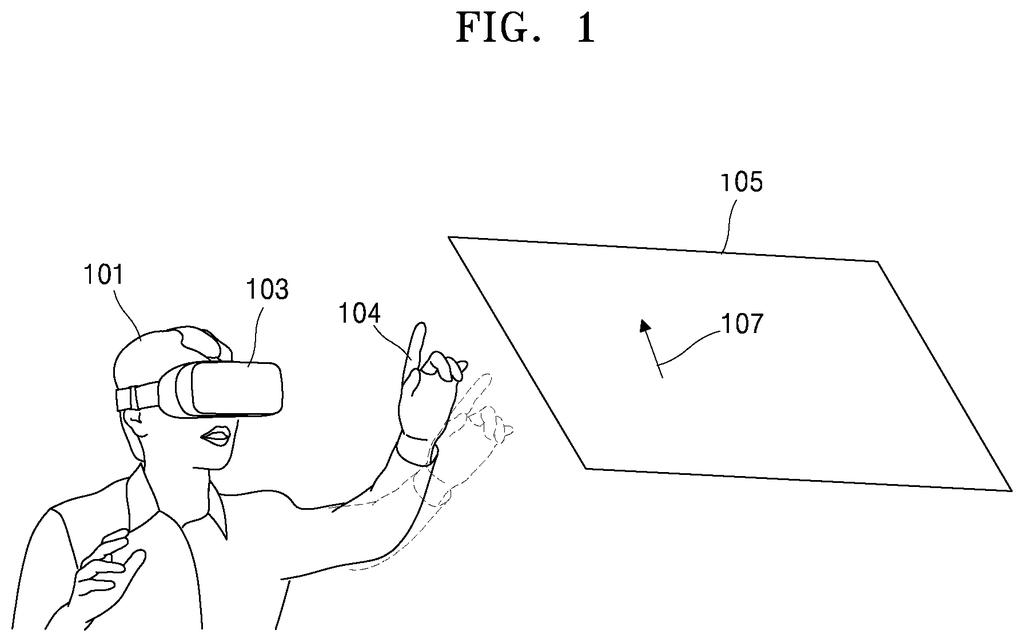
What Samsung's eye-gaze hand prediction actually does
A person waves their hand quickly in a VR headset, and suddenly the virtual hand freezes, stutters, or snaps to the wrong position. It ruins the experience and, in interactive apps, can mean missed selections or dropped virtual objects.
Samsung's patent addresses this by combining two things the headset already tracks: where your eyes are looking, and where your hand was a moment ago. The idea is that people tend to look at whatever their hand is about to do. So when your hand moves faster than the cameras can follow, the system uses your eye gaze direction as a clue to predict where the hand is going next.
Instead of losing the hand entirely or freezing it in place, the headset fills in the gap with a predicted path. You'd see smoother, more believable hand movement even during those quick, sudden gestures that used to throw the system off.
detecting, during at least one current frame associated with a field-of-view (FOV) of the HMD device, a disproportionate hand movement while the hand tracking of the hand is performed …
Translation: The system spots a sudden, blurry hand motion that threatens to break tracking.
How the headset predicts hand position from eye gaze
The patent describes a three-step process running inside a head-mounted display device (a VR or mixed-reality headset that sits on your face and tracks the world around you).
First, the headset detects a disproportionate hand movement: a motion that is faster or more abrupt than what the tracking system can reliably follow frame by frame. This is the trigger that kicks the new logic into gear.
Second, the system looks back at recent frames and checks the relationship between two data points: eye gaze location (where on the display the user's eyes were pointed) and hand location (where the hand was in the camera's field of view). It uses the pattern between those two over several past moments to predict a trajectory (the expected path the hand will take next).
Third, instead of dropping tracking or freezing the hand, the headset uses that predicted trajectory to continue showing hand movement that makes physical sense, bridging the gap until the cameras can lock on again.
- Detects a sudden or fast hand movement that breaks normal tracking
- Looks at the correlation between where the user was gazing and where the hand was in prior frames
- Predicts the hand's path forward and uses it to maintain smooth tracking
… predicting, when the disproportionate hand movement is detected, a trajectory of a movement of the hand, based on a correlation between an eye gaze location of the user and a hand location of the user in one or more previous frames …
Translation: It guesses where your hand went by looking at where your eyes were focused.
What this means for people using VR headsets daily
For anyone who uses a VR or mixed-reality headset for gaming, productivity, or creative work, the tracking gap during fast gestures is one of the most common complaints. When virtual hands stutter or jump, it breaks presence, the feeling that you are actually inside the experience. A fix that keeps hands plausible even during fast swipes or throws would make headsets feel more reliable in everyday use.
Samsung has been filing around head-mounted display interaction for a few years, and this patent sits squarely in the part of the problem that hardware improvements alone cannot easily fix. Better cameras help, but there will always be frames where a fast hand outruns the sensor. A prediction layer using eye gaze is a software-side answer to a physics-side problem.
Samsung's 51st filing we've tracked in our AR glasses race watch since May adds to a run that includes keeping VR context on app switches and AI video sharpening for see-through headsets.
The headset watches where your eyes go before your hand moves, learns that pattern, and uses it to predict where your hand is heading when the motion gets too fast or sudden to track cleanly. That prediction keeps your virtual hand visible and moving in a believable way instead of freezing or jumping.
You would notice this every time you reach quickly for something in a game, swipe through a menu, or gesture mid-conversation in a shared virtual space. Those are common moments, not corner cases, and right now they tend to be exactly when tracking breaks down most visibly.
The honest caveat is that the prediction leans on your personal pattern of looking at your own hands, and people who habitually look elsewhere while they move may get shakier results. For most users doing most things, though, this closes a gap that makes headsets feel unpolished in a way that is hard to ignore once you have experienced it.
There are more where this came from
We read every patent application Big Tech publishes and send you the ones worth knowing. Plain English, free, every week.
The drawings
7 drawing sheets from US 2026/0277323 A1 · click any drawing to enlarge


Want this weekly breakdown for a company we don't cover? Patentlyze Pro →