
Qualcomm Patents a Way to Track Your Workout Using Radio Signals Between Devices
Your phone, watch, and earbuds already exchange wireless signals constantly. Qualcomm wants those signals to double as a fitness tracker, measuring how your body moves through space.
How Qualcomm's radio-signal fitness tracking actually works
A runner crosses a finish line and their phone already knows their pace, distance, and heart rate. But what if the device didn't need a GPS chip or a heart-rate sensor to figure out what kind of exercise they were doing?
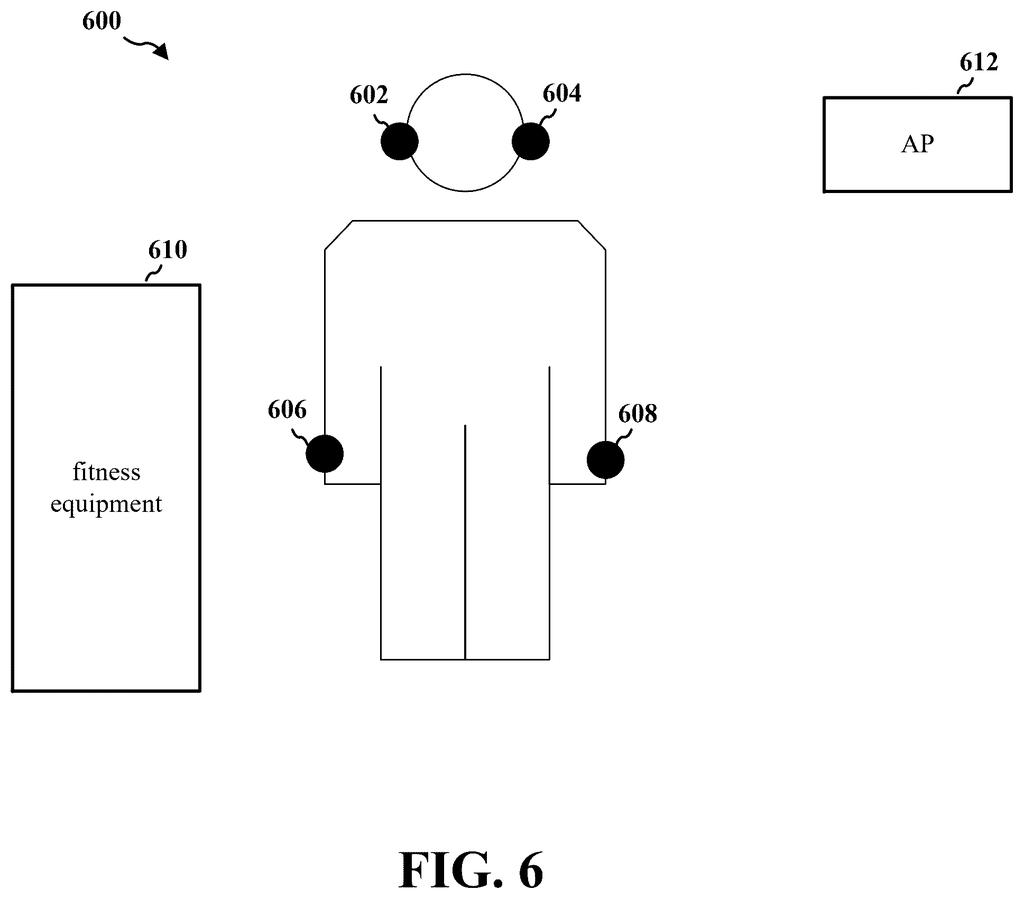
That's the direction this Qualcomm patent points. The idea is to use a set of wireless devices you already own, such as your phone, smartwatch, and earbuds, to constantly measure the distances and angles between each other. When you do a bicep curl, a squat, or a run, those distances shift in predictable ways. The devices pool that data and figure out your exercise state, meaning what activity you're doing and how your body is positioned.
The system can also use radio frequency sensing, which is a technique where wireless signals bounce off your body and come back with information about your movement. Together, these measurements give the devices a surprisingly detailed picture of what you're up to physically, without you having to strap on anything new.
… calculate an exercise state based on at least one of the set of relative ranges, the set of relative angles, or the set of RF sensing measurements.
Translation: Figure out how you are working out using wireless signals between your devices.
How the devices measure distance, angle, and RF sensing together
The patent describes a system where multiple user devices (phones, wearables, earbuds) work together as a coordinated sensing network. Each pair of devices in the set measures two things: how far apart they are from each other (relative range) and the angle between them (relative angle). Because these devices sit on different parts of your body, those measurements shift as you move.
On top of that, the system incorporates RF sensing (radio frequency sensing), where a device broadcasts a wireless signal that bounces off your body and returns. The way that reflected signal changes over time reveals motion patterns, which the device can interpret as specific movements.
One device in the set does the math, pulling in the range data, angle data, and RF reflections to calculate an exercise state. Think of an exercise state as a label: squatting, running, doing a push-up, or resting. The devices cooperate to reach that label rather than each one trying to figure it out alone.
The claim is deliberately broad. The system only needs at least one of those three data types (range, angle, or RF sensing) to produce a result, which gives it flexibility across different device combinations and environments.
A set of UEs may be configured to cooperate to calculate an exercise state of a user of the set of UEs.
Translation: Multiple gadgets can work together to track your physical exercise.
What this means for fitness tracking without extra sensors
For consumers, the appeal is a fitness-tracking system that doesn't require buying dedicated hardware. If the devices you already carry can triangulate your movements using their existing wireless radios, a separate sensor-laden chest strap or specialized tracker becomes less necessary.
For Qualcomm specifically, this fits a pattern of pushing the sensing capabilities of wireless chips beyond pure communication. If this kind of exercise detection can run on existing radio hardware, it becomes a feature that chip makers and device manufacturers can offer without adding physical components, which matters enormously for thin, low-cost, or battery-constrained devices.
Qualcomm's 61st filing in cell phone coverage we've tracked since May adds to a run that includes one adjusting zoom by eye distance and one skipping unchanged screen areas.
Getting this from patent to product requires several things to exist that don't yet: a shared language between your phone, watch, and earbuds for swapping distance and angle measurements in real time, plus the processing muscle to turn all that radio chatter into a coherent picture of what your body is doing. That coordination layer would have to be built from scratch across an entire device lineup.
The most realistic path runs through a single manufacturer controlling every device in the chain, all running compatible chips with custom software on top. Even then, the system still has to prove it can match what a basic motion sensor already does reliably and cheaply.
Qualcomm is planting a flag on the concept now, which is a sound legal strategy, but the engineering work between this document and a working feature is substantial. Whether that work ever gets done depends on whether the accuracy turns out to be worth the effort.
There are more where this came from
We read every patent application Big Tech publishes and send you the ones worth knowing. Plain English, free, every week.
The drawings
16 drawing sheets from US 2026/0304356 A1 · click any drawing to enlarge


Want this weekly breakdown for a company we don't cover? Patentlyze Pro →
Be the first to weigh in