
Samsung Patents a Foldable Phone Antenna That Stays Active When the Phone Is Shut
Folding phones face a stubborn physics problem: fold the device shut and the two metal housings can block or fight each other's radio signals. Samsung's new patent describes a way to turn that geometry into an advantage instead.
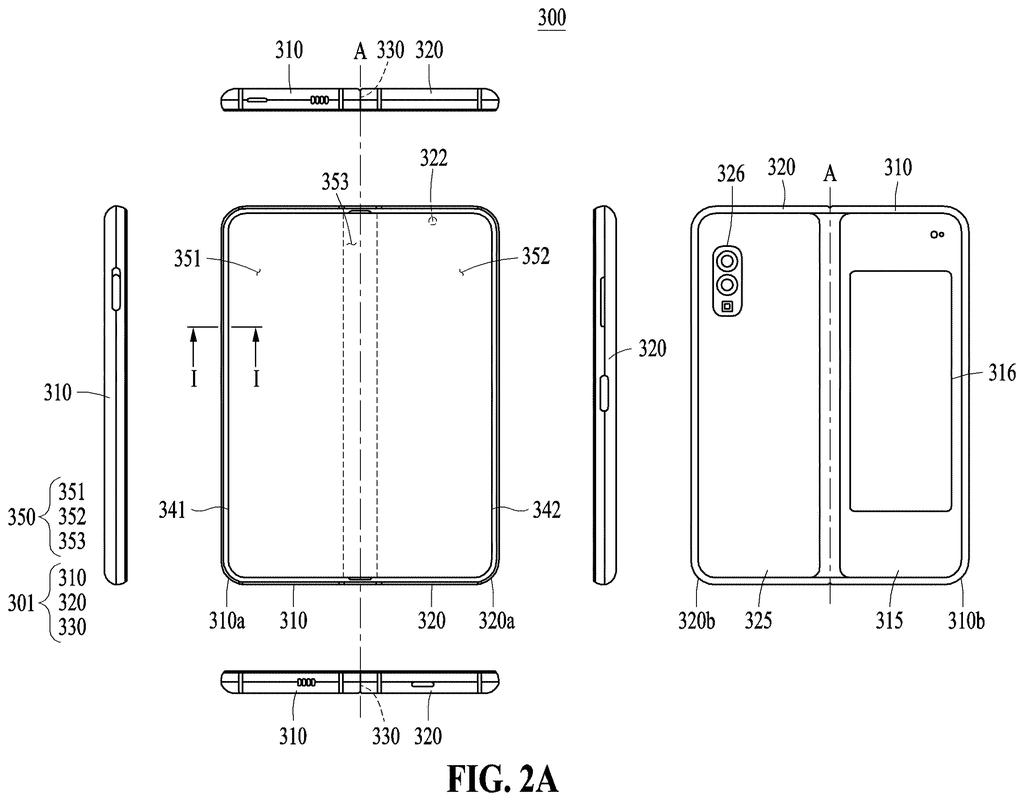
How Samsung keeps signal alive on a folded-shut Galaxy phone
Foldable phones carry two separate metal frames, and when you close one, those frames end up pressed face-to-face. That proximity can choke the phone's antenna, because the second housing acts almost like a shield. Samsung wants to fix that by making both halves cooperate.
The patent describes an antenna built into the edge of one housing and a thin gap (called a slot) cut into the edge of the other housing. When the phone is folded shut, those two structures line up across from each other. The trick is that electrical current flows through both of them in the same direction at the same time, so they reinforce each other rather than cancel each other out.
The result, in theory, is a phone that holds onto a stronger signal whether it's open on your desk or closed in your pocket, without any extra radio hardware.
… a hinge connecting the first housing and the second housing, and configured to operate between a folded state in which the first surface and the third surface face each other and an unfolded state in which the first surface and the third surface do not face each other …
Translation: The hinge lets the phone open and close like a book.
How the slot-and-antenna pair shares current across both halves
The patent describes an electronic device, clearly a foldable phone, with two housings joined by a hinge. Each housing has its own conductive frame (the metal side rails you can see on any modern phone), and the design introduces two complementary structures.
- Antenna: Positioned in the side surface of the first housing, it extends outward from a split unit (a small non-conductive gap in the metal frame that lets radio energy radiate rather than being absorbed by the metal).
- Slot: A narrow gap cut into the conductive frame of the second housing, extending from a ground section. In antenna engineering, a slot in a ground plane radiates radio waves in a predictable, controllable way.
The key behavior is in the folded state. The slot is positioned to sit directly across from the antenna. The patent specifies that current flows through both structures with the same phase (meaning the electrical waves in each element are synchronized, peaking and troughing together rather than fighting each other). That phase alignment turns the two elements into a cooperating pair rather than two competing radiators.
In antenna design, two in-phase elements that are close together can behave like a single, more effective antenna. The filing does not claim a specific frequency band, suggesting the approach is intended to apply broadly across cellular, Wi-Fi, or other radio bands.
… in a folded state, the slot is disposed to substantially face the antenna such that a current having the same phase can flow through the slot and the antenna …
Translation: When the phone is shut, the parts line up so the antenna keeps working.
What this means for foldable phone signal quality
Signal quality on foldables has been a real, documented weakness. The extra metal in a second housing creates interference that single-slab phones don't have to manage, and folding the phone shut can make it worse exactly when you least expect it (say, when the phone is pocketed and receiving a background notification or a call).
If this approach works as described, it could mean foldable Galaxy phones hold onto signal without requiring thicker frames, bigger antenna cutouts, or extra radio chips. That matters for users in weak-signal areas and for Samsung's ability to match the antenna performance of traditional candy-bar phones, which remain the benchmark most buyers are used to.
Samsung's 78th patent we've tracked since May in our foldable phone patents watchlist follows filings like the frame as antenna and the hinge cradling the screen.
Foldable phones drop calls and lose signal more than regular phones, and that problem has nothing to do with software or network coverage. It comes from the physical act of folding: the hinge that makes the device special also interrupts the antenna, and every foldable owner absorbs that cost whether they know it or not.
Samsung's patent addresses this by redesigning how the two halves work together when the phone is closed, so both sides contribute to receiving signal rather than one undermining the other. That is the right scale of response to a problem that affects the phone's most basic job.
A patent cannot prove the fix works in a weak-signal stairwell or a crowded stadium, and that proof only comes from a shipping product. But the problem is real, it matters to ordinary users, and the engineering here is clearly aimed at the root of it.
There are more where this came from
We read every patent application Big Tech publishes and send you the ones worth knowing. Plain English, free, every week.
The drawings
33 drawing sheets from US 2026/0291048 A1 · click any drawing to enlarge


Want this weekly breakdown for a company we don't cover? Patentlyze Pro →
Be the first to weigh in