
Samsung Patents a Camera Color Fix That Reads the Time of Day
Your phone's camera often guesses wrong about lighting, turning a warm golden-hour photo into something flat and off-color. Samsung is patenting a way to cut down on those mistakes by feeding the camera the time of day, not just what it sees in the frame.
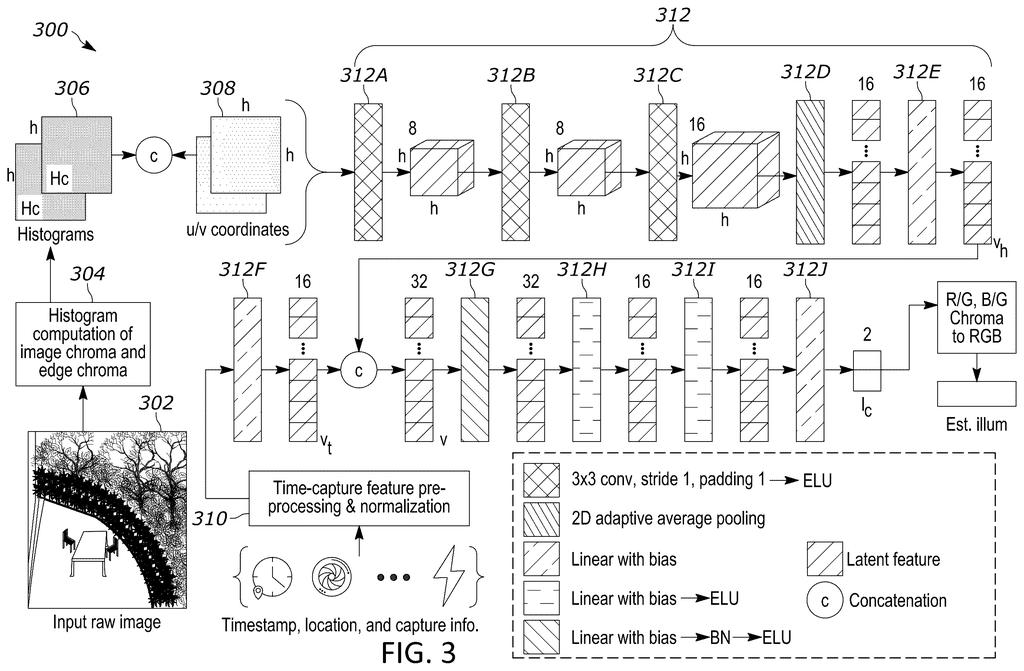
How Samsung's camera uses your clock to fix photo colors
Most phone cameras figure out the color of the light in a scene by analyzing the image itself, which can go badly wrong in unusual lighting like candles, fluorescent offices, or a sunset. The camera ends up making skin tones look green or a cozy indoor scene look cold and clinical.
Samsung's patent proposes adding a simple piece of information the camera already has access to: when the photo was taken. If your phone knows it's 6:45 p.m. in October, it can reasonably expect warm, low-angle sunlight rather than harsh noon sun. That time-of-day clue gets fed into a small AI model alongside the usual pixel color data, and together they drive a better color correction decision.
The result, if it works as described, is that the colors in your photos more closely match what your eyes actually saw in the moment, especially for those lighting situations that trip up cameras most often.
… generating a time-capture feature based on the metadata; generating a histogram feature based on the raw image; obtaining illuminant chromaticity based on a neural network by using the histogram feature and the time-capture feature as inputs; …
Translation: An AI looks at both the time the photo was taken and pixel data to figure out the lighting.
How the neural network combines time and pixel data
The patent describes a pipeline that runs inside a phone's camera before an image is processed into a final photo.
- Raw image capture: The camera captures a raw, unprocessed image (the data straight from the sensor, before any color adjustments).
- Metadata extraction: The system pulls the capture time from the image's metadata, then converts it into a time-capture feature, a numerical representation of when the shot was taken that the neural network can read.
- Histogram feature: Separately, the raw image is summarized as a color histogram (a statistical count of how many pixels fall into each color range), which describes the overall color distribution of the scene without storing every pixel.
- Neural network inference: Both inputs go into a neural network (a small AI model trained on many lighting examples), which outputs an estimate of the scene's illuminant chromaticity, the color temperature of the dominant light source.
- ISP adjustment: That estimate is converted to an RGB color value and used to tune the Image Signal Processor (the hardware chip that turns raw sensor data into a viewable photo), correcting the white balance before the image is saved.
The core idea is that time of day carries real predictive power about what kind of light is probably hitting a scene, and that prior knowledge should make the AI's color estimate more reliable.
… adjusting one or more white balance parameters of an Image Signal Processor (ISP) based on the RGB illuminant color.
Translation: The camera updates its color settings to make whites look natural based on that lighting calculation.
What this means for everyday phone photography
For most phone users, white balance is invisible until it fails, and then it's very visible: an orange cast at a dinner table, a sickly green under office lights, a blown-out blue sky. Cameras already apply white balance corrections automatically, but they can only work from what's in the frame, which leaves them guessing in edge cases.
Adding time as an input is a small architectural change that costs almost nothing at runtime, since the timestamp is already stored in every photo's metadata. Whether Samsung ships this in a future Galaxy camera pipeline isn't certain from the patent alone, but the approach points toward cameras that treat context, not just pixels, as a useful signal for image quality.
Samsung's 142nd filing we've tracked since May in our camera sensor push watchlist follows the voltage trick for less noise and the two-pass light capture chip.
The tradeoff here is straightforward: time of day is a weak prior, not a reliable measurement. Lighting at 7 p.m. varies enormously depending on whether you're indoors under fluorescent lights, outdoors in the rain, or standing in a candlelit restaurant. Leaning on the timestamp works well when the lighting matches typical outdoor conditions for that hour, and it could actually make things worse when the shooting environment deviates from those expectations.
That cost is probably acceptable. The neural network is also reading the actual pixel histogram, so the time feature is one input among two, not the whole story. It nudges the model toward a better starting guess rather than overriding what the sensor sees. That's a reasonable engineering balance.
Where this matters most is in the training data story. A time-aware model needs training images tagged by capture time across many geographic locations, seasons, and lighting environments. If Samsung's dataset skews toward particular regions or conditions, the improvement in some scenarios could come at the cost of accuracy in others. That's the quiet risk in an otherwise tidy idea.
There are more where this came from
We read every patent application Big Tech publishes and send you the ones worth knowing. Plain English, free, every week.
The drawings
13 drawing sheets from US 2026/0303986 A1 · click any drawing to enlarge


Want this weekly breakdown for a company we don't cover? Patentlyze Pro →
Be the first to weigh in