
Sony Patents a System That Keeps 3D Worksites Up to Date Without Rebuilding Them
When a remote expert is guiding someone through a repair job, the 3D map of the workspace goes stale the moment a part gets moved or replaced. Sony's patent describes a way to refresh only the pieces that have changed, rather than rebuilding the whole model from scratch.
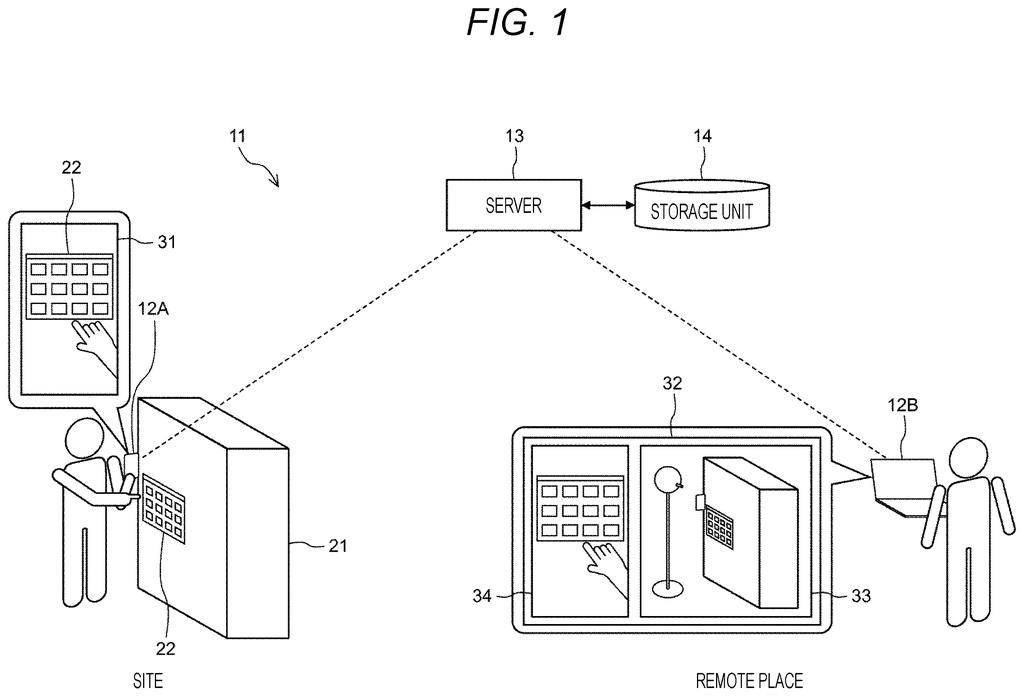
What Sony's partial 3D model update actually does
Ever tried to give someone directions, only to find the map you're both looking at is already out of date? That's a real headache in remote work, where an expert in one city is guiding a technician in another through a complicated repair or assembly job using a shared 3D model of the workspace.
Sony's patent describes a system that watches for changes. When a new photo or video frame of the work area comes in, the system compares it to the existing 3D model, figures out exactly which parts have shifted or changed, and updates only those sections. Everything else stays as it was.
The practical payoff is that the 3D picture the remote expert sees stays current without a full rebuild every time something moves. That makes it faster, cheaper on bandwidth, and far less disruptive to a live guidance session.
… compares the 3D data of the work target object already created with the update image to specify an update part of the 3D data of the work target object …
Translation: It compares the old digital model against new photos to pinpoint exactly what changed on the job site.
How the system finds and replaces only the changed parts
The patent describes three coordinated components working together.
- Update image acquisition unit: This grabs incoming images of the physical workspace, specifically selecting frames that are actually useful for refreshing the 3D model rather than processing every single frame captured.
- Update part specification unit: This is where the core logic lives. It compares the newly captured image against the existing 3D data (think of the 3D model as a precise digital twin of the physical scene) and identifies which portion of the model no longer matches reality. It pinpoints the update zone rather than flagging the whole scene.
- 3D data update unit: Once the changed region is identified, this component rewrites only that slice of the 3D model using the new image data, leaving untouched areas exactly as they were.
The system is designed for remote work support, where a distant expert sees a live or near-live 3D representation of what a local technician is working on. Keeping that representation accurate as the work progresses is what the patent is solving.
The patent does not specify a single capture technology, leaving room for standard cameras, depth sensors, or other imaging hardware to feed the pipeline.
What this means for remote repair and inspection work
Remote guidance for technical work, such as equipment repair, factory assembly, or medical-device maintenance, depends on the remote expert actually seeing what the on-site worker sees. If the shared 3D model lags or goes stale, the expert is essentially navigating blind, and mistakes become likely.
Incremental 3D updating is a more practical answer to that problem than full model rebuilds, which eat bandwidth and processing time. Sony's bet on remote work and spatial computing puts this filing in a broader context of making distance less of a barrier in skilled trades. If the approach works well in practice, it could meaningfully reduce the cost and error rate of remote technical support across industries that rely on it.
Sony's 562nd filing in our Sony coverage since May adds to a run that includes cleaning up sensor readings and one AI handling many visual tasks.
The problem this patent targets is real and underappreciated. Remote technical support, the kind where an engineer talks a field technician through fixing something complicated, breaks down fast when the shared view of the workspace drifts from reality. A stale 3D model is not a minor inconvenience; in high-stakes settings like aircraft maintenance or medical equipment, it is a genuine safety concern.
The approach here, identifying and replacing only the changed portions of a 3D model, is a reasonable match for that problem. Full model rebuilds are slow and interrupt the flow of a live guidance session, so partial updates make practical sense.
What the patent does not resolve is how the system handles ambiguous or partially obscured scenes, where the new image doesn't cleanly show the changed area. That is likely where real-world performance will vary. The concept is sound; the execution details will be what determines whether this helps in the field or stays theoretical.
There are more where this came from
We read every patent application Big Tech publishes and send you the ones worth knowing. Plain English, free, every week.
The drawings
17 drawing sheets from US 2026/0301326 A1 · click any drawing to enlarge


Want this weekly breakdown for a company we don't cover? Patentlyze Pro →
Be the first to weigh in