
Amazon Patents a Multi-Neural-Network System for Confirming Warehouse Bin Placement
Amazon is filing patents for warehouse systems that use not one but three neural networks working in concert to confirm — with high confidence — that a specific item actually landed in the right bin, not just near it.
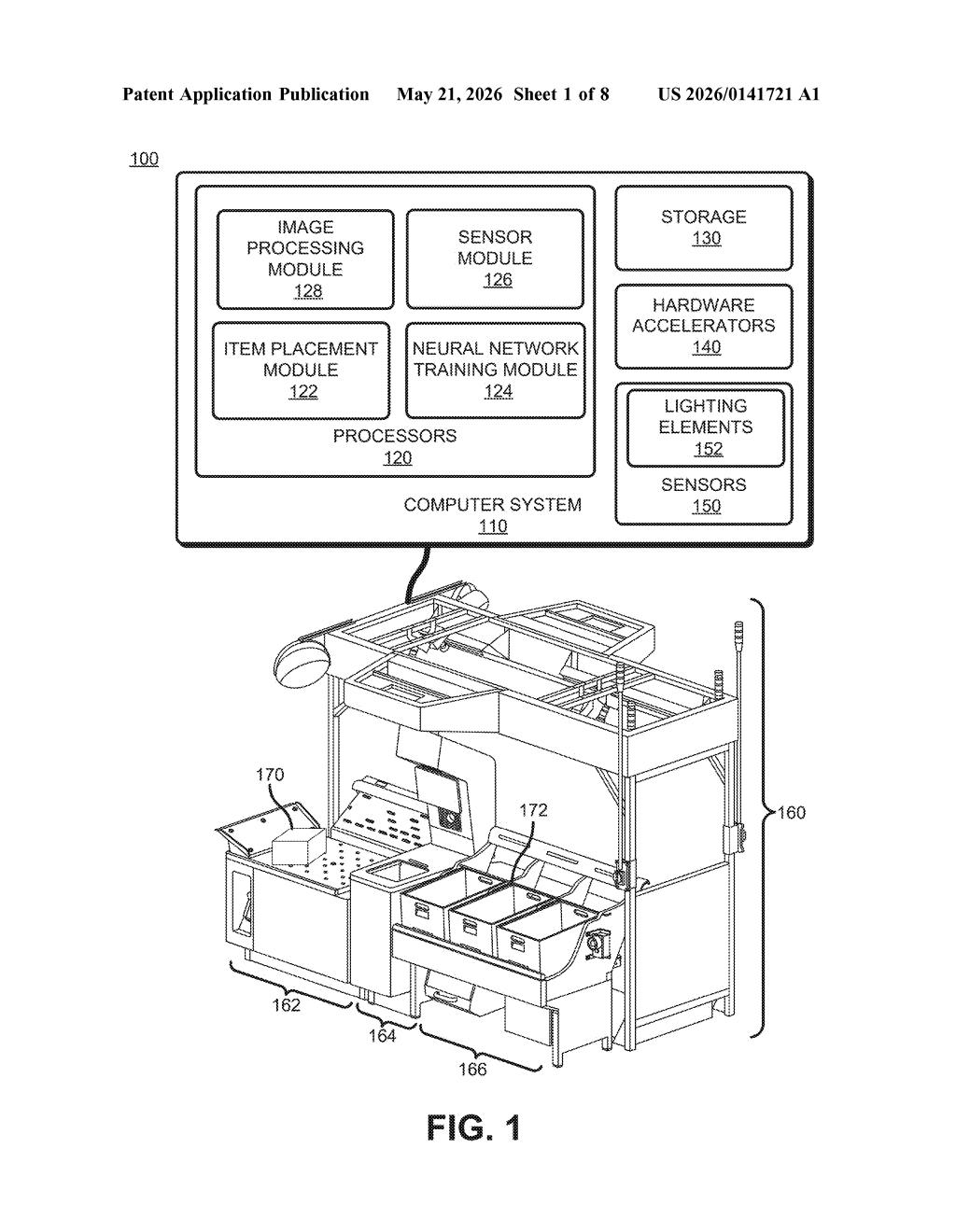
What Amazon's warehouse bin-tracking system actually does
Imagine a warehouse worker picking up a product and placing it into a storage tote. Sounds simple, but at Amazon's scale, tracking exactly which item went into which bin, thousands of times per hour, is a serious challenge. A misplaced item means a wrong order, an angry customer, and a costly return.
This patent describes a system that watches the placement process through cameras and runs the footage through three separate neural networks. One network identifies what the item is. A second watches the item moving toward the bin during a specific time window. A third double-checks that the item is actually inside the container after the fact. The system only records a confirmed placement when at least two of these checks agree.
Think of it like getting a receipt, a photo confirmation, and a second look from a supervisor — all happening automatically and in real time. The result is a data record linking each specific object to its specific storage location.
How three neural networks confirm an item reached its bin
The system uses a set of cameras positioned around storage containers (totes) in a fulfillment environment. Those camera feeds are split into distinct image sets captured at different time windows, and each set is fed to a different neural network with a different job.
- Neural Network 1 (Object ID): Receives images of the object already in the container and identifies it — essentially reading its visual fingerprint or barcode to assign it an identifier.
- Neural Network 2 (Motion Check): Receives images captured during the window when the item is moving toward the containers. It predicts whether the object entered a specific bin during that window.
- Neural Network 3 (Presence Verification): Reviews the full image set and independently checks whether the object is actually stored in the container.
The system then compares the outputs from Networks 2 and 3. Only when both outputs agree does the system generate a confirmation event — at which point it writes a data structure recording the association between that specific item and that specific container.
This multi-model cross-checking approach (running parallel predictions and requiring consensus) reduces the false-positive rate that a single model would produce. It also handles edge cases like an item hovering over a bin without being placed, or being picked up again immediately after.
What this means for Amazon's fulfillment accuracy
Inventory accuracy is one of the most expensive problems in fulfillment logistics. A single misplaced item can cascade into a wrong shipment, a customer service interaction, a return, and a re-pick — all adding cost. By building a system that uses redundant neural network checks rather than relying on a single model or a human scan, Amazon is engineering a higher-confidence placement record that could reduce those errors at scale.
For you as an Amazon customer, this is the behind-the-scenes infrastructure that makes same-day and next-day delivery reliable. For Amazon's operations teams, confirmed bin placement data is also the foundation for automated inventory management, robotic retrieval, and labor planning — so the accuracy of this one step ripples through the entire fulfillment chain.
This is exactly the kind of foundational, unsexy infrastructure patent that Amazon excels at and rarely gets credit for. It's not a flashy AI product — it's a reliability layer for a process that already exists, made meaningfully more accurate by stacking three specialized models instead of one. The multi-network consensus approach is a smart engineering choice, and it's the kind of thing that compounds quietly into a large operational advantage over time.
Get our take in your Top Stories
Liked this breakdown? Add Patentlyze as a preferred source on Google, and our plain-English take shows up more often in your Top Stories the next time Amazon patent news breaks.
There are more where this came from
We read every patent application Big Tech publishes and send you the ones worth knowing. Plain English, free, every week.
Want this weekly breakdown for a company we don't cover? Patentlyze Pro →