
Amazon Patents an AI Sorting Station That Confirms What Gets Packed
Amazon has filed a patent for an L-shaped workstation that uses two cameras and two separate AI models to track items as they move from one bin to another, automatically checking that the right object ended up in the right container before it ships.
How Amazon's camera station checks your package
Imagine you work at a warehouse sorting station, pulling items from one bin and placing them into shipping containers all day. The challenge isn't just speed; it's making sure the right item actually lands in the right box.
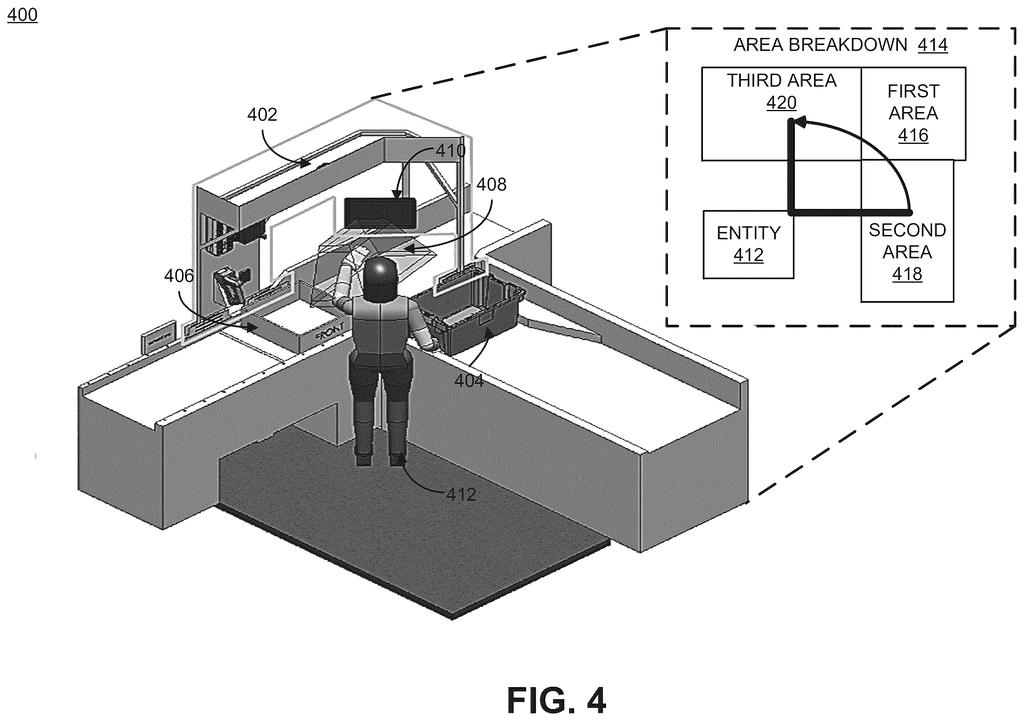
Amazon's newly filed patent describes a physical workstation shaped like an L. One section holds incoming items, one is the active work surface, and one holds the outgoing container. A camera watches the work surface and uses AI to read what the item is. A second camera watches the outgoing container and uses a different AI to check whether the item actually landed inside.
That two-step check is the core idea. The first AI identifies the object; the second AI verifies the placement. If the item is confirmed inside the right container, the system automatically sends that container on its way. No human needs to scan a barcode or press a button to confirm.
… detect, using a first machine learning model, an identifier corresponding to the object based, at least in part, on the one or more first images …
Translation: An AI model scans the item to figure out what it is as it moves through the workstation.
How two cameras and two AI models split the job
The station is built around an L-shaped layout of three rectangular zones. The center zone is the main work area. One arm of the L holds the source container (the bin items come from), and the other arm holds the destination container (the box items go into).
A first camera is mounted above the center work area. It generates images whenever an item enters that zone. A first machine learning model analyzes those images to identify the item, essentially reading whatever unique identifier (a barcode, a label, a product shape) the object carries.
A second camera sits above the destination arm of the L. It generates images of the outgoing container. A second machine learning model (a separate AI specialized for a different task) looks at those images and produces a binary verdict: is the item inside the container, or not?
- If the item is confirmed inside and the identifier matches expectations, the system triggers the container to move to its next destination automatically.
- If the item is not confirmed inside, the system can hold the container, flagging the discrepancy before anything ships.
Splitting the work across two models, each optimized for its own subtask (identification versus placement verification), is the central design choice here.
… generate using a second machine learning model, an indication of whether the object is placed inside the first container based, at least in part, on the second set of images …
Translation: A second AI check confirms the item successfully made it into the correct bin.
What this means for warehouse accuracy and speed
Mis-picks and mis-packs are a persistent and expensive problem in warehouse fulfillment. A worker might grab the right item but accidentally drop it outside the container, or scan the barcode before actually placing the item. Traditional barcode scanning systems catch the first mistake but not always the second. Amazon's design adds a visual confirmation layer that closes that gap.
Amazon has been filing around warehouse automation since at least 2016 For you as a customer, the downstream effect is fewer wrong items arriving at your door. For warehouse operators, an automated placement check could reduce the need for manual audit steps at the end of a shift, which is where a lot of error-correction labor currently sits.
Amazon's second filing in AI vision we've tracked since August builds on giving robots spatial memory with a new application for visual understanding.
The physical pieces here are a table, two cameras, and a computer, none of which need to be invented. The harder work is a pair of software models: one that recognizes what an item is, and one that confirms whether it landed in the right box.
That separation of jobs is the real design decision. Rather than asking one piece of software to do everything, the system splits recognition from verification, which makes each task easier to train and easier to fix when it goes wrong.
The shortest path from this filing to a working feature is unusually short. The equipment is ordinary, the software approach is clean, and Amazon already handles enough packages daily to train both models on real-world variety. The main open question the document leaves unanswered is how well the confirmation step handles oddly shaped items that are only partly visible once dropped into a container.
There are more where this came from
We read every patent application Big Tech publishes and send you the ones worth knowing. Plain English, free, every week.
The drawings
8 drawing sheets from US 2026/0295847 A1 · click any drawing to enlarge


Want this weekly breakdown for a company we don't cover? Patentlyze Pro →
Be the first to weigh in