
Qualcomm Patents a Way to Stop AI From Wasting Time on Still Video Frames
Most video is repetitive: a parked car stays parked, a background wall doesn't move, a sky just sits there. Qualcomm is patenting a system that teaches AI to notice when nothing changed and skip the redundant work.
What Qualcomm's token-merging trick actually does to video AI
A security camera stares at an empty hallway all night. Every second, it records a fresh frame, and if an AI is analyzing that footage, it's grinding through thousands of near-identical images, doing the same work over and over for no reason.
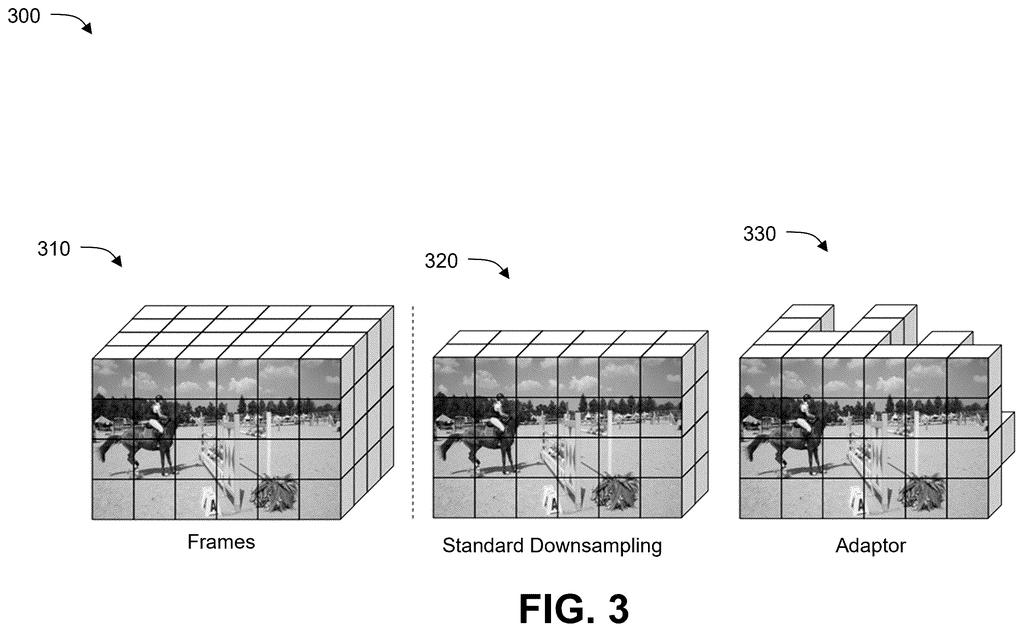
Qualcomm's patent describes a system that looks at two consecutive video frames, checks whether a given region of the image actually moved between them, and if it didn't, collapses both pieces of data into one. Instead of the AI handling two separate chunks representing the same static corner of a room, it handles one merged chunk. The AI then works from that compressed input to generate its output.
The practical upside is speed and efficiency. When an AI model processes video on your phone or a small device, the less redundant data it has to chew through, the faster and cheaper that processing gets. This is especially relevant for on-device AI that doesn't have the luxury of a powerful server doing the heavy lifting.
… determine, from the first token and the second token, a measurement of movement within the first region between the first frame and the second frame; based on the measurement of movement, compress the first token and the second token to generate a third token; …
Translation: The system calculates how much things moved between frames and squishes the data down if nothing changed much.
How the system measures motion and merges redundant frame data
AI models that work with video don't see video the way you do. They first chop each frame into a grid of small regions, then convert each region into a token (a compact numeric representation of what's in that patch). A one-minute video clip can produce an enormous number of tokens, and the AI has to process every single one.
Qualcomm's system adds a step before that processing begins. It takes the token for a particular region in frame one and the token for the same region in frame two, then computes a movement measurement between them. Think of it as asking: "Did anything in this patch of the image actually change?"
If the answer is "not much," the system merges the two tokens into a single third token. That merged token carries the information for both frames but only counts as one unit of work for the AI. The model then runs on the reduced token set instead of the full original.
The patent covers this as a general apparatus: a processor and memory that can apply this compression logic adaptively, meaning regions with motion keep their full detail while static regions get collapsed. The output of the model (generated content, a description, a classification, whatever the application needs) comes from that compressed representation.
What this means for AI video processing on phones and devices
On-device AI for video is expensive. Analyzing a video clip in real time on a smartphone or a pair of smart glasses requires processing huge amounts of data with limited battery and processing power. Any technique that cuts the volume of data an AI model has to handle without throwing away important information is directly useful in those constrained environments.
Qualcomm makes the chips that run inside many smartphones and edge devices, so a patent in this area fits squarely into their core business. If this technique works as described, it could let video AI applications (think real-time captioning, security analysis, or video search) run faster and consume less power on the hardware Qualcomm sells, which benefits you as the end user through longer battery life and quicker responses.
Qualcomm's 19th filing in the AI vision work we've tracked since May adds to a run that includes finding every object in a photo and shot reframing guidance.
Claim 1 is broad. It covers any apparatus that measures movement between two tokens from corresponding regions of two frames, then merges them based on that measurement. It doesn't restrict itself to a particular type of AI model, a specific application, or even a minimum motion threshold. That breadth matters: if granted, it could potentially reach a wide range of video preprocessing pipelines that follow this compress-then-process pattern.
Token reduction for transformers is an active area of research, which cuts both ways. The idea of merging redundant tokens isn't new in the academic literature, but Qualcomm's specific claim wraps it around the motion-measurement step applied to video regions specifically. Whether the USPTO finds that specific combination sufficiently distinct from prior art is the real open question.
For the average person, this patent is less about a dramatic product announcement and more about the quiet engineering work that makes AI on small devices practical. A chip that processes video AI more efficiently isn't exciting to announce, but it's the reason these features actually show up on phones instead of staying in data centers.
There are more where this came from
We read every patent application Big Tech publishes and send you the ones worth knowing. Plain English, free, every week.
The drawings
10 drawing sheets from US 2026/0289822 A1 · click any drawing to enlarge


Want this weekly breakdown for a company we don't cover? Patentlyze Pro →
Be the first to weigh in