
Amazon Patents an AI That Picks Its Own Personality Before It Answers You
Amazon has filed a patent for an AI system that doesn't just answer your question, it first decides what kind of personality should be answering it. That choice is made automatically, based on what you asked and the context around the request.
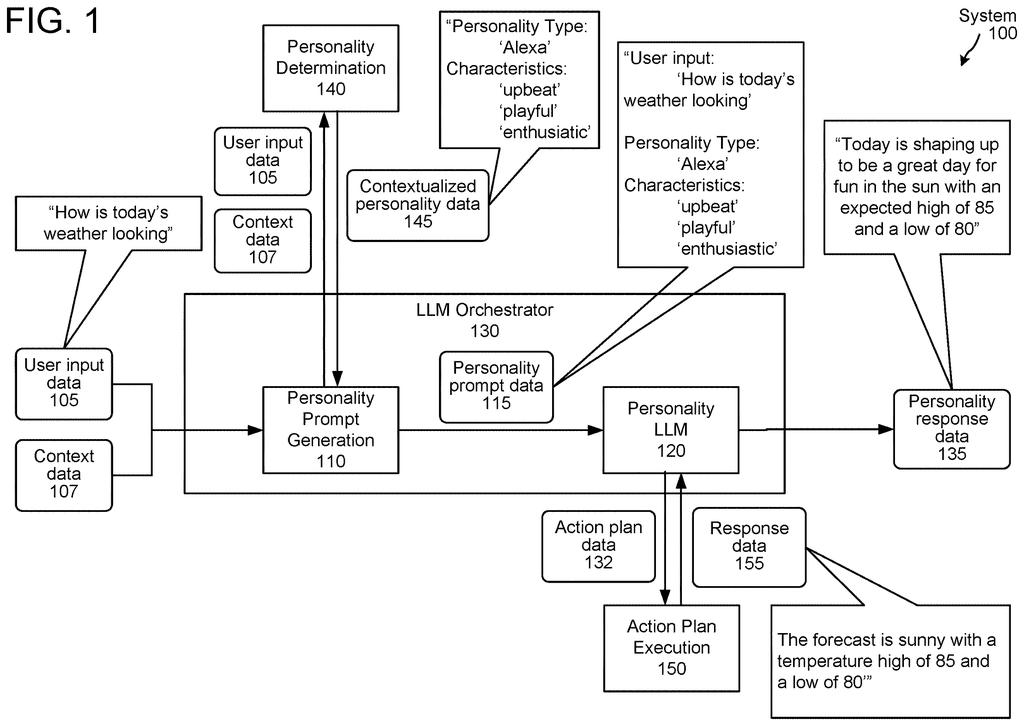
What Amazon's personality-switching AI actually does
Every time you ask Alexa something, it picks a voice and a tone to reply in. Right now, that tone is pretty consistent. This patent describes a system where the AI would pick a personality for each response based on what you asked and the situation you're in.
So a question about medication might get a calm, careful tone. A question about a party playlist might get something warmer and more playful. The system reads your input and surrounding context, decides which personality fits, then tells the underlying AI model to reply in that style.
The model can also pull in information from other parts of the system and then rewrite that information to match the chosen personality before it reaches you. You'd still get the right answer; it would just sound different depending on what you asked.
… determines a personality (e.g., including a personality type and/or personality characteristics) relevant to the user input. The system generates a prompt instructing a model to generate a response to the user input that corresponds to the personality.
Translation: The AI picks an appropriate persona and tells itself to reply using that specific tone.
How the system matches a prompt to a personality
The system works in a few steps. First, it takes in your question alongside context data (information about the situation, like time of day, the topic category, or prior conversation history). Using those two inputs, it identifies a personality, which can include a personality type and specific characteristics like tone, formality, or warmth.
Next, the system builds a prompt, a set of instructions fed to a language model, that tells the model not just what to answer but how to answer it, in line with the selected personality. The model then generates a response that matches both the content request and the personality profile.
The patent also describes a two-step flow where the model first generates a request to another component of the system, asking that component to fetch or compute the factual answer. Once that raw answer comes back, the model transforms it, rewriting the text so it fits the personality before the user ever sees it.
- Input stage: user question plus context data
- Personality selection: system picks a type and set of characteristics
- Prompt construction: instructions tell the model which personality to use
- Response generation and optional transformation: model rewrites factual output to match the personality
What this means for Alexa and AI assistants broadly
For you as a user, this would mean an AI assistant that feels more situationally aware. A medical query answered in a measured, precise tone and a casual trivia question answered with a lighter touch could both come from the same system, without any manual settings on your part.
For Amazon, Amazon's interest in conversational AI makes this kind of filing strategically significant. Alexa competes with Google Assistant, Apple's Siri, and a growing field of AI chatbots. Personality consistency (or the lack of it) is one of the sharpest complaints users raise about voice assistants. A system that adjusts tone to context, automatically, could make a measurable difference in how natural those interactions feel.
Amazon's tenth filing we've tracked since May ties together ideas from turning requests into commands and swapping robot skill modules in our Alexa learning to act watch list.
Claim 1 has been canceled, which strips the patent down to its narrower, dependent claims. In practical terms, that means the legal boundary now protects only specific variations of the system rather than the full process of reading a user message, choosing a personality, and instructing a model to respond in that voice.
That full loop, described plainly in the abstract, is where the real competitive weight would have lived. A granted Claim 1 covering it could have given Amazon grounds to challenge any product running a similar personality-selection process, no matter which model or personality types were involved.
Canceled claims can be refiled, so this is not a closed door. For now, the filing reveals where Amazon's product thinking is pointed on AI tone and personality, even if the legal protection around that thinking is currently narrow.
There are more where this came from
We read every patent application Big Tech publishes and send you the ones worth knowing. Plain English, free, every week.
The drawings
14 drawing sheets from US 2026/0289186 A1 · click any drawing to enlarge


Want this weekly breakdown for a company we don't cover? Patentlyze Pro →
Be the first to weigh in