
Google Patents a Video Camera System That Lets You Switch Off Face Recognition Entirely
Most smart cameras are always trying to figure out who's on screen. Google's new patent describes a system with a dedicated off switch that makes the camera stop trying to identify people entirely, and delete what it already collected.
What Google's person-recognition opt-out actually does
Home security cameras today typically run face recognition in the background whether you want it or not. Google's new patent describes a way to give you direct control over that: a simple setting in the camera's app that shuts the feature off completely.
When you flip that switch, the camera stops trying to match faces against any list of known people. It still detects that a person is there, but it never asks "who is that?" Any information already gathered about the person gets deleted. If the camera had flagged someone as an unrecognized stranger, that label and the associated data go away too.
The idea is that the choice to use recognition, or not, should be yours to make, and the system should follow through cleanly when you say no.
… providing a user interface comprising a selectable setting to control a recognition feature; receiving, via the user interface, a user input modifying the selectable setting to disable the recognition feature; detecting a person in the video data; and in response to receiving the user input, forgoing determining whether the detected person is a known person.
Translation: Users can turn off facial recognition so the camera stops checking if anyone in the video is a known person.
How the system handles data when recognition is disabled
The patent describes a camera pipeline with two distinct modes: recognition active and recognition disabled. In active mode, the system detects a person in the video frame, analyzes attributes (appearance, movement patterns, possibly biometric features), and compares that information against a database of known people to decide whether the person is familiar or a stranger.
When a user disables the recognition feature through a settings interface, the pipeline stops at detection. The device registers that a person is present but forgoes the identification step entirely. It does not attempt to classify the person as known or unknown.
The patent also specifies a data-hygiene step: any information that was stored during a prior recognition attempt (before the setting was changed) gets deleted. So disabling the feature is not just a pause; it includes a cleanup of what was already collected.
- Selectable setting exposed in the user interface
- Detection continues; identification stops
- Previously stored person-attribute data is deleted
- "Stranger" classifications are also removed
… determining based on at least some of the first information that the first person is not identifiable to the computing system, storing at least some of the first information, receiving a user classification of the first person as being a stranger, and deleting the stored first information.
Translation: If the system cannot identify someone, you can label them a stranger and permanently delete their stored data.
What this means for Nest camera users and privacy
For anyone with a Google Nest camera at their front door, this would mean you get a genuine off switch rather than a buried setting that might only hide results while the analysis keeps running. When you disable recognition, the patent says the system actually stops doing the work, not just stops showing you the output.
There is also a privacy-design argument here. Regulations in several U.S. states and the EU require that companies give people meaningful control over biometric data. Building an auditable, data-deleting opt-out directly into the device, rather than relying on a backend toggle, could help Google demonstrate compliance in a way that a server-side setting cannot.
Google's 55th filing we've tracked since May in our on-device AI privacy watchlist builds on earlier applications like picking ads without personal data and an AI that asks first, each limiting how much personal data the system sees.
If you have a house cleaner, a neighbor who drops by, or a guest you did not invite through an app, you probably do not want your security camera building a file on their face. This patent describes a setting that, when you mark someone as a stranger, wipes what the camera already collected about them rather than simply hiding it from your view.
That deletion step is what makes the control feel real. A lot of privacy settings stop you from seeing data without stopping the camera from keeping it, which means the protection is partial at best. Specifying that the stored information gets erased closes that gap, and most people would never notice the difference until something went wrong.
The patent covers the interface and the cleanup behavior, not any new way of recognizing faces. That is a narrow focus, but it solves a narrow and common problem: giving ordinary users a setting they can trust to actually mean something.
There are more where this came from
We read every patent application Big Tech publishes and send you the ones worth knowing. Plain English, free, every week.
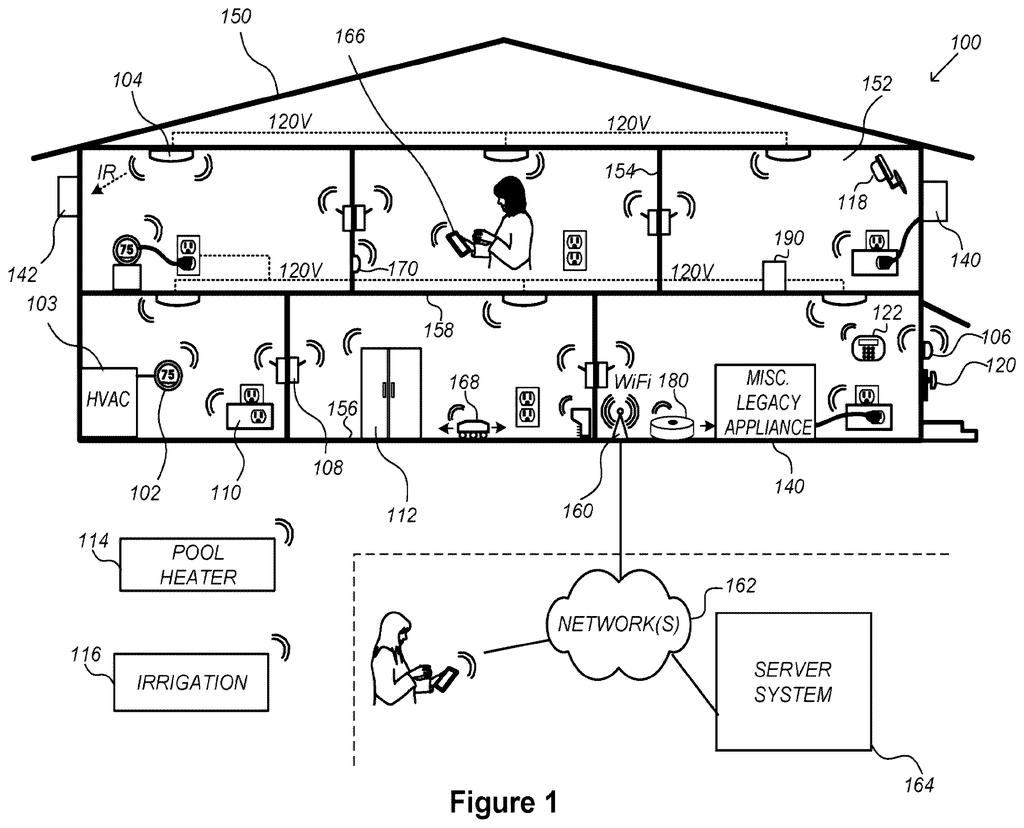
The drawings
21 drawing sheets from US 2026/0300438 A1 · click any drawing to enlarge


Want this weekly breakdown for a company we don't cover? Patentlyze Pro →
Be the first to weigh in