
Sony Patents a System That Keeps LiDAR Sensors and Cameras Precisely Aligned
Every time a self-driving car or robot misreads the world, misaligned sensors are often the culprit. Sony has patented a method to automatically keep a depth sensor and a camera in perfect agreement, without needing a special calibration target or a factory reset.
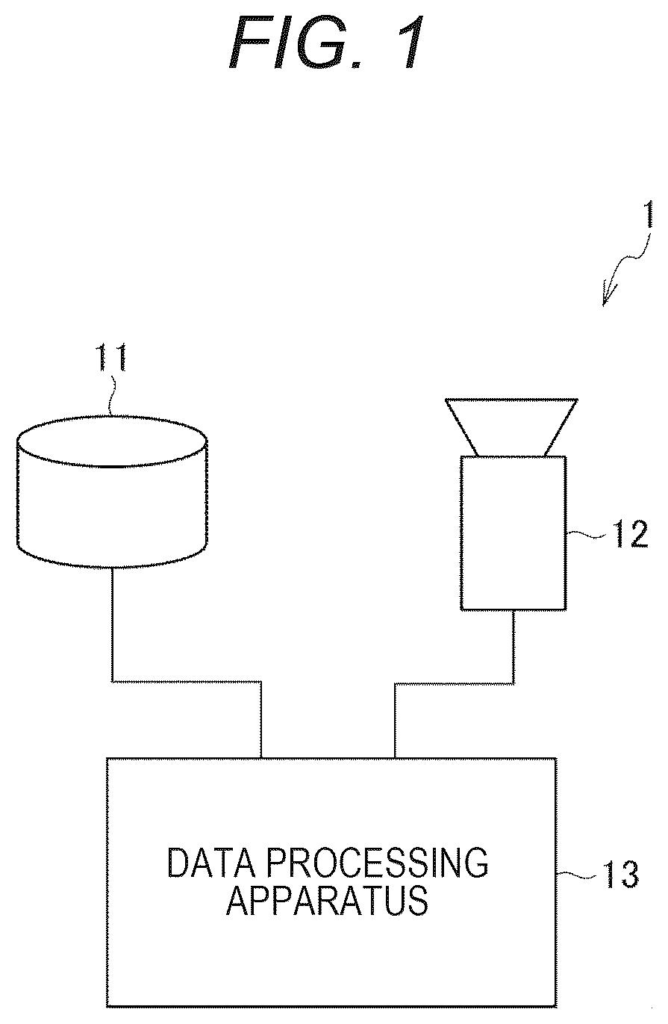
What Sony's LiDAR-camera sync system actually does
Ever tried to line up two photos of the same scene taken from slightly different angles? Even a few millimeters of difference makes objects appear in the wrong spot. That's essentially the problem robots and self-driving cars face when they combine a depth sensor (which measures distance using laser pulses) with a regular camera (which captures color and detail).
Sony's patent describes a system that automatically checks whether those two sensors are still seeing the same point in space and corrects any drift. It does this by firing a precise flash of measurement light, finding where that lit-up spot appears in the camera image, and comparing the two readings. If they disagree, the system adjusts its internal math until they match.
The practical upside is that you don't need a technician or a specially marked room to recalibrate the system. It can check and fix itself using whatever is already in front of the sensors, making it useful for devices that operate in the real world and can't be taken offline for maintenance.
… a correction unit that corrects a parameter indicating a positional relationship between the three-dimensional sensor and the camera on a basis of a position of the observation point in a predetermined three-dimensional coordinate system and a position of the corresponding point in a two-dimensional coordinate system of the camera image.
Translation: It automatically fixes the alignment between the camera and sensor by comparing their respective coordinate data.
How the calibration corrects the sensor gap
The patent centers on a three-part software system designed to keep a LiDAR sensor (a laser-based depth mapper) and a conventional camera geometrically synchronized.
First, an irradiation control unit fires the LiDAR's laser at a precise, controlled moment. This matters because LiDAR works by sending out pulses and measuring how long they take to bounce back, so timing determines exactly which point in space is being measured at any given instant.
Second, a corresponding point detection unit looks at the camera image captured at the same moment and finds the pixel that matches the 3D point the LiDAR just measured. This is the tricky part: the camera image is a flat 2D picture, while the LiDAR output is a cloud of 3D coordinates, and bridging those two representations requires careful geometry.
Third, a correction unit compares the LiDAR's reported 3D position with the camera's reported 2D pixel position and updates a set of parameters (essentially, a mathematical description of how the two sensors are physically positioned relative to each other). If the sensors have drifted out of alignment, those parameters are nudged back into agreement. The system can repeat this process continuously, meaning calibration becomes an ongoing background task rather than a one-time setup step.
… enable calibration of a positional relationship between a three-dimensional sensor and a camera to be easily executed with high accuracy.
Translation: The technology allows the system to calibrate how the camera and sensor line up with high precision.
What this means for robots, cars, and AR devices
Autonomous vehicles, delivery robots, industrial inspection systems, and some AR headsets all rely on fusing camera images with depth data. When the two sensors drift out of alignment, objects appear in the wrong position, and decisions made from that combined data can go wrong. Periodic manual recalibration is time-consuming and doesn't catch gradual drift between service visits.
A system that self-corrects in the background removes that maintenance burden and could make sensor-fusion hardware more reliable over the life of a product. For you as a consumer, that could eventually mean cars and robots that degrade less over time, or AR glasses that don't start misregistering virtual objects onto the real world after a few months of use.
Sony's 27th filing we've tracked since July in our self-driving sensing work follows the danger-sound picker and the faster LiDAR reader.
This patent is squarely in the infrastructure category: it solves a real engineering headache, but it won't translate directly into a user-facing feature anyone notices. The invention is software logic layered on top of hardware (LiDAR plus camera) that already has to exist before any of this is useful.
The shortest path to a product would be embedding this calibration logic into Sony's existing imaging or robotics platforms. Sony already makes camera sensors and has invested in automotive imaging, so the component base is there. What's less clear from the document is how the system handles fast-moving scenes or low-light conditions, where finding a reliable matching point between the LiDAR flash and the camera frame gets much harder.
That gap between a clean lab result and a messy real-world deployment is where most sensor-fusion patents stall. This one is technically sound, but the engineering distance from filing to shipping is still significant.
There are more where this came from
We read every patent application Big Tech publishes and send you the ones worth knowing. Plain English, free, every week.
The drawings
14 drawing sheets from US 2026/0299131 A1 · click any drawing to enlarge


Want this weekly breakdown for a company we don't cover? Patentlyze Pro →
Be the first to weigh in