
Sony Patents a Motorized Clip-On That Physically Presses Your Controller Buttons
Sony has patented a small device that snaps onto a game controller and presses its buttons using mechanical arms, no human hands required. It's essentially a robot that plays games for you, physically.
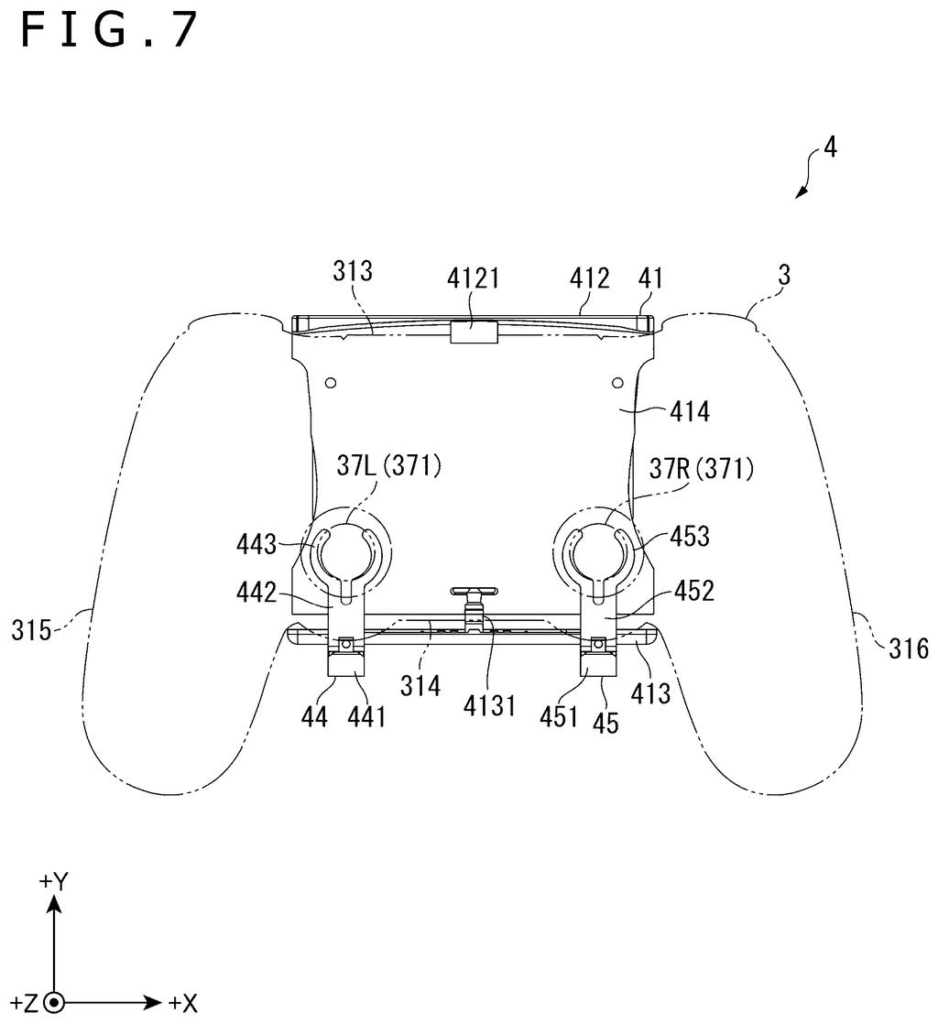
What Sony's button-pressing robot attachment actually does
You're mid-game and your hands are full, or your fingers just can't reach a button fast enough, or you have a physical condition that makes holding a controller painful. Sony's new patent describes a clip-on device designed to handle the button-pressing for you.
The device attaches to a standard game controller and extends small mechanical arms that hook onto the controller's buttons and triggers. Motors inside the attachment move those arms on command, pressing or releasing buttons just like a finger would, but mechanically.
The key idea is that nothing about the controller itself changes. You don't need a special controller, a modified console, or new firmware. You clip this device onto the controller you already own, and it takes over the physical inputs.
… an arm engaged with the operation member; a driving unit configured to move the arm; and an action control unit configured to cause the driving unit to drive the arm to operate the operation member.
Translation: A motorized arm physically moves and presses the controller buttons for you.
How the arms clamp on and trigger controller inputs
The patent describes what Sony calls an attachment device: a clip-on unit that physically operates a game controller's buttons and triggers using motorized arms.
Here's how the pieces fit together:
- Attachment unit: a frame or clamp that fastens the device to a standard controller without modifying it.
- Arms: mechanical limbs that reach over and engage directly with the controller's buttons, triggers, or other input surfaces.
- Driving units: small motors or actuators (the components that convert electrical signals into physical movement) that push and pull the arms on demand.
- Action control unit: the onboard logic that decides when and how to move each arm, essentially the device's brain.
The action control unit tells each driving unit when to fire, and the arm presses the corresponding button with physical force, the same way a thumb would. The claim doesn't specify what sends commands to the action control unit, so the trigger could be software, a secondary input, or an automated sequence.
Because the device operates at the physical layer rather than the software layer, it doesn't need to talk to the game or the console directly. It just presses buttons.
… arms ( 44 , 45 ) that engage with the operation members, driving units ( 42 , 43 ) that move the arms, and an action control unit ( 493 ) that causes the driving units to drive the arms to operate the operation members.
Translation: Motors push specific mechanical arms to interact directly with the gamepad controls.
What this means for gaming accessibility and automation
The most immediate use case is accessibility. Players with limited hand mobility, reduced grip strength, or conditions like arthritis often struggle with controllers designed around two-handed, ten-finger operation. A clip-on device that handles some or all of the physical inputs could open games to people who've been locked out by the hardware design.
There's also an obvious automation angle: a device like this could replay repetitive in-game actions (grinding, farming, timed sequences) without requiring software exploits or modified hardware. Whether that's a feature or a problem depends entirely on how Sony decides to position it. The trade between accessibility tool and automation shortcut will be the real design question if this ever ships.
Sony's 36th filing in the robotics work we cover since May builds on ideas like keeping sensors in alignment and mapping robot photo angles.
Mechanical arms pressing physical buttons will always be slower than a direct signal, and that delay is the central cost of this design. For someone who needs help holding a controller steady, a fraction of a second does not matter much. For anything fast-paced, it could make the device feel broken.
The physical approach also skips any need for permission from game makers or platform software, which means it works broadly without negotiation. That compatibility is real, but it comes with noise, wear on the controller's surface, and moving parts that can fail.
Whether that trade reads as worth it depends almost entirely on who uses it. As a tool for people with limited hand mobility, the tradeoffs are reasonable. As a general-purpose solution, the mechanical limits would frustrate more people than they help.
There are more where this came from
We read every patent application Big Tech publishes and send you the ones worth knowing. Plain English, free, every week.
The drawings
18 drawing sheets from US 2026/0295446 A1 · click any drawing to enlarge


Want this weekly breakdown for a company we don't cover? Patentlyze Pro →
Be the first to weigh in