
Sony Patents a System That Reads Your Gaming Taste and Adjusts the Game Around You
Sony is exploring a system that watches how interested you are in a game moment and then reshapes the audio, video, and gameplay settings to better match what you seem to like.
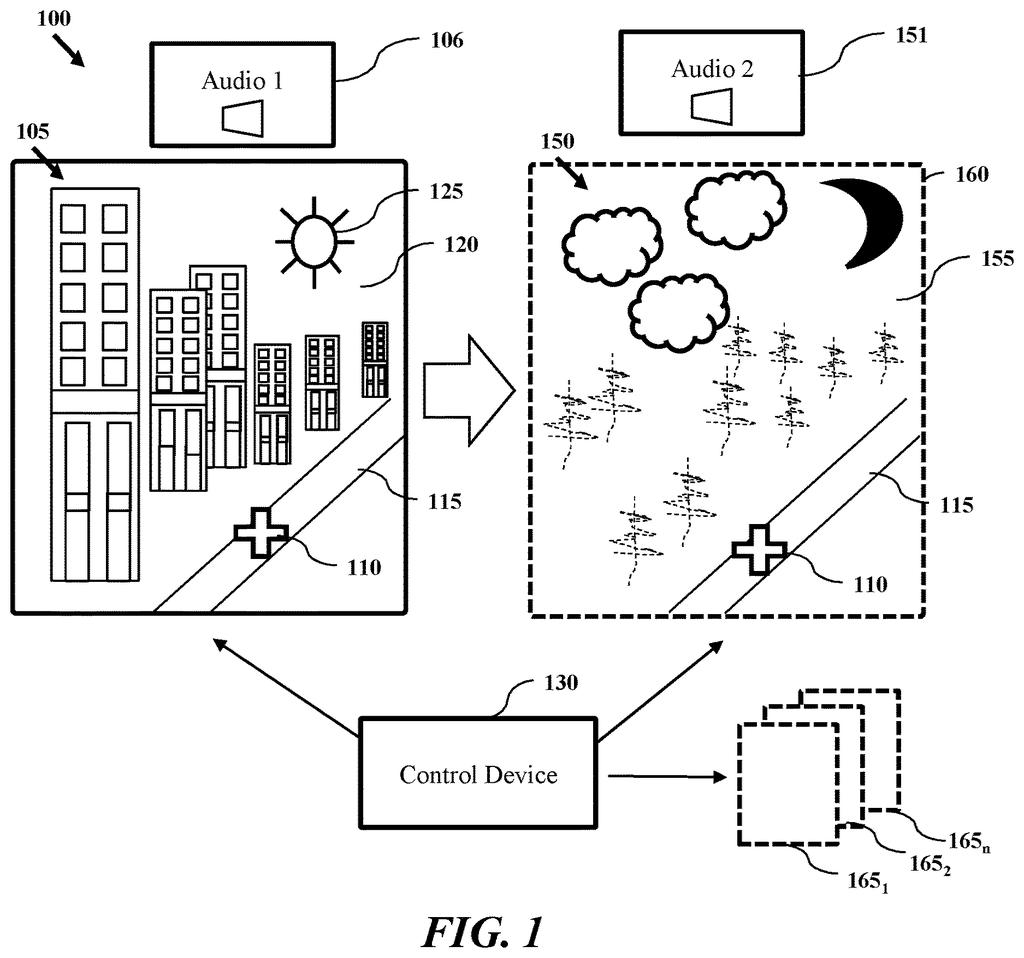
What Sony's per-player game tuning actually does
A player loads up a game and, without touching any settings menu, the game starts paying attention. Are they lingering on certain visual styles? Responding more to particular music? Engaging more with specific types of challenges? Sony's patent describes a system that tracks all of that, in real time, and builds a profile around each player's tastes.
That profile then feeds back into the game itself. The system can change what the game looks like, what it sounds like, and how it plays, all based on what it has learned about you specifically. It is not a static difficulty slider; it is a continuous loop where the game observes, learns, and adjusts.
Think of it like a streaming service that learns you prefer thriller films over comedies, except instead of choosing the next show, it reshapes the show you are already watching. The system applies separately to visual style, audio style, and the gameplay style, treating them as three independent dimensions of your preference.
generating a plurality of game scenarios for an electronic game by varying parameters of audio style, video style, or gameplay style; collecting game behavior data for the plurality of game scenarios; processing the game behavior data to create or update a game-specific player profile; and controlling output for a later game event using the game-specific player profile.
Translation: The system changes music, graphics, and gameplay to learn what you like and alters future game moments to match.
How the kernel function scores your in-session reactions
The patent describes a pipeline with several stages. First, the system generates game scenarios that vary across three axes: visual configuration (lighting, color grading, art style), audio configuration (music type, sound design), and gameplay configuration (pacing, challenge level, rule variations).
The system then outputs those scenarios and watches for user interest. Interest is detected using something called a kernel function, a mathematical tool that measures similarity and weight across data points. Here it has a separate component (a "kernel element") dedicated to each of the three style axes. That means visual interest, audio interest, and gameplay interest are tracked independently, not lumped together.
The outputs feed into a user profile that is updated continuously. Over time, the profile becomes a richer picture of what that player responds to. The system then uses that profile to control the game state, meaning it can change what the player sees, hears, and experiences without the player doing anything manually.
The core loop looks like this:
- Generate scenario variants across visual, audio, and gameplay axes
- Detect how interested the player is in each variant
- Update the user profile with those interest signals
- Adjust the live game state to favor what the profile predicts the player will enjoy
User interest for the at least one game scenario may be detected using a kernel function including a kernel element for each of a visual style, an audio style and a gameplay style.
Translation: It mathematically measures your interest in different visual, sound, and gameplay styles.
What this means for personalized PlayStation sessions
If this system made it into a real product, it would shift game personalization from something you configure once in a settings menu to something that happens automatically and continuously. That has real appeal for players who never touch accessibility or difficulty options, and for developers who want games to feel well-tuned to a wider range of people.
Sony's track record in game-personalization patents suggests this is an area of sustained interest, not a one-off idea. The practical limit here is instrumentation: the system needs some signal for "user interest," and the patent does not lock down what that signal is, whether it is controller input patterns, eye tracking, session length, or something else. That gap between the described system and a shippable feature is real, and what Sony ships, if anything, may look quite different.
Sony's 19th filing in our AI simulation coverage since May follows adaptive enemy behavior and asset compression for cloud play among the applications we've tracked.
Claim 1 is canceled, which is the first and most important thing to note. The claims section is entirely canceled (claims 1 through 20), meaning this publication has, at this stage, no enforceable scope to analyze. That is either a refiling in progress or a procedural artifact, but it makes the breadth question moot for now.
Taking the specification at face value, the described system is genuinely interesting architecturally. Treating visual, audio, and gameplay preference as separate kernel elements is a more principled approach than a single aggregate score, and it would, in theory, allow the system to tune one axis without blowing up the others.
The practical story is harder to tell. Detecting "user interest" continuously without being intrusive, slow, or wrong is an enormous engineering problem that a patent description does not have to solve. Sony is staking out the idea; whether the implementation ever closes that gap is a different question entirely.
There are more where this came from
We read every patent application Big Tech publishes and send you the ones worth knowing. Plain English, free, every week.
The drawings
6 drawing sheets from US 2026/0295411 A1 · click any drawing to enlarge


Want this weekly breakdown for a company we don't cover? Patentlyze Pro →
Be the first to weigh in