
Amazon Patents an AI System That Gives Robots a 3D Picture of Every Object They Pack
Before a robot arm reaches for a box, it needs to know exactly how big and oddly shaped the thing inside actually is. Amazon has filed a patent for an AI system that builds a full 3D picture of any object just by looking at it from a few camera angles.
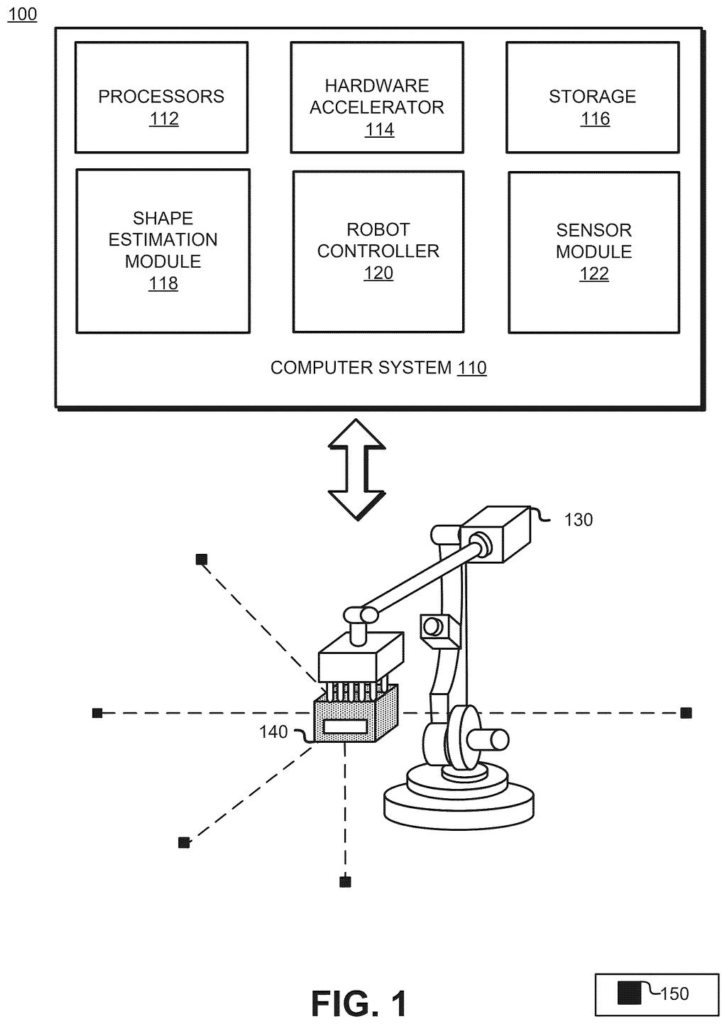
How Amazon's robots figure out an object's shape before packing it
A warehouse robot hovers over a conveyor belt, staring at a weirdly shaped product it has never seen before. Without a reliable sense of the object's true size and contours, it's essentially guessing where to grab and how to fit it into a box. That kind of guessing leads to crushed packages, failed picks, and slowdowns on the line.
Amazon's patent describes a system that builds a 3D model of an object by combining several 2D camera photos taken from different angles. An AI processes all those flat images together, figures out what each part of the object looks like in three dimensions, and then uses that shape to decide exactly where in a container the item should go.
The practical upshot for you is that a robot handling your order has a much clearer picture of what it's working with, which should mean fewer damaged items and tighter, more efficient packing.
… mapping, using the one or more neural networks, each voxel in a voxel grid to different portions of the plurality of 2D images based, at least in part, on one or more parameters from the plurality of cameras …
Translation: The AI connects 3D grid points to flat camera views using camera settings.
How the neural network maps flat photos into a 3D object grid
The system starts by surrounding an object with multiple cameras that each snap an image from a different perspective. A neural network scans all of these 2D photos simultaneously and picks out visual features (edges, textures, color boundaries) across every image.
Next, the AI lays an invisible 3D grid called a voxel grid over the space where the object sits. A voxel is essentially a tiny cube in 3D space, the volumetric equivalent of a pixel. For each voxel in that grid, the system projects back into the flat 2D images to find the corresponding pixels, using the known physical positions and orientations of the cameras to do that math accurately.
The network then combines the visual features from those corresponding image regions to produce a richer set of features for each voxel. Finally, it runs a classification step: is this voxel inside the object or outside it? The result is a filled-in 3D shape.
- The reconstructed shape tells the robot which spaces inside a shipping container are actually open.
- The robot can then identify the best spot to place the object so it fits without wasted space or unsafe stacking.
- The whole process is driven by the neural network end-to-end, meaning it can generalize to objects it has never encountered before.
The systems may use machine learning models (e.g., neural networks) to project from a voxel in a set of voxels to distinct portions within the images.
Translation: Neural networks link 3D space blocks directly to specific areas in the photos.
What smarter robot packing means for warehouse speed and your orders
Warehouse robots today often rely on pre-measured product catalogs or simple depth sensors, both of which break down with unusual or unlisted items. A system that can reconstruct a 3D shape on the fly, from ordinary cameras, removes that dependency and makes the robot far more adaptable to whatever shows up on the belt.
Amazon keeps filing on warehouse robotics and autonomous picking, so this fits a broader push to automate more of the fulfillment process. For shoppers, the near-term impact is potentially better packaging (less empty space, fewer items rattling around), and for Amazon, it means faster throughput without hiring more human packers to handle edge cases.
Amazon's second AI simulation filing we've tracked since September follows a photo to 3D model patent.
Building a full three-dimensional picture of every object moving through a warehouse costs processing time, and the patent says nothing about how much. That silence leaves the central question unanswered: does the system keep pace with a fast-moving conveyor, or does it become the bottleneck?
The approach also depends on cameras getting a clear look at each item from several angles. A box tilted against another, or a gap in coverage, produces an incomplete picture, and an incomplete picture can cause the same mishandled grab the whole system was designed to prevent.
The underlying trade is still reasonable: teaching a robot to measure each object as it arrives is far more flexible than pre-loading the dimensions of every product a warehouse might ever handle. Whether the time cost makes that flexibility practical at real fulfillment scale is the engineering burden this patent passes forward.
There are more where this came from
We read every patent application Big Tech publishes and send you the ones worth knowing. Plain English, free, every week.
The drawings
8 drawing sheets from US 2026/0284891 A1 · click any drawing to enlarge


Want this weekly breakdown for a company we don't cover? Patentlyze Pro →
Be the first to weigh in