
Microsoft Patents an Automated Way to Catch Bugs in Security-Scanning Code
Security tools that scan code for flaws can themselves have flaws. Microsoft has filed a patent for a system that automatically stress-tests those scanners before they ever touch real software.
What Microsoft's tool-testing tool actually does
Every time a developer ships code, automated scanners run through it looking for dangerous mistakes, like instructions that could crash a program or expose private data. Those scanners are supposed to be the last line of defense. But what happens when the scanner itself has a bug?
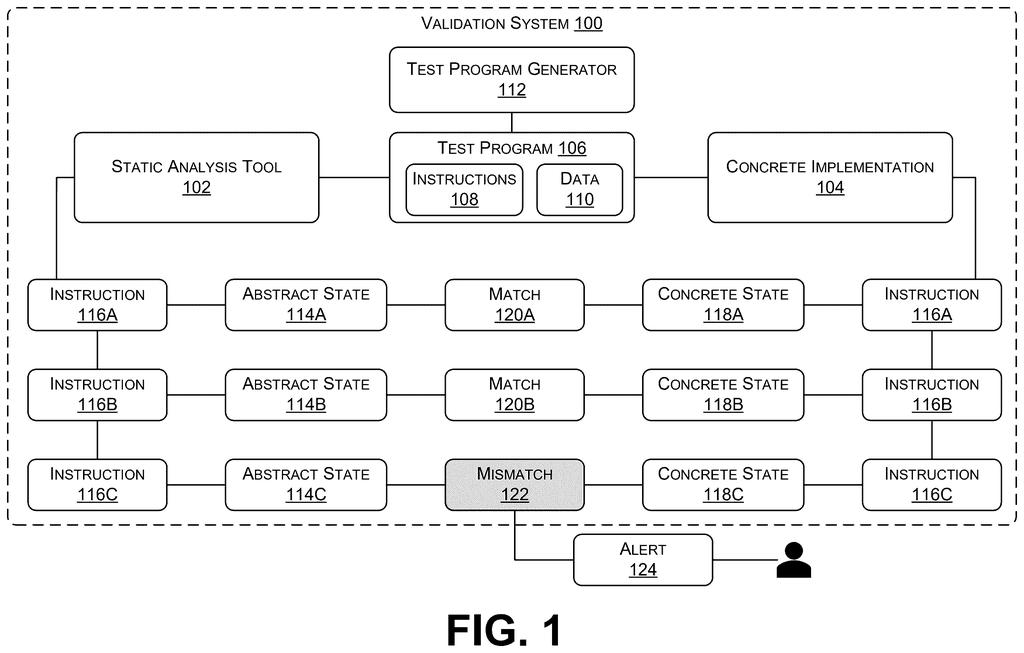
Microsoft's patent describes a system that generates test programs specifically designed to probe the scanner rather than the code it normally reviews. The system creates little instruction sequences that are either clearly safe or clearly unsafe, then watches how the scanner classifies them. If the scanner calls an unsafe program "safe" and then the system runs it and something bad actually happens, that mismatch is flagged as a bug in the scanner itself.
Think of it as a quality-control inspector who tests the inspectors. Instead of a human manually writing tricky edge-case tests, the whole process is automated, which means it can generate far more scenarios than any team could write by hand.
generating, by an automated tool, a test program comprising a sequence of instructions wherein: the test program operates on an aspect of the static analysis tool; and the sequence of instructions performs an operation that is one of a safe operation or an unsafe operation; …
Translation: An automated system builds a test script made of instructions meant to check how a security scanner behaves.
How the test generator catches a flawed safety verdict
The patent describes a three-stage loop. First, an automated generator creates a test program made up of a sequence of instructions. Each instruction performs an operation that the patent categorizes as either safe (allowed, expected behavior) or unsafe (something that should never happen in a well-behaved program).
Second, the static analysis tool under test (a scanner that reads code without running it) classifies the generated program. Static analysis means the tool reads the instructions like a reader reads a book, drawing conclusions without actually executing anything. If the scanner labels the program safe, the system moves to step three.
Third, the program is handed to a concrete implementation, which the patent describes as something like a virtual machine, a controlled software environment that actually runs the instructions. If the virtual machine then encounters an unsafe operation that the scanner promised wasn't there, the system fires an alert pinpointing exactly which instruction caused the discrepancy.
The key insight is the gap between what the scanner predicted and what actually happened at runtime. That gap is the bug. The patent's claim covers the full pipeline: generation, classification, execution, discrepancy detection, and alert.
If the static analysis tool classifies the test program as safe, the test program is then executed by a concrete implementation (e.g., virtual machine) to observe the actual behavior.
Translation: If the scanner thinks the code is safe, it runs in a virtual machine to see what it actually does.
What this means for software security pipelines
Static analysis tools underpin the security review process at virtually every software company. If one of those tools has a blind spot, it could wave through dangerous code for months or years before anyone catches it. An automated system that continuously generates new test cases and checks the scanner's reasoning against real execution gives security teams a way to find those blind spots without relying on manual review or waiting for a real-world incident.
For you as a software user, the benefit is indirect but real: the apps and services you rely on are typically guarded by layers of automated scanning. A more reliable scanner means fewer undetected vulnerabilities slip through to the product you actually use. Microsoft has been filing around developer-tooling security since at least the mid-2020s, and this patent fits that pattern of hardening the infrastructure that developers themselves depend on.
Microsoft's 488th filing we've tracked since May in our Microsoft coverage continues its AI safety work, joining flagging suspicious prompts and grouping cloud alerts.
Claim 1 covers any method that automatically builds a test program, feeds it to a code-checking tool for a verdict, runs it on an actual machine to see what really happens, and raises an alarm when the two answers disagree. The claim sets no limits on the programming language, the type of software being checked, or how the tests are generated.
That breadth means the protected territory is wide. Any automated pipeline following those four steps, build, classify, execute, compare, would fall inside this claim regardless of how differently the underlying machinery is constructed.
If granted, Microsoft would hold rights over the general loop itself, not a specific clever twist on it, at precisely the moment that automated code-checking is becoming routine practice across the software industry. That is meaningful leverage.
There are more where this came from
We read every patent application Big Tech publishes and send you the ones worth knowing. Plain English, free, every week.
The drawings
12 drawing sheets from US 2026/0300469 A1 · click any drawing to enlarge


Want this weekly breakdown for a company we don't cover? Patentlyze Pro →
Be the first to weigh in