
Microsoft Patents a Way to Instantly Alert Apps When Their Search Results Change
Every database-backed app faces the same headache: how do you know when fresh data changes your search results, without constantly re-running expensive queries? Microsoft thinks it has a leaner answer.
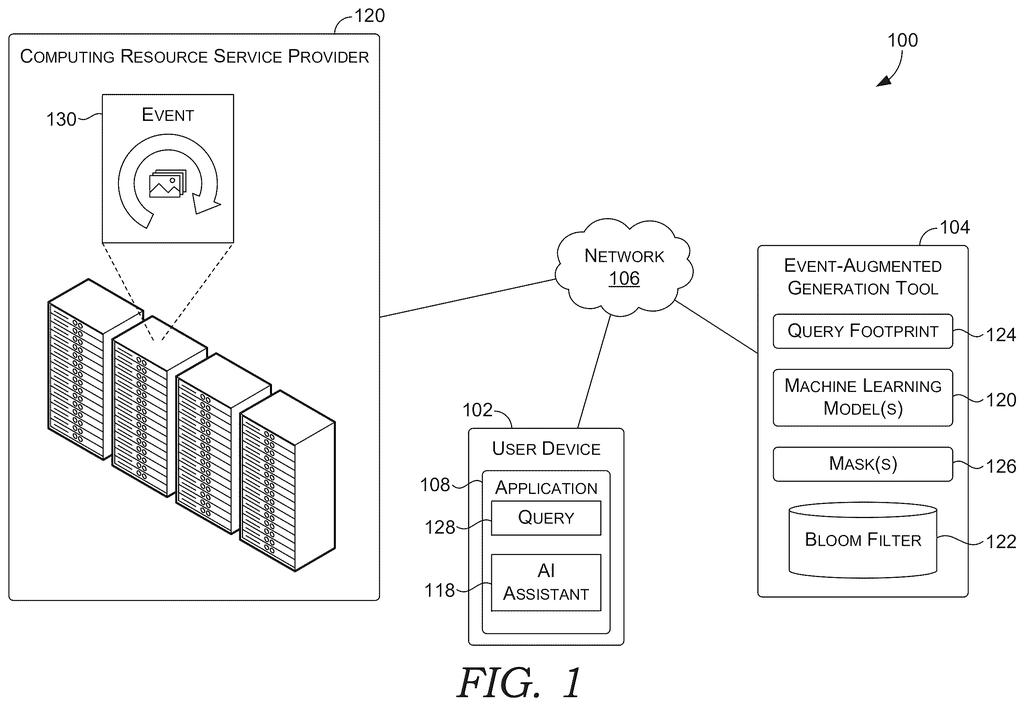
What Microsoft's live-query alert system actually does
Every time a banking app shows your balance, a sports app updates a score, or a dashboard refreshes a chart, something in the background has to check whether new data changes what you're already looking at. Most systems handle this by re-running the original search over and over, or by flooding the app with every single update and letting it sort out what's relevant. Both approaches waste a lot of computing power.
Microsoft's patent describes a smarter checkpoint. When you first run a query (think: "show me all orders over $500"), the system builds a compact fingerprint of exactly what data your query cares about. Then, whenever new data arrives, the system checks that fingerprint first. If the new data doesn't touch anything your query is watching, nothing happens. If it does, your app gets a targeted alert.
The payoff for you, as an end user, is fresher information with less lag, and apps that don't burn through computing resources just to tell you nothing changed.
generating a hash value based on the data; applying a bitmask to the hash value based on a mask included in a predicate set associated with the query; querying a Bloom filter included in the predicate set; …
Translation: The system runs quick mathematical checks to see if new data matches an active search.
How hash filters catch only the relevant data changes
The system centers on what the patent calls a query footprint: a record of all the data in a database that a given query would return. Rather than storing that entire result set, the system compresses it into a predicate set, a compact mathematical summary made of two parts.
- A bitmask (a pattern of ones and zeros that filters out data values that clearly don't match the query, before doing any heavier checking)
- A Bloom filter (a well-known probabilistic structure, meaning it can confidently say "definitely not relevant" but may occasionally flag something for a second look; it trades a tiny error rate for extreme speed and small memory use)
When new data arrives (called an ingress event, meaning any incoming write or update to the database), the system runs it through that two-step filter. First, it generates a hash value (a fixed-length numeric fingerprint of the data) and applies the bitmask. If the data passes that initial screen, it queries the Bloom filter. Only if both checks flag a match does the system notify the client application.
The result is that most irrelevant updates are discarded in microseconds without touching the original query or the database at scale.
In such examples, the event-augmented generation tool generates a predicate set that represents at least a portion of the query footprint.
Translation: It builds a digital profile of what results a specific search currently cares about.
What this means for apps that depend on live data
For developers building apps that show live data (think stock tickers, logistics dashboards, or collaborative documents), this kind of system could cut the cost of keeping displays current. Right now, many apps either poll the database on a timer (wasting resources when nothing changed) or subscribe to every update (overwhelming the app with noise). A targeted alert mechanism like this one sits in between: quiet when nothing relevant happens, immediate when something does.
the pattern in Microsoft's database and AI-infrastructure filings suggests the company is building toward intelligent backends that do more filtering work server-side, so client apps stay lean. For everyday users, the visible payoff would be live apps that feel more responsive without draining cloud resources behind the scenes.
Microsoft's 492nd filing in our Microsoft coverage since May adds to a run that includes a cheaper AI linking method and meaning-based image search.
The real payoff here is that apps stop wasting your time. Instead of refreshing to see whether your order shipped, your shared document updated, or your alert triggered, the system watches for the exact change that matters to you and tells you the moment it happens.
The engineering underneath that experience involves a mathematical shortcut: before sending any notification, the system runs a fast, cheap check to confirm the incoming data actually affects what you were looking at. That means fewer false alerts, less background noise, and a product that feels responsive without burning resources to get there.
For most users, this will never have a name. It will just feel like software that respects your attention.
There are more where this came from
We read every patent application Big Tech publishes and send you the ones worth knowing. Plain English, free, every week.
The drawings
9 drawing sheets from US 2026/0300319 A1 · click any drawing to enlarge


Want this weekly breakdown for a company we don't cover? Patentlyze Pro →
Be the first to weigh in