
Samsung Patents a Multi-Rail Hinge System for Sturdier Foldable Phones
Foldable phones live and die by their hinges — and Samsung just filed a patent for a more mechanically controlled hinge design that uses a network of interlocking rails and spring-loaded support members to keep both sides of the display tracking together smoothly.
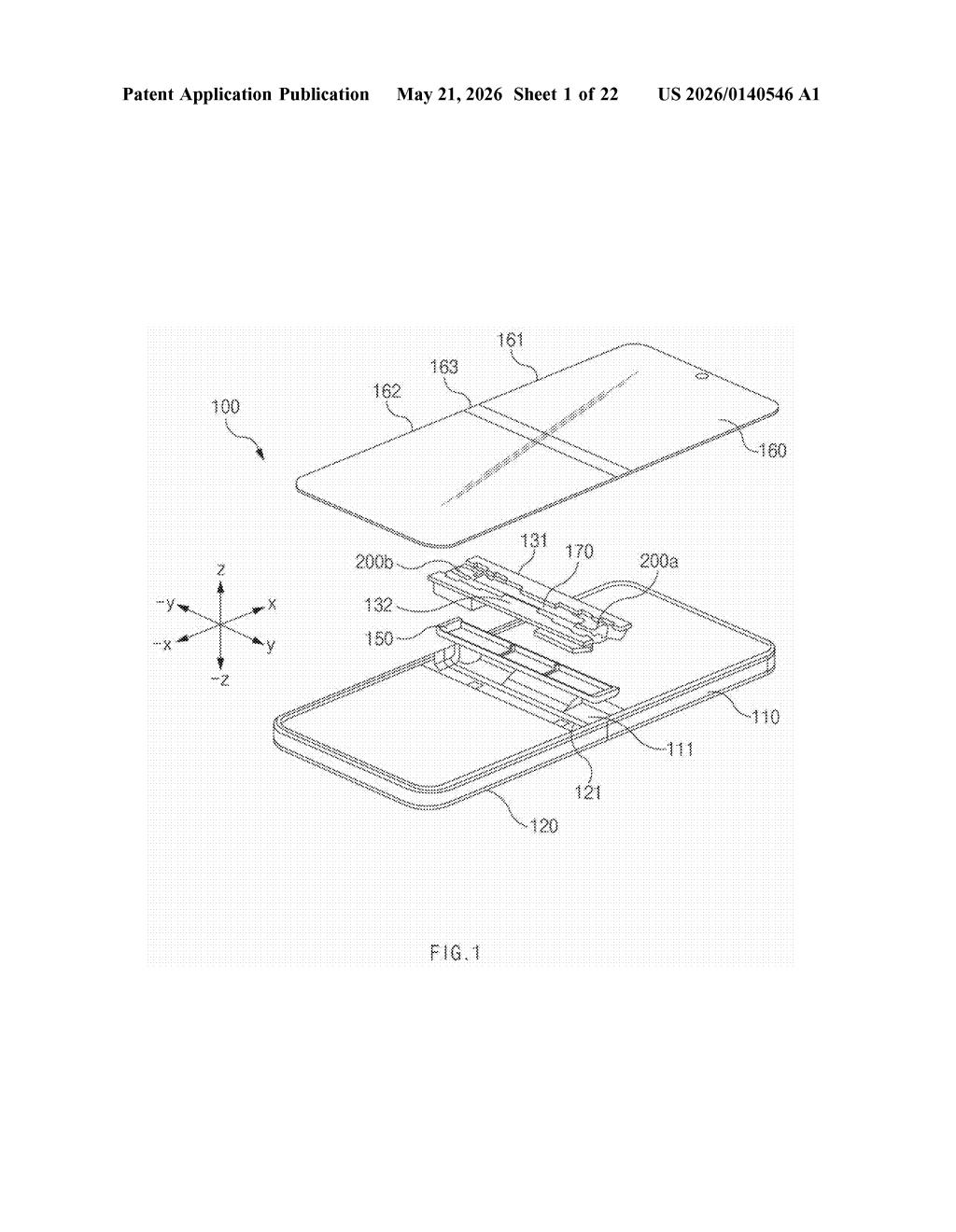
What Samsung's rail-and-support hinge actually does
Imagine folding a paperback book thousands of times a day. The spine eventually wears out, creases form, and the pages start to misalign. A foldable phone's hinge faces the same problem — every open and close puts stress on the display and the mechanism underneath it.
Samsung's patent describes a hinge built around six interlocking rail structures — think of them like miniature drawer slides that keep each half of the phone moving along a precise, controlled arc rather than wobbling freely. Two central rotating members ride on fixed rails inside the hinge housing, while two arm members extend outward and connect to each phone half.
The clever part is four support members — small force-applying pieces tucked between the housings and the rail structures — that push back against the rails during rotation. This keeps everything snug and aligned, reducing the play and looseness that can make a foldable feel cheap or cause the display to flex unevenly over time.
How the six-rail system distributes hinge forces
The hinge sits between the two halves of the phone (first housing and second housing) and coordinates their rotation through a fixed central bracket anchored to a hinge housing.
That central fixing bracket has two rails — essentially precision tracks — onto which a first rotating member and a second rotating member are each mounted. Each rotating member includes a second rail structure that extends outward, connecting the hinge core to the phone halves. Two additional arm members (first and sixth rail structures) are mechanically linked to each rotating member so they move in sync.
The critical innovation is the set of four support members:
- The first and third support members press against the arm members' rail structures from the housing side, applying force inward.
- The second and fourth support members press against the rotating members' outward rail structures in the same way.
Think of these as constant-contact tension elements — like a door closer that keeps a hinge from flopping open. By applying force on the opposite surface of each rail structure (i.e., from the outside in), they preload the mechanism, eliminating slop and keeping the display geometry consistent whether the phone is fully open, halfway folded, or fully closed.
What this means for Galaxy Z Fold durability
Hinge feel is one of the top complaints about foldable phones — too much play and the device feels flimsy; too much resistance and the open-close action becomes fatiguing. Samsung's rail-plus-support approach is an attempt to engineer out that looseness mechanically, rather than relying purely on friction or cam-based detents.
For Galaxy Z Fold and Galaxy Z Flip owners, a hinge that stays tightly aligned over tens of thousands of cycles could mean less visible creasing, better display longevity, and a more premium feel that holds up past the first year of use. It also signals that Samsung is still investing heavily in the mechanical fundamentals of foldables, not just the software experience.
This is solidly engineered, unsexy mechanical work — exactly the kind of filing that doesn't make headlines but eventually shows up as 'wow, this hinge feels so much tighter than the last generation.' Samsung files a lot of hinge patents, and most don't ship verbatim, but the multi-rail preloading concept here is coherent enough to take seriously as a direction for future Galaxy Z devices.
Get our take in your Top Stories
Liked this breakdown? Add Patentlyze as a preferred source on Google, and our plain-English take shows up more often in your Top Stories the next time Samsung patent news breaks.
There are more where this came from
We read every patent application Big Tech publishes and send you the ones worth knowing. Plain English, free, every week.
Want this weekly breakdown for a company we don't cover? Patentlyze Pro →