
Qualcomm Patents a Method to Save Battery While Your Phone Searches for Nearby Devices
Your phone burns battery just listening for a neighbor's phone that could relay its signal. Qualcomm's patent application describes letting it nap on a schedule between listens.
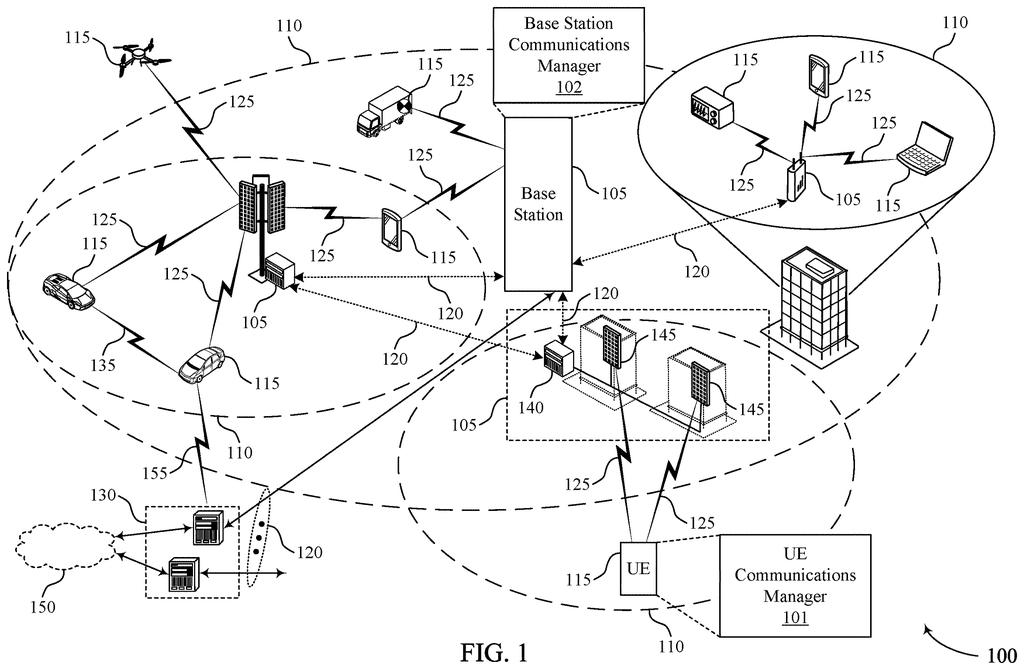
What Qualcomm's phone-nap schedule actually does
A phone at the edge of a cell tower's range keeps its radio listening all day for a nearby phone that could pass its messages along. That constant listening drains the battery fast.
Qualcomm's patent application describes putting that listening on a schedule. Your phone tells the network how it would like to nap: how long to stay awake, how long to sleep, and how often. The cell tower answers with an official schedule, and your phone listens for helper phones only during the awake windows. The rest of the time, that part of the radio rests.
The filing also lets the tower give your phone two separate schedules: one for hunting helper phones and one for ordinary contact with the tower. In one version, phones in a group share a schedule, so a helper phone can stay silent when nobody is listening.
transmitting sidelink discontinuous reception, DRX, information to a base station while operating in a connected mode; receiving a first radio resource control, RRC, reconfiguration message including a sidelink DRX configuration from the base station …
Translation: The phone tells the cellular tower how it wants to manage its power saving cycles for device searching.
How the tower hands out two sleep schedules
Phones can talk to each other directly, without going through a cell tower. The filing calls this a sidelink. One use is a relay: a phone out of the tower's reach finds a nearby phone that can pass its traffic along. Finding that helper means listening for its discovery signal (a short announcement that says, in effect, 'I can relay for you').
The patent is about letting the listening phone sleep on a schedule, known as discontinuous reception or DRX (the radio is on for an active window, then off for an inactive one). While still connected to the tower, the phone sends its preferences, often inside UE-assistance information (a message where the phone gives the network hints about its own needs). Those preferences can include cycle length, active time and timers, chosen based on the relay service and how urgent its data is.
Claim 1 then has the tower send back two messages:
- A first RRC reconfiguration message (a standard settings update from tower to phone) carrying a sleep pattern for watching for relay phones.
- A second one carrying a pattern for ordinary reception over the Uu interface (the normal phone-to-tower radio link).
The phone then listens for discovery signals only during the active windows of the first pattern. A matching claim covers the tower's side of the exchange.
The sidelink DRX information may include a preference of a DRX cycle, a DRX active duration, a DRX inactive duration, and the like, for sidelink DRX operation.
Translation: Your device can specify exact active and sleep timings to conserve battery while looking for nearby gadgets.
What this means for phones at the signal edge
If you've ever watched your battery melt in a spot with poor reception, you know that radios searching for a signal are costly. This filing targets one slice of that problem: the effort a phone spends looking for a nearby phone to relay through. The description says the savings can reach both the phone looking for help and the helper phone, which can stay quiet when it knows nobody is listening.
There is a tradeoff, and the filing admits it. A sleeping phone is slower to find a relay. So in the description, a phone with urgent data can switch sleeping off and listen constantly, and a phone can also turn sleeping on only when its battery runs low. Nothing in the filing names a product, so it reads as groundwork for how future phones and networks might behave.
Qualcomm's 491st filing in our Qualcomm coverage since May adds to a run that includes the robot-grading AI and the GPS satellite filter.
Claim 1 is narrower than the abstract makes it sound. The abstract talks about a phone sharing its sleep preferences and getting a schedule back. The claim also demands two separate messages from the tower: one schedule for listening for relay phones, and a second for ordinary tower traffic.
That two-schedule requirement is the heart of it. A setup that gives a phone one combined sleep schedule for both jobs falls outside the wording of claim 1, and the description itself lists that single-schedule option as a variation. The claim also applies only to a phone already connected to the tower, so the group-schedule version for phones out of coverage is not what it covers. If granted, it would cover both ends of the exchange, the phone in claim 1 and the tower in claim 13.
Overall this is a modest, routine refinement to how phones sleep. Its reach depends on whether the two-schedule arrangement is how real networks end up doing it.
Get our take in your Top Stories
Liked this breakdown? Add Patentlyze as a preferred source on Google, and our plain-English take shows up more often in your Top Stories the next time Qualcomm patent news breaks.
There are more where this came from
We read every patent application Big Tech publishes and send you the ones worth knowing. Plain English, free, every week.
The drawings
19 drawing sheets from US 2026/0313746 A1 · click any drawing to enlarge


Want this weekly breakdown for a company we don't cover? Patentlyze Pro →
Be the first to weigh in