
Sony Files Patent for Streaming Game World Animation From a Server
A game world's trees, rivers and clouds could live on a Sony server, with your console asking for only the next slice of motion it needs to draw.
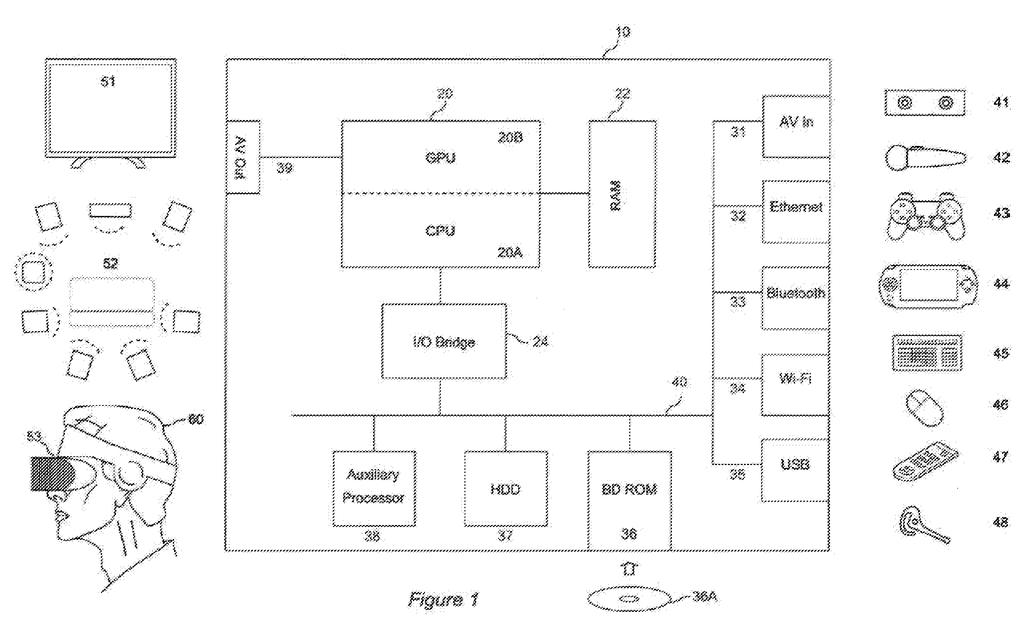
What Sony's streamed game animation does
Ever wondered why the trees in a game world so often sway in the same short loop? Animating a whole forest takes a huge amount of data, and your console only has so much room and processing power.
Sony's patent application tackles this by moving the animation to a server. The motion is worked out ahead of time, covering anything from a few seconds up to a full year in one example, and stored there. While you play, your console asks for just the piece it needs, and the server sends only that.
The payoff is richer worlds on ordinary hardware, with seasons, storms or fires that look different instead of repeating a short loop. Your console still draws the pictures, but it doesn't have to store or calculate all the motion itself.
… receiving an animation data request identifying a temporal parameter for the stored animation data; selecting, from the stored animation data, a time based segment in dependence on the identified temporal parameter; and outputting the selected time based segment.
Translation: The server gets a request with a time marker, finds the matching animation piece, and sends it out.
How the server picks a slice of the timeline
The system has three parts: storage, selection and output. The storage holds precomputed animation data (motion worked out ahead of time, rather than calculated while you play) for the moving objects in a game world over a set period. That period can be a loop of a few seconds or, in the filing's longest example, 8,760 hours, which is one year.
When a game device sends a request, it names a temporal parameter, meaning a time, a duration, or both. Each frame of animation carries a timestamp (a time label), so the system matches the requested time to a label and sends back that segment. If no start time is given, a control value acts like a clock that sweeps through the timeline and jumps back to the start at the end, which suits a shared world that is always running.
The description adds several optional extras:
- Sending animation only for objects near the player's viewpoint, such as trees in the field of view.
- Lowering quality with distance, for example sending every other frame or a simpler 3D model for far-off objects.
- Storing different versions of one world, such as spring and winter, or a forest fire.
- Letting player changes, like a dropped item, persist for later visitors.
… storage circuitry to store animation data for a computer generated environment, the animation data specifying animations of animated objects of the computer generated environment for a period of time …
Translation: Hardware components hold all the recorded movements for objects in the virtual world.
What this means for game downloads and storage
For you, the practical upside is a smaller download and more room on your drive. The filing says streaming animation as you approach an area can shrink a game's initial download and let you keep more titles installed at once. It also says precomputed motion helps a console hold its target frame rate while showing animation too complex to calculate on the fly.
For developers, it loosens a familiar limit. The filing's background says the PlayStation 5 allowed more detailed worlds than the PlayStation 4, and that processing limits still push studios to simplify their games. A server that holds long, season-length animations gives them another route, though it comes with a need to be online.
Sony's 589th filing in our Sony coverage since May follows patents like the surgery simulator and the health-filtering earbuds that we track.
Moving a game's animation onto a server buys richer scenery, and the price is that your console now depends on a connection. If the signal lags as you turn a corner, the trees and waterfalls have nothing to play. The filing sees this coming and pads each request by a small margin (5 or 10 percent in its examples) so nearby areas arrive early, which is a sensible patch.
The second cost is flexibility. Motion worked out in advance is fixed, so it suits swaying trees, flowing rivers and seasonal changes far better than anything that must react to what you do. A pre-baked storm cannot bend around your character.
The first claim itself is broad and plain: store a timeline, ask for a piece of it, get that piece back. For background scenery the trade reads as worth it, since a bigger world without a bigger download is a real win. For anything interactive, that work still falls to your own device.
Get our take in your Top Stories
Liked this breakdown? Add Patentlyze as a preferred source on Google, and our plain-English take shows up more often in your Top Stories the next time Sony patent news breaks.
There are more where this came from
We read every patent application Big Tech publishes and send you the ones worth knowing. Plain English, free, every week.
The drawings
4 drawing sheets from US 2026/0311412 A1 · click any drawing to enlarge


Want this weekly breakdown for a company we don't cover? Patentlyze Pro →
Be the first to weigh in