
Sony Patents a 3D Facial Animation Transfer System for Game Characters
Capturing a real actor's facial performance and having it look right on a fictional game character is a notoriously messy problem. Sony's latest patent tackles exactly that — by teaching a system to intelligently transplant expressions from one 3D face to another.
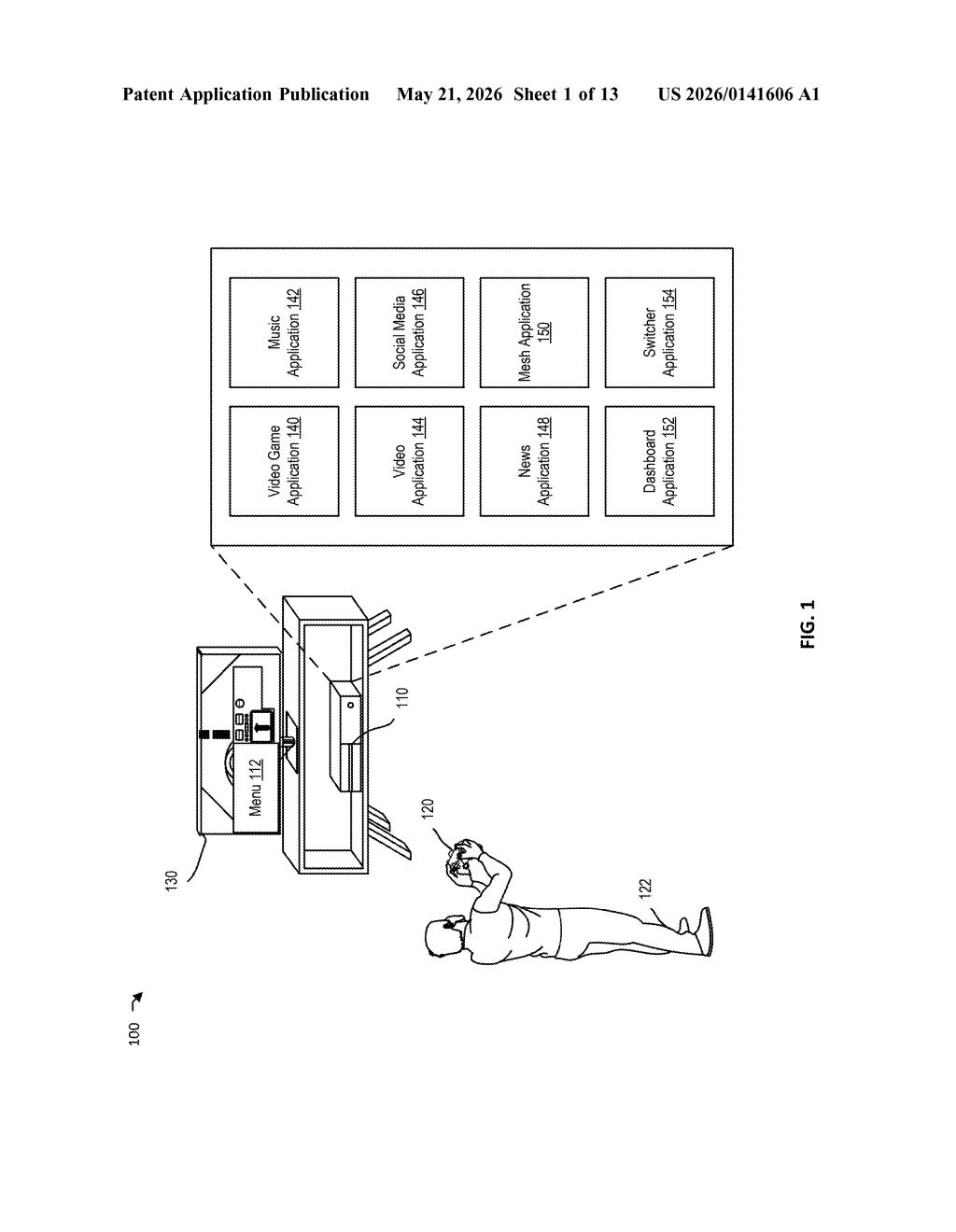
What Sony's face mesh retargeting actually does
Imagine you've motion-captured an actor's face as they deliver a dramatic monologue — every eyebrow raise, every lip curl, every wrinkle. Now you want that same performance to live on a video game character with a completely different skull shape, wider eyes, and a jaw that never existed in real life. Just copying the raw data over looks wrong, because the two faces don't share the same geometry.
Sony's patent describes a system that first learns a correspondence map between key points (called landmarks) on two different 3D face meshes — one source, one target. Think of it like pinning matching sticky notes to the nose tip, the corners of the mouth, and the outer edges of each eye on both faces.
Once those relationships are established, the system can take any new facial performance and warp it onto the target character's face in a way that respects the character's unique proportions. The result is a face that moves with the captured performance's emotion but looks like it naturally belongs to that character.
How Sony maps landmarks across mismatched 3D faces
The patent describes a pipeline that operates on paired 3D landmarks — specific geometric anchor points tied to facial features like the corners of the eyes, the tip of the nose, or the edges of the lips — across two different meshes.
The core flow works in a few steps:
- A source head mesh (representing a real or reference face) and a target head mesh (the destination character) are analyzed, and matching landmark pairs are identified for shared facial features.
- A separate, live facial performance mesh (a "third face" in the patent's language) is fed into the system — this is the animation you actually want to transfer.
- A parametric deformation unit uses the landmark correspondence to warp the live performance onto the target character, producing a new mesh that blends the target character's facial structure with the expressive motion from the performance capture.
The architecture references a parametric face model — a statistical model (think of it like a slider-based face editor that can represent millions of plausible human faces) — to help bridge the geometric gap between radically different face shapes. The output mesh inherits the structural identity of the target character while reflecting the dynamic expressions of the source performance.
What this means for game character animation pipelines
For game studios, facial animation retargeting is one of the most labor-intensive parts of production. Artists currently spend enormous time hand-tweaking motion-captured performances to fit non-human or stylized characters. A reliable automated system would compress that pipeline significantly — and Sony, as both a console maker and a major game studio, sits in an ideal position to bake this directly into developer tooling on PlayStation platforms.
For players, the downstream effect is more expressive, believable characters across a wider range of titles — including games where studios couldn't previously afford the manual cleanup work. It also opens the door to more dynamic systems where, say, your own scanned face could be retargeted onto an in-game avatar without looking like a broken puppet.
This is solidly useful work, not flashy research. Mesh retargeting is a well-established problem in animation, but having Sony file a patent on a specific landmark-correspondence pipeline suggests they're building proprietary tooling rather than relying on off-the-shelf solutions — likely for internal studios or as part of a future developer SDK. Worth watching if you follow PlayStation's first-party animation quality trajectory.
There are more where this came from
We read every patent application Big Tech publishes and send you the ones worth knowing. Plain English, free, every week.
Want this weekly breakdown for a company we don't cover? Patentlyze Pro →