
Microsoft Patents an AI Game Tester That Finds Bugs by Watching the Screen
Microsoft has filed a patent for an AI that plays through a game world looking for bugs, and all it ever sees is the screen. It circles objects the way a human tester would, then goes looking for corners it hasn't visited.
What Microsoft's screenshot-only bug hunter does
A game tester walks into a room, spots a health pack, circles it from every side, then wanders off to find the next thing to poke. Multiply that by every room in a huge modern game, and you can see why testing eats so much time and money.
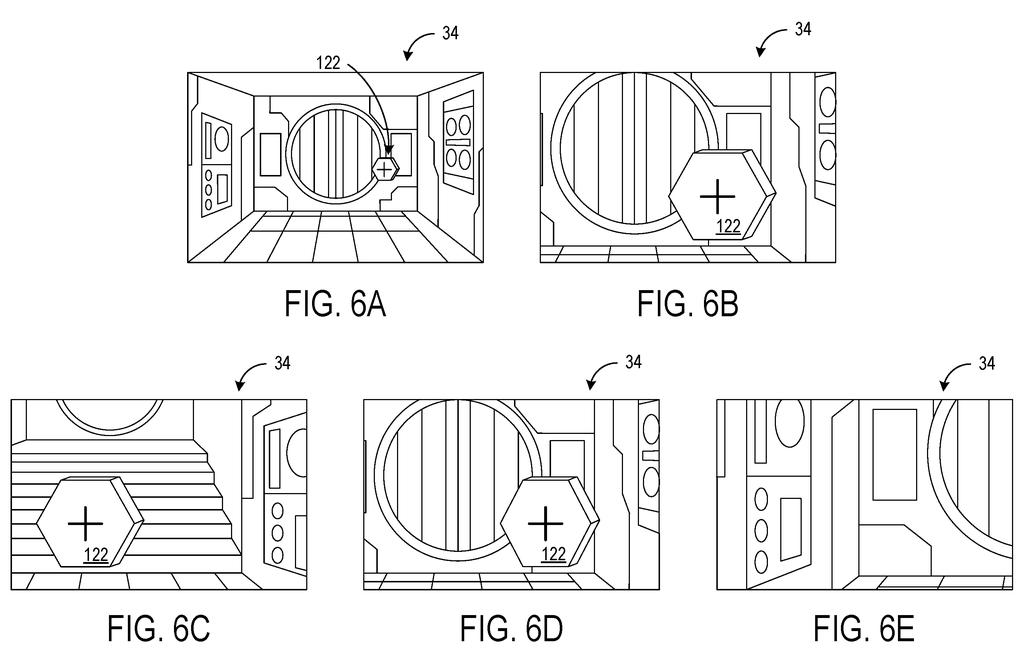
Microsoft's patent describes an AI that does this job by looking at the screen, the same way you do. It takes a screenshot and asks whether anything important is in view, such as a health pack, a weapon or a vehicle. If so, it inspects the object the way a human tester would. If nothing important shows up, it explores, steering toward places it hasn't seen yet.
It sends fake button presses to the game, so it doesn't need the game's source code. Any bugs it finds go into a report that tells developers where to look.
receive a screen image of the navigable simulated environment generated by the application under test; and determine if a key object is present in the screen image …
Translation: It looks at screenshots from the game to check if important objects appear on screen.
How the AI decides to inspect or explore
The system is built around a simple loop with three neural networks (software that learns patterns from examples) working in turn. At every step, it takes a screenshot and decides which one to call on.
- Spotting key objects: an object detector (a type of network called Faster R-CNN) checks the screenshot for items worth inspecting. It is first trained on the public COCO collection of more than 200,000 labeled everyday images, then on a smaller set of labeled screenshots of the game's own objects.
- Investigating: a second network is trained on pairs of screenshots and the actions human testers took, so it learns to inspect objects in a human-like way, such as walking around one from all sides.
- Exploring: a third network is rewarded for reaching screens that look unfamiliar. A fixed, randomly set network and a learning network each summarize the screen as a string of numbers. When their summaries differ a lot, the screen is probably new, and the reward is bigger.
The filing's example loop investigates an object only if its detected box is big enough and the detector is confident enough, then returns to exploring. Output goes to the game as simulated button presses, sent through software calls or even Bluetooth commands. Errors are logged in a test report with location, object and error type.
… generate an environment exploration action to be provided to the application under test as simulated user input.
Translation: When nothing special is found, it plays the game like a normal user to discover new areas.
Why testing without source code matters for games
If you play big games, you know some bugs slip through to release. Testing every corner of a modern game by hand is slow and expensive, and this patent aims to hand much of that grind to software.
Because the tester only needs screenshots, the filing says it can work on games where nobody can wire testing into the code. Developers can also keep changing the code mid-project without breaking it. The filing says the same approach could apply to virtual reality programs and simulators, such as flight or machinery simulators.
The pitch is lower cost, less human effort and shorter testing time. The text gives no test results, though, so how well it finds bugs compared with people is not shown.
Microsoft's 21st filing we've tracked since July in our AI agents acting for you watch builds on earlier applications like one reading your open screen and one trimming pages for AI.
Claim 1 is short and wide. It covers taking a screenshot of a navigable simulated world, checking for a key object, investigating that object if one is there, and otherwise making a move by sending simulated input to the program. Nothing in it says what a key object is, how detection works, or even that the program is a game.
The concrete engineering sits in the dependent claims: the two-stage training of the object spotter, the imitation of human testers, and the curiosity reward for new screens. The screenshots-only feature, which frees testers from needing source code, appears only in claim 10. If granted, claim 1 would reach any automated tester built on this look, then investigate or explore pattern, however it is trained.
That makes the headline claim a sensible but generic recipe, and the specific claims are where the real ideas live. Game studios would care most about those details.
Get our take in your Top Stories
Liked this breakdown? Add Patentlyze as a preferred source on Google, and our plain-English take shows up more often in your Top Stories the next time Microsoft patent news breaks.
There are more where this came from
We read every patent application Big Tech publishes and send you the ones worth knowing. Plain English, free, every week.
The drawings
13 drawing sheets from US 2026/0310593 A1 · click any drawing to enlarge


Want this weekly breakdown for a company we don't cover? Patentlyze Pro →
Be the first to weigh in