
Microsoft Patents an AI That Detects When a Meeting Needs a Brainstorm and Runs It
Brainstorming sessions in online meetings often happen by accident, mid-call, with no structure and no clear output. Microsoft is filing a patent for an AI that notices when a brainstorm should start and then runs the whole thing on its own.
What Microsoft's AI meeting facilitator actually does
Most online meetings that drift into brainstorming mode do so without a plan. Someone says "let's just throw ideas around," and what follows is usually chaotic, repetitive, or dominated by whoever talks loudest. Microsoft's patent describes a system that watches for that moment and steps in automatically.
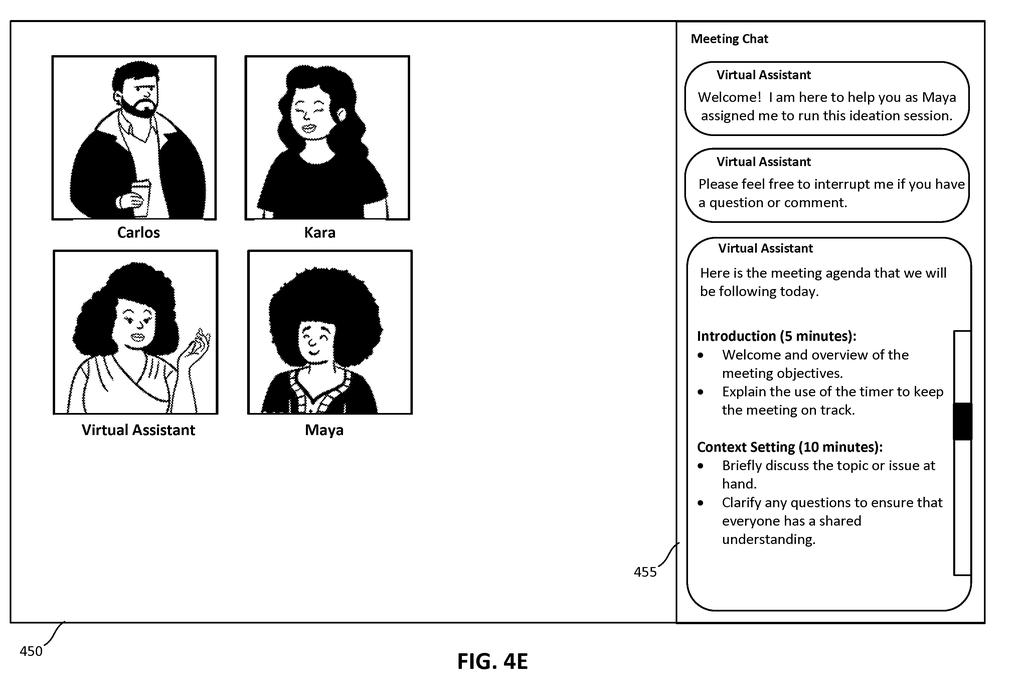
When the system detects a signal that a brainstorm is about to happen (based on what's being discussed in the meeting), it picks a pre-built template suited to that type of session. It then feeds that template to an AI to generate a proper agenda and facilitates the whole session: prompting participants, collecting ideas, and keeping things moving.
The point is that you don't have to stop mid-meeting to figure out how to structure the creative part. The AI does the facilitation work so your team can focus on the actual ideas.
detecting an occurrence of a trigger condition during an online meeting among a plurality of client devices associated with participants of the online meeting, the occurrence of the trigger condition indicating that an ideation session for collecting ideas from the participants should be initiated …
Translation: The system spots the exact moment a virtual meeting stalls and needs a creative brainstorming session.
How the system picks a template and builds the AI prompt
The system operates inside an online meeting platform and watches for what the patent calls a trigger condition (a signal that the meeting has reached a point where collecting ideas from participants would be useful). That trigger could be a spoken phrase, a topic shift, or a calendar cue tied to the meeting's agenda.
Once triggered, the system selects from a library of ideation session templates. Each template is essentially a pre-written instruction set in plain language, telling a large language model (an AI text engine, like the kind that powers chatbots) how to run a specific type of brainstorm: a silent idea dump, a round-robin, a "How Might We" session, and so on.
The system then builds a prompt (a structured question or instruction) from that template, using context from the current meeting, and sends it to the language model. The AI generates a session agenda on the fly and then conducts the session: presenting questions to participants, pacing the conversation, and collecting responses.
- Detects the right moment to start a brainstorm
- Picks the most appropriate session format automatically
- Uses a language model to generate and run a structured agenda
- Handles facilitation without a human moderator
… selecting an ideation session template based on meeting information associated with the online meeting, each ideation session template comprising a natural language prompt template that includes instructions to a language model to generate an agenda for a specific type of ideation session and to conduct the ideation session according to the agenda …
Translation: It picks a customized AI brainstorming format based on what the meeting is currently about.
What this means for how your team runs brainstorms
For anyone who runs or sits in online meetings, this is about removing the awkward handoff between "normal meeting" and "brainstorm." Right now, shifting gears mid-call usually means someone has to volunteer to moderate, open a whiteboard, and improvise a structure. That friction kills momentum.
If this system works as described, the creative portion of a meeting becomes structured by default rather than by effort. Microsoft's bet on AI-assisted collaboration tools suggests this is part of a wider effort to make Teams a more active participant in meetings, not just a video pipe. The people most likely to notice the difference are team leads who currently spend energy facilitating instead of contributing.
Microsoft's 12th filing we've tracked since July on agents that act for you joins earlier applications like one that reads your intent and one that sits in on meetings.
Most group brainstorms fall apart because nobody is actually running them. This feature puts a prepared facilitator into every call automatically, reading what the meeting is about and picking a format that fits before the awkwardness sets in.
The concrete payoff is that participants can spend their time on ideas rather than figuring out whose turn it is to speak.
The real test comes when someone needs a quick decision rather than an open brainstorm. If the system misreads that moment and launches a lengthy process, it turns a five-minute conversation into a twenty-minute one, and people will switch it off after the second bad experience. Getting that timing right is what determines whether this becomes something people depend on.
There are more where this came from
We read every patent application Big Tech publishes and send you the ones worth knowing. Plain English, free, every week.
The drawings
18 drawing sheets from US 2026/0291766 A1 · click any drawing to enlarge


Want this weekly breakdown for a company we don't cover? Patentlyze Pro →
Be the first to weigh in