
Nvidia Patents an AI System That Reads Data at Multiple Zoom Levels at Once
Most AI models look at data in one fixed level of detail — like always reading a map at the same zoom level. Nvidia's new patent describes a way to let a neural network read data at several zoom levels at the same time.
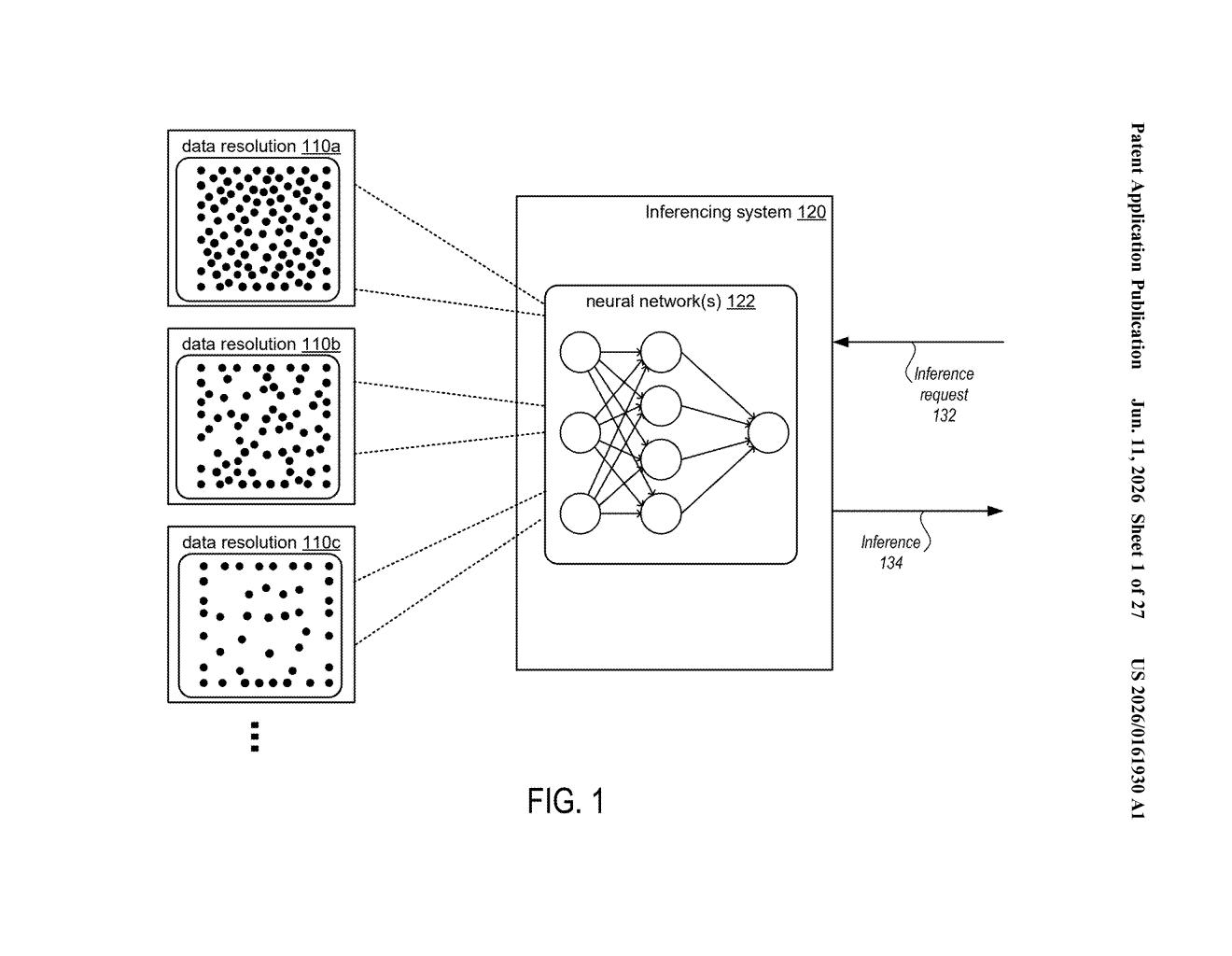
What Nvidia's multi-resolution AI approach actually does
Imagine trying to read a city map. Sometimes you need the broad view to understand the neighborhood layout, and sometimes you need to zoom way in to find a specific street. Most AI systems today are stuck at one zoom level — they process information at a single level of detail and can miss things that only show up at a different scale.
Nvidia's patent describes a system where the neural network holds multiple versions of the same data — some zoomed in, some zoomed out — and uses all of them together when making decisions. These different-detail snapshots are called embeddings, which are basically the AI's internal compressed representation of what it has seen.
The practical payoff is that the AI can catch both the big picture and the fine details without needing to run separate passes. That's useful any time you're asking an AI to analyze something complex — like a 3D simulation, a medical scan, or a physical environment — where important information lives at multiple scales.
How the embeddings encode different resolutions in parallel
The patent centers on a neural network architecture that ingests embeddings (compressed numerical summaries of input data) at multiple resolutions simultaneously, rather than encoding everything at a single fixed granularity.
Embeddings are the way a neural network digests raw input — they translate text, images, or sensor data into arrays of numbers the network can do math on. Normally, that translation happens once, at one level of detail. This patent proposes maintaining a set of embeddings, each capturing the same underlying data but at a different resolution — think of it as a image pyramid, where you keep the full-resolution image, a half-size version, and a quarter-size version all in memory at once.
During inferencing (the stage where a trained model actually makes predictions, as opposed to training), the network can draw on whichever resolution level is most relevant to the question being asked. The claim is broad: a processor with circuits that run neural networks built around this multi-resolution embedding structure.
The inventors come from Nvidia's physics-simulation and scientific AI teams, which suggests the primary use case may be physical simulation — fluid dynamics, structural analysis, or digital-twin modeling — where phenomena occur across many length scales at once.
What this means for AI inference in real-world applications
For everyday AI applications — image recognition, language models — single-resolution embeddings mostly get the job done. But for scientific and engineering AI, where a simulation might need to capture both large structural behavior and tiny local details, being locked into one resolution is a genuine bottleneck. Nvidia's approach, if it works as described, could make AI-driven simulations faster and more accurate without requiring separate models tuned to different scales.
Nvidia already sells the hardware (GPUs) and the software stack (CUDA, Modulus for physics AI) that would run this kind of system. A patent like this fits a clear strategy: make Nvidia's platform indispensable for the next wave of industrial AI — digital twins, climate modeling, drug discovery — where scale matters literally, not just figuratively.
This is a fairly abstract, broad patent — the first claim covers almost any processor running neural nets with multi-resolution embeddings, which is a wide net. The interesting signal is who filed it: Nvidia's physics-simulation AI group, which is building out the Modulus platform for scientific computing. That context makes this more than a routine filing; it hints at where Nvidia thinks the hard problems in scientific AI actually live.
There are more where this came from
We read every patent application Big Tech publishes and send you the ones worth knowing. Plain English, free, every week.
Want this weekly breakdown for a company we don't cover? Patentlyze Pro →