
Microsoft Patents an AI That Builds Realistic Hand Poses from Fingertip Positions Alone
Getting a virtual hand to grip a coffee mug convincingly is surprisingly hard — most systems either look robotic or require an enormous amount of data to pull off. Microsoft's new patent cuts that problem down to just five pieces of information: where your fingertips are.
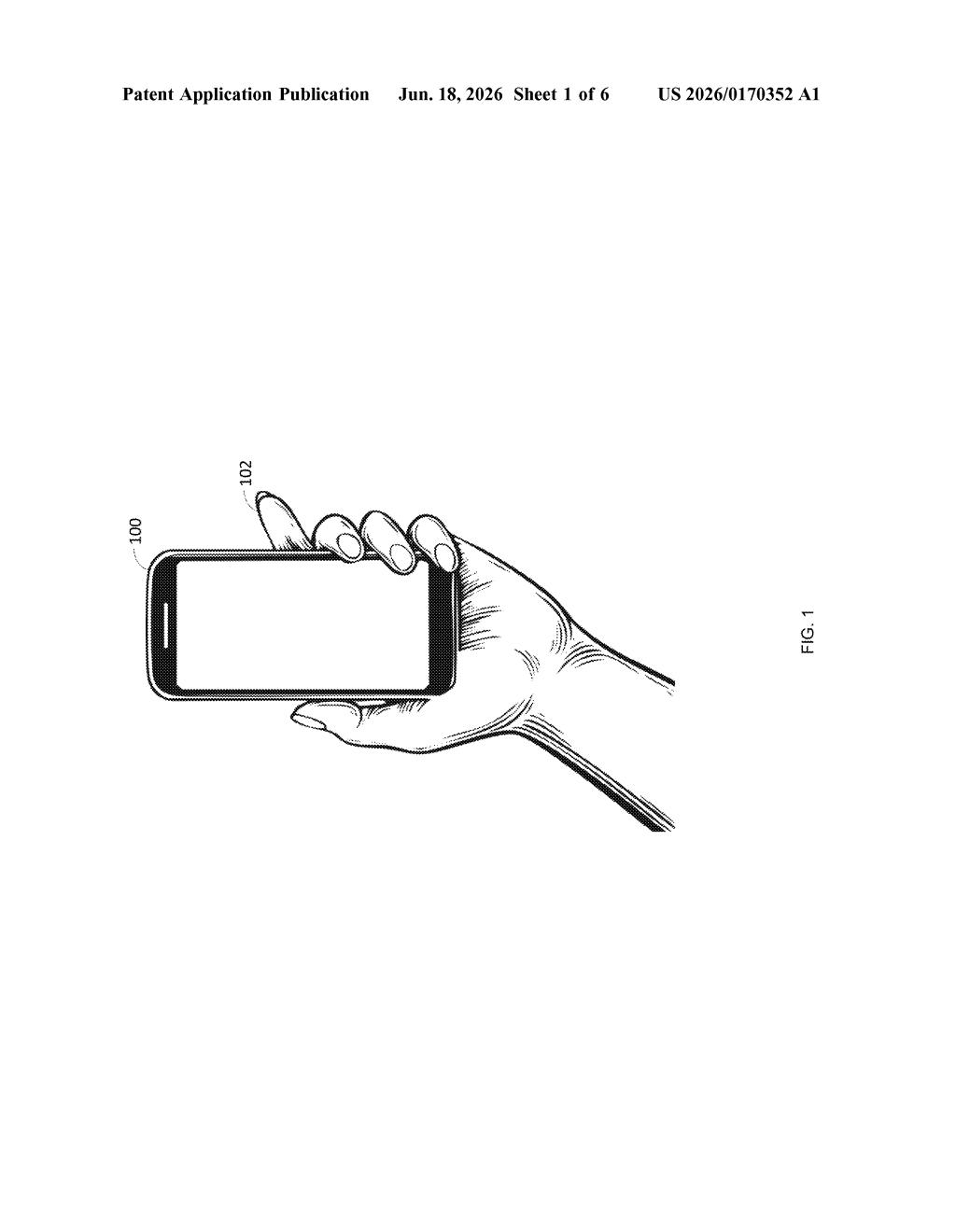
What Microsoft's fingertip-only hand pose system actually does
Imagine you're playing a VR game and you reach out to pick up a virtual object. The character's hand should curl naturally around it — not freeze up, not bend its fingers backward, not contort its wrist into an impossible angle. Getting that right has traditionally required feeding a computer a huge amount of information about every joint in the hand. Microsoft's approach skips most of that.
The system only needs the 3D position of your five fingertips to figure out what a natural-looking hand pose should look like. An AI model, trained on a large library of real hand positions, fills in all the in-between details — the knuckle angles, wrist orientation, and so on — based on what poses tend to look anatomically plausible for humans.
The same technology doubles as a factory for training data. Building AI systems that recognize hands in photos or video requires thousands of labeled examples. This method can generate diverse, realistic hand poses on demand, which means less expensive manual annotation work.
How the neural decoder reconstructs a full hand from five points
The patent describes a machine-learning model called a conditional variational autoencoder (CVAE) — think of it as two halves working together. The first half, the encoder, looks at a large dataset of real human hand poses and learns a compressed map of what "natural" hand shapes tend to look like, entirely independent of any specific task. The second half, the decoder, takes a position on that map plus the actual 3D fingertip coordinates and outputs a complete hand pose with all joint angles filled in.
Training uses a clever data-prep trick: the system combines parts of different hand poses to build new composite examples, which helps the model generalize rather than just memorizing positions it's seen before. Hand poses are also normalized (repositioned and reoriented to a standard reference frame) so the model learns shape patterns without getting confused by where in space the hand happens to be.
At inference time — when the system needs to generate a pose on the fly — the process is:
- Receive the 3D coordinates of the five fingertips (no rotation data required)
- Sample a latent code from the learned distribution of natural poses
- Pass both through the decoder to get a full hand configuration
- Run an iterative refinement step that nudges the result until it satisfies positional constraints without violating anatomical limits
The key claim is that joint rotation data is never required as input, which is what distinguishes this from classical inverse kinematics (the traditional math-based approach that often produces stiff or unnatural-looking results).
What this means for VR gaming and AI training data
For VR and gaming, natural hand animation is one of those details players notice immediately when it goes wrong. A character whose fingers phase through a door handle, or whose wrist bends at an impossible angle, breaks immersion fast. This system is designed to run in real time, which means it could power live hand tracking in headsets without the lag or weirdness that plagues rule-based approaches today.
The synthetic data generation angle may actually be the bigger long-term payoff. Training computer vision models to understand hands — for sign language recognition, gesture controls, or medical applications — requires enormous labeled datasets that are expensive to collect. A system that can generate diverse, anatomically correct hand poses on demand could significantly lower that cost.
This is a solid, focused piece of engineering rather than a headline-grabbing concept. The move from rotation-heavy inverse kinematics to a purely position-driven neural approach is a real practical improvement, and the dual use case — VR animation plus training data — gives Microsoft two strong reasons to actually ship it. The most interesting angle is probably the synthetic data side; hand-pose datasets are a genuine bottleneck in computer vision research right now.
There are more where this came from
We read every patent application Big Tech publishes and send you the ones worth knowing. Plain English, free, every week.
Want this weekly breakdown for a company we don't cover? Patentlyze Pro →