
Qualcomm Files Patent for Catching Fake GPS Signals Before They Mislead Your Phone
Fake satellite signals can convince your phone you are somewhere you are not. Qualcomm's filing describes a way for the phone to grade each signal against its own history and ignore the ones that look off.
What Qualcomm's fake-GPS filter actually does
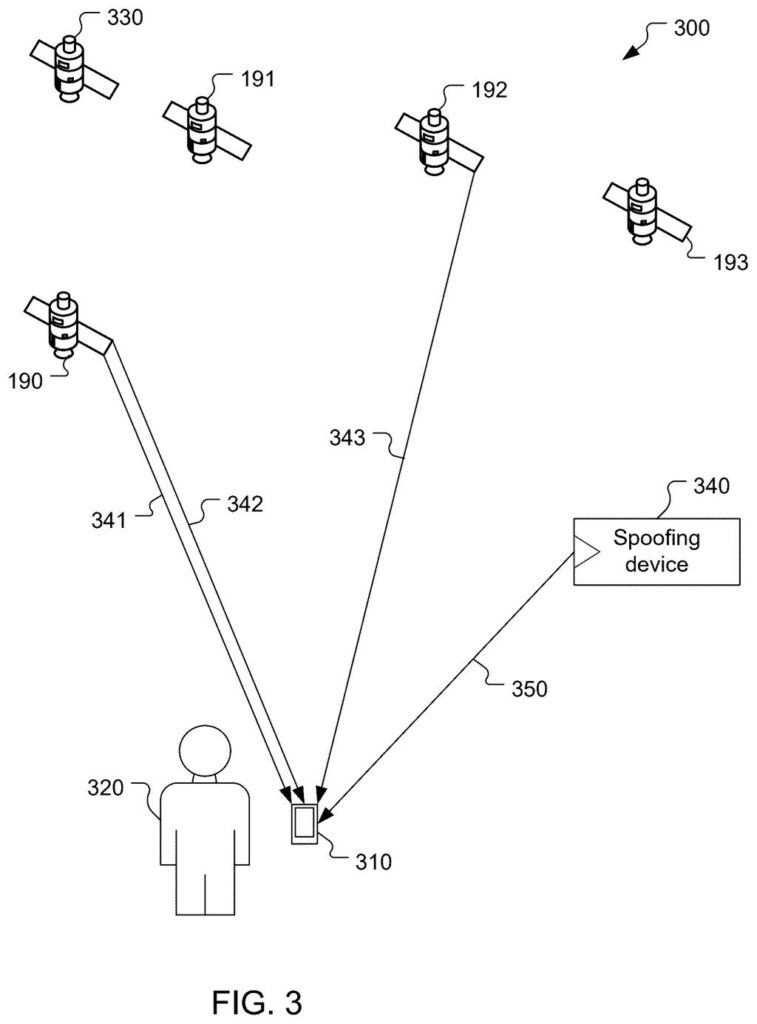
Every time you open a maps app, your phone listens for faint radio signals from satellites overhead and believes what it hears. That trust is a weak spot. Someone with the right gadget can broadcast fake signals that look real, and your phone may decide you are somewhere you are not.
Qualcomm's filing describes a way for the phone to be more skeptical. It gives the incoming signals a score for how well they match what it expects, then compares that score with how things looked in the past. A signal that suddenly doesn't fit gets flagged.
Flagged signals are ignored or given less weight when your phone works out where you are. The filing says this can work without extra hardware, and it can also warn an app that your location looks shaky.
… determining, at the mobile device based on the active measurements, a first conformance indicator that is indicative of how well the active measurements correspond to expected measurements of the first plurality of positioning signals …
Translation: Your phone checks how closely current GPS signals match what it expects to see.
How the phone grades each satellite signal
The phone first measures the satellite signals it is receiving right now (the filing calls these active measurements) and computes a conformity index, a score showing how well those measurements match what it expected. In the filing's example, the score runs from 0 to 0.99. Below 0.5 suggests suspicious data, and below 0.2 suggests spoofed (fake) data.
It then compares that score with an earlier one, built from past measurements of signals. The score can draw on how many position fixes the phone obtained, which satellite network and frequency was used, environmental factors, how consistent the phone's motion is, and how recently the device started up. History is stored in a database next to each satellite's ID, its estimated distance (pseudorange), Doppler shift (a frequency change caused by motion), carrier phase, and signal-to-noise ratio (how strong the signal is against background hiss).
A machine-learning method called an isolated forest does the judging. It builds many decision trees that split the data again and again. An oddball signal gets cut off from the rest in fewer splits, so a short path marks it as an anomaly. The method is unsupervised, meaning it needs no labeled examples of fake signals.
Once a signal is flagged, the phone leaves its measurement out when computing your final position. The filing also describes de-weighting it, or warning an app that the location is unreliable.
… determining position information of the mobile device using the active measurements of the first plurality of positioning signals other than any of the active measurements corresponding to a respective one of the first plurality of positioning signals determined to be spoofed …
Translation: The device calculates its true location by throwing out any fake signals it detects.
Why fake GPS matters for phones and cars
If your phone gets tricked about where you are, the fallout ranges from a maps app sending you the wrong way to a self-driving car, drone or aircraft working from bad data. The filing names those areas, along with defense, as places where spoofing can have serious consequences. A phone that drops suspect signals on its own and still finds you using the honest ones would be a real safety gain.
The appeal here is cost. The filing stresses that the approach works with little or possibly no additional hardware compared with the satellite receivers phones already have, and it can judge signals from a single satellite network. That points to a fix that could fit into existing devices rather than demanding new parts. It is still a patent application, so nothing here says when, or whether, you would see it in a product.
Qualcomm's 513th filing in our Qualcomm coverage since May continues a battery-saving thread that includes the video-without-waking patent and the AR glasses app-freezing filing.
Most people will only notice this on the day it works: the day a fake signal shows up near you and your blue dot stays where it belongs. That makes it a hard benefit to feel, because the best outcome is that nothing strange happens.
For everyday users, location faking is rare, so the practical gain is mostly peace of mind and fewer baffling map glitches. The bigger gain goes to people relying on automated driving or flying features, where a wrong position is dangerous.
One question the filing leaves open is how often the filter would wrongly throw out a real signal, which you would feel as a location that drifts or lags. It describes score thresholds and a warning to apps, but gives no accuracy figures. As a protective idea, it is sensible and cheap to imagine, and the proof would be in how rarely it cries wolf.
Get our take in your Top Stories
Liked this breakdown? Add Patentlyze as a preferred source on Google, and our plain-English take shows up more often in your Top Stories the next time Qualcomm patent news breaks.
There are more where this came from
We read every patent application Big Tech publishes and send you the ones worth knowing. Plain English, free, every week.
The drawings
10 drawing sheets from US 2026/0309872 A1 · click any drawing to enlarge


Show the other 2 sheets


Want this weekly breakdown for a company we don't cover? Patentlyze Pro →
Be the first to weigh in