
Samsung Patents a Camera-Driven Auto Keystone Correction System for Projectors
If you've ever pointed a projector at a wall from an angle and gotten a trapezoid instead of a rectangle, you know the keystone problem. Samsung's new patent describes a system that fixes that automatically — no manual slider required.
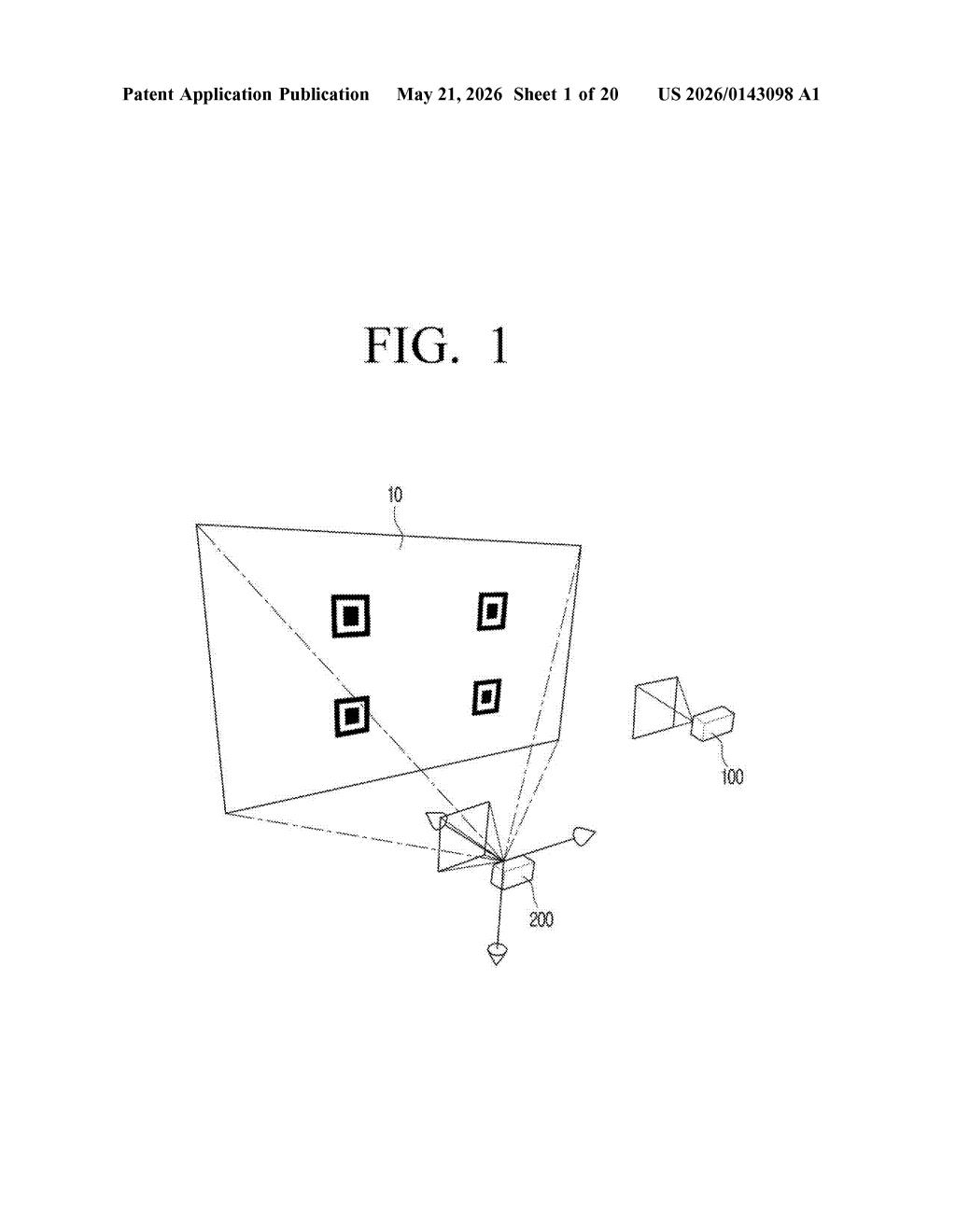
What Samsung's auto keystone correction actually does
Imagine you set up a portable projector on a coffee table, slightly off-center from your wall. Instead of a clean rectangle, the image comes out wider on one side — a classic keystone distortion. Fixing it usually means either physically repositioning the projector or fiddling with correction sliders until it looks right.
Samsung's patent describes a way to do that correction automatically. The projector throws a test pattern onto the surface, and a camera captures what that pattern looks like. By comparing how the pattern should look versus how it actually landed, the system figures out exactly where the projector is sitting relative to the wall and how the wall itself is oriented.
From there, it calculates a "virtual viewpoint" — basically, where a perfectly centered viewer would be standing — and uses that to compute the exact corrections needed. The result is a properly squared image without you touching a thing.
How the virtual viewpoint drives Samsung's correction math
The system relies on two sets of calibration data: a first internal parameter describing the projector's lens geometry (focal length, distortion characteristics) and a second internal parameter for the camera doing the capturing. Together, these give the system a precise model of how both devices see and project the world.
When the projector throws a pattern image — think a grid or checkerboard — onto the surface, the camera records what it looks like from its physical vantage point. The processor then uses both internal parameter sets plus the captured image to derive two things:
- Pose information — the electronic apparatus's physical position and orientation in space
- Projection surface information — the geometry of the wall or screen being projected onto (its tilt, angle, and shape)
With the surface geometry known, the system picks a virtual viewpoint — an idealized position directly in front of the screen — and calculates what the image would look like from there. The gap between that ideal view and the actual projected image becomes the keystone correction data, which is then applied to warp the source image so it looks correct on the physical surface.
This is essentially a computer-vision-based spatial calibration loop, similar in spirit to how AR headsets map real-world surfaces, but targeted narrowly at projection geometry.
What this means for Samsung's portable projector lineup
Keystone correction is one of those features that sounds boring until you actually need it. For Samsung's portable and ultra-short-throw projectors — like the Freestyle line — being able to set the device down anywhere and get a clean image automatically is a genuine usability win. Manual correction is fiddly enough that many users just live with a slightly skewed image.
The deeper implication is that this approach uses the camera as a spatial sensor rather than just a way to detect brightness or obstacles. That's a building block for more sophisticated projection features — like fitting an image precisely inside a picture frame, or adjusting the projection dynamically as someone moves the device. If Samsung integrates this into consumer hardware, it moves auto-keystone from a "nice to have" checkbox into something that actually works reliably.
This is a solid, practical patent solving a real and annoying problem in portable projectors. It's not a moonshot — keystone correction has existed for years — but automating it accurately via computer vision rather than crude tilt sensors is a genuine engineering improvement. Worth watching for anyone following Samsung's Freestyle projector roadmap.
Get our take in your Top Stories
Liked this breakdown? Add Patentlyze as a preferred source on Google, and our plain-English take shows up more often in your Top Stories the next time Samsung patent news breaks.
There are more where this came from
We read every patent application Big Tech publishes and send you the ones worth knowing. Plain English, free, every week.
Want this weekly breakdown for a company we don't cover? Patentlyze Pro →