
Samsung Patents a Spiral-Driven Hinge Mechanism for Foldable Phones
The hinge is the most mechanically stressed part of any foldable phone — and Samsung is quietly rethinking how it works from the inside out, using interlocking spiral structures to control the fold motion.
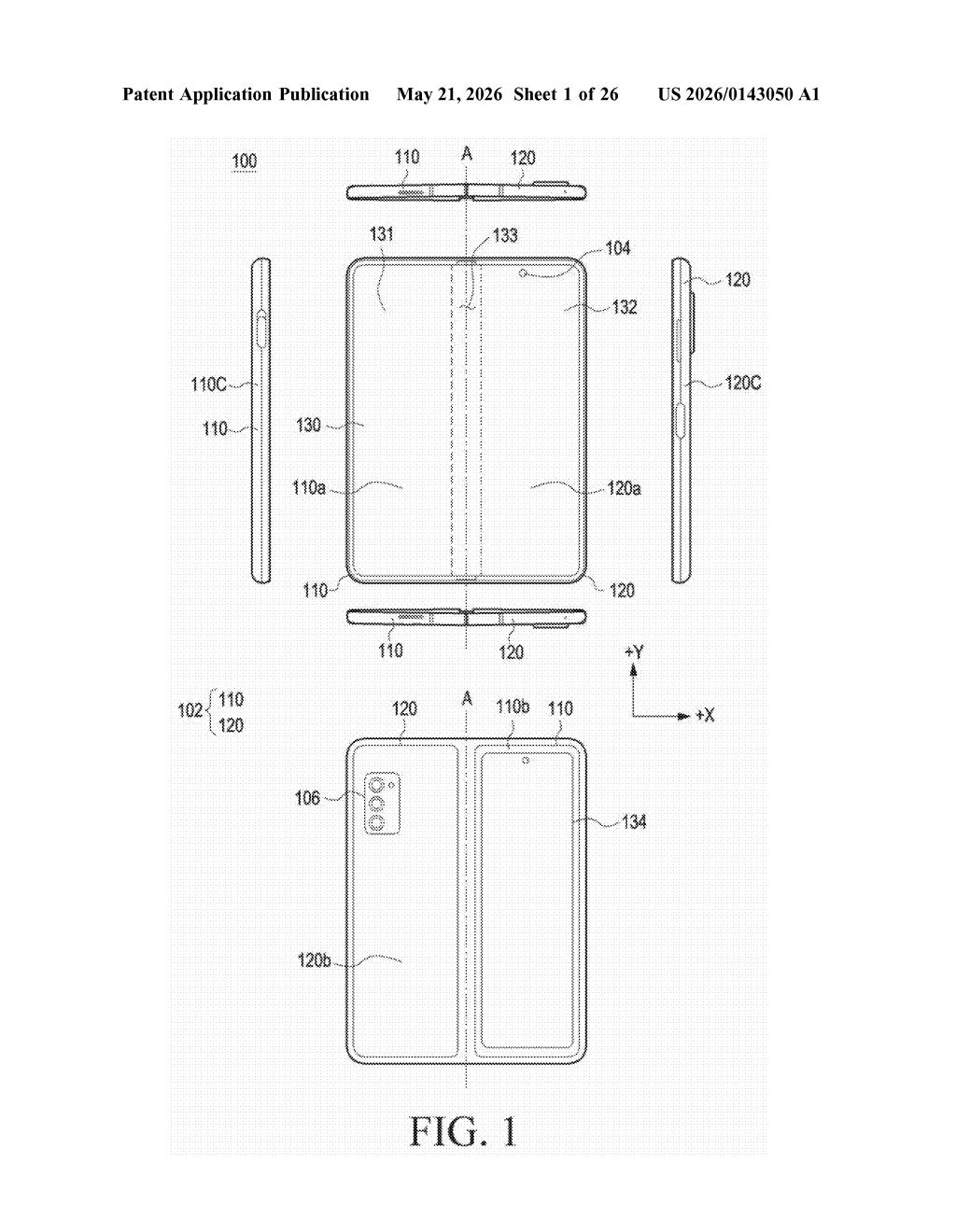
What Samsung's spiral hinge actually does to your fold
Imagine a foldable phone's hinge as a tiny piece of origami engineering: every time you open or close the phone, two halves have to rotate in sync without grinding, wobbling, or wearing out. That's a surprisingly hard problem to solve at phone scale.
Samsung's patent describes a hinge where two spiral-shaped rotating members — one connected to each half of the phone — mesh with a sliding piece that rides along their grooves. When you fold or unfold the device, the spirals turn and push that slide member along a track, keeping both halves moving together in a controlled, coordinated way.
Think of it like a double-threaded bolt: turning it naturally moves a nut along its length. Samsung is applying that same mechanical logic to a phone hinge, which could mean a smoother, more consistent fold feel and potentially better long-term durability than gear-based or cam-based hinge designs.
How the spiral members and slide translate rotation into motion
The patent describes a hinge structure built around two spiral rotating members — one anchored to each housing of the foldable device. Each spiral member has two rotating portions with a gap (an "empty space") between them.
A central slide member threads through both spiral members. It has two spiral portions of its own, each sitting inside the empty space of the corresponding spiral rotating member. When either housing rotates — say, when you open the phone — the spiral on that side turns, and its geometry forces the slide member to travel linearly along the rotational axis (think of a screw driving a nut forward).
The patent also describes:
- Guide members that surround each spiral rotating member, keeping them aligned and constrained
- A rotation bracket that houses both rotating members within a unified rotation structure
- The entire assembly connecting the two housings while accommodating a flexible display that spans both
The key mechanical insight is that the slide member's linear movement is derived directly from rotation — no separate gears, cams, or linkages are needed to synchronize the two halves. The spiral geometry does the work.
What this means for Galaxy Z Fold durability and feel
Hinge reliability is the single biggest engineering liability in foldable phones. Galaxy Z Fold and Z Flip devices have improved substantially since 2019, but hinge wear, creak, and inconsistent resistance remain real concerns for long-term users. A spiral-driven mechanism that converts rotational motion to linear sliding with fewer discrete parts could reduce mechanical play and wear points over hundreds of thousands of fold cycles.
For you as a buyer, this kind of patent signals Samsung is still actively iterating on the fundamental mechanics of folding — not just the software or the display. Whether this specific design makes it into a shipping Galaxy Z Fold device is unknown, but it reflects ongoing investment in making the fold feel less like a liability and more like a feature.
This is a legitimately interesting mechanical engineering patent — not flashy, but the kind of foundational work that separates durable foldables from fragile ones. The spiral-to-linear conversion approach is elegant in the same way a lead screw is elegant: fewer parts, predictable motion, and no need to synchronize separate gear teeth. Samsung's hinge team is doing real work here, and it shows.
Get our take in your Top Stories
Liked this breakdown? Add Patentlyze as a preferred source on Google, and our plain-English take shows up more often in your Top Stories the next time Samsung patent news breaks.
There are more where this came from
We read every patent application Big Tech publishes and send you the ones worth knowing. Plain English, free, every week.
Want this weekly breakdown for a company we don't cover? Patentlyze Pro →