
Salesforce Files Patent for Adding AI Apps Without Rewriting Code
Adding a new AI feature to a big cloud platform can mean engineers editing the traffic-directing code by hand. Salesforce's patent application replaces that chore with a small settings file.
What Salesforce's settings-file approach does
Today, when a company adds a new AI-powered feature to a shared cloud platform, engineers often have to change the code that directs incoming questions to the right place, plus do plenty of other manual setup. That work piles up fast when thousands of customers and models share the same system.
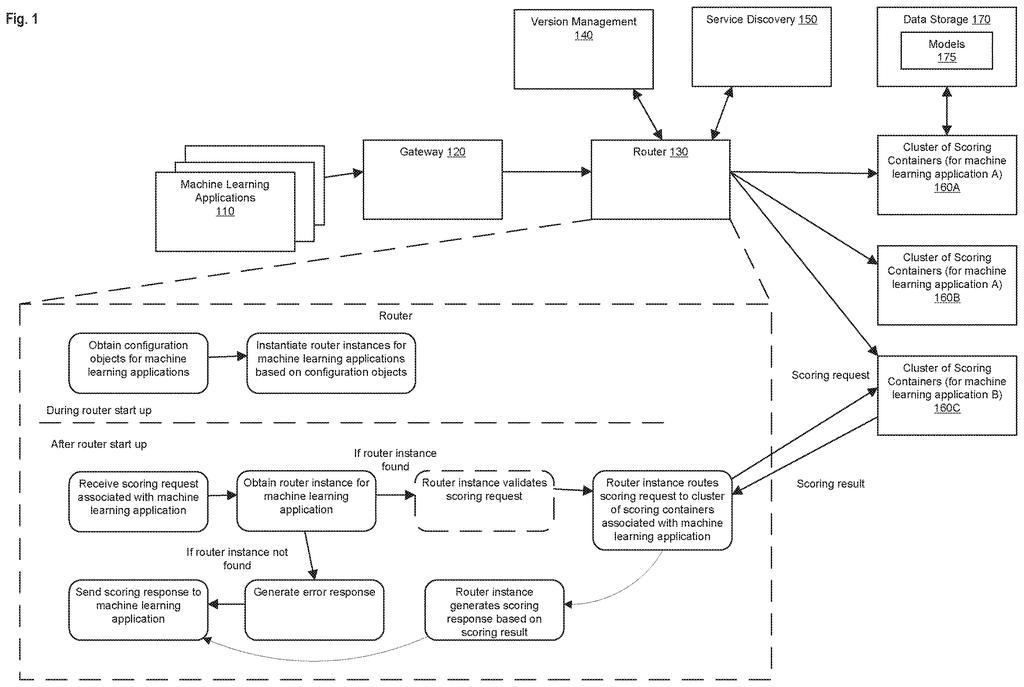
Salesforce's filing describes a different route. Each new AI application gets a short configuration object, basically a settings file listing the app's name and which group of computers should answer its requests. The system reads that file and builds a dedicated router for the app on its own.
The result: adding a new AI feature becomes closer to filling out a form than rewriting software.
… causing a router component to instantiate a router instance for the machine learning application, wherein the router component instantiates the router instance for the machine learning application based on the configuration object …
Translation: The system automatically creates a specialized router based on the app's settings.
How the router builds a custom traffic cop
The patent covers a way to manage the rollout of a configuration object (a file or database record describing one machine learning application) inside a multi-tenant model serving system. "Multi-tenant" means many separate customers share the same underlying machinery, and "model serving" means running trained AI models on fresh data to produce predictions, which the filing calls scoring.
The key steps in the claims work like this:
- The system gets a signal that a configuration object is ready to be deployed.
- It fetches that object.
- It tells a router component (the part that sends incoming scoring requests to the right place) to create a router instance for that application, built from the object's contents.
That router instance then sends the app's requests to a scoring container, a packaged unit of software that runs the model. The description says the object holds the app's name and the cluster of containers that serves it.
Other claims add storing the object in a data store, handing it to the router through an API (a standard way for programs to talk to each other), and running automated tests against the new router in a development or staging environment before it goes live.
… configured to route incoming scoring requests associated with the machine learning application to a scoring container that provides scoring functionality for the machine learning application.
Translation: It directs user requests to the correct container to run the app's AI predictions.
Why Salesforce wants AI apps added by paperwork
For you as a Salesforce customer, this is plumbing you would never see directly. But it shapes how quickly new AI features can show up in the products you use, since the filing's own complaint is that manual onboarding "does not scale well."
The description says the service is meant to handle more than 10,000 models and over 600 requests per second. At that size, turning each new AI app into a reviewed, testable settings file is a practical way to add features without touching core code every time. It also fits the broader trend of companies packaging AI tools on shared platforms.
Salesforce's 12th filing we've tracked since July in AI agents working in teams adds to earlier applications covering agent communication permissions and one AI grading another.
The tradeoff is easy to name. Moving setup into settings files means the router's behavior now depends on those files being right. A wrong cluster name or a typo in a file could send an app's requests to the wrong place, or nowhere. The filing's answer is a review step, version tracking, and automated tests before anything moves from development to staging to live, which is a sensible price for the safety.
There is a second cost: every new app still needs a human to write and approve its file, so the work shrinks rather than disappears. Even so, trading code edits for a checked form is a good bargain at the scale the filing describes.
This is routine infrastructure housekeeping, and it is a divisional of a 2021 application, so it is not a fresh idea. It matters to engineers running the platform far more than to anyone using it.
Get our take in your Top Stories
Liked this breakdown? Add Patentlyze as a preferred source on Google, and our plain-English take shows up more often in your Top Stories the next time Salesforce patent news breaks.
There are more where this came from
We read every patent application Big Tech publishes and send you the ones worth knowing. Plain English, free, every week.
The drawings
6 drawing sheets from US 2026/0320504 A1 · click any drawing to enlarge


Want this weekly breakdown for a company we don't cover? Patentlyze Pro →
Be the first to weigh in