
Salesforce Patents a System Where One AI Grades and Corrects Another
Getting an AI to produce a good answer is one problem. Knowing whether the answer is actually good is a separate, harder problem. Salesforce has filed a patent for a system that uses one AI model to judge, guide, and push another AI model to do better.
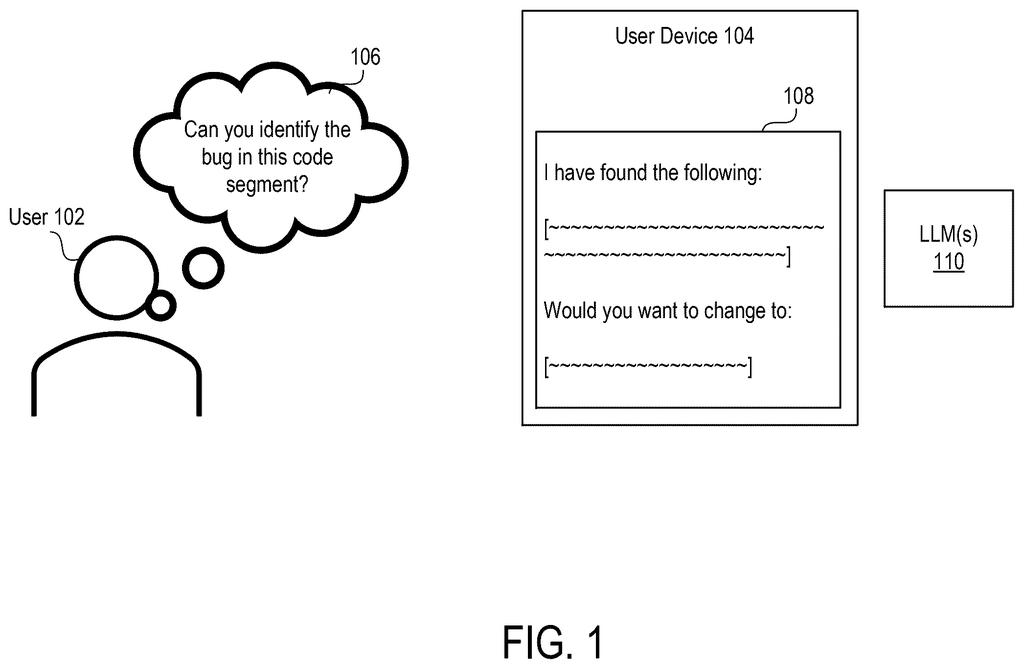
How Salesforce's AI-judge system actually works
Every time a company deploys an AI assistant, someone has to figure out whether the answers it gives are any good. Right now, that often means expensive human review or crude automated checks that miss a lot.
Salesforce's patent describes a two-AI setup: one model (the generator) writes answers, and a second model (the judge) evaluates them. The judge can do this three different ways: picking the best answer from a batch, walking the generator through a problem one step at a time, or writing plain-language feedback that the generator uses to try again.
The system also measures how much the judge actually helps. If the judge's guidance leads to better final answers, it gets a high score and gets deployed alongside the generator. If it doesn't pull its weight, it doesn't make the cut. The goal is automatic quality control without a human in the loop for every single response.
… iteratively allocating compute resources for the first neural network based language model to conduct one or more updated generations, guided by a second neural network based language model to iteratively evaluate at least the plurality of candidate responses, thereby resulting in a final response out of the plurality of candidate responses …
Translation: One AI helps use more computing power to judge and improve another AI's answers until the best one is found.
How the judge model scores, steers, and refines output
The patent describes a framework for what it calls test-time scaling (meaning: using extra computing power at the moment a user asks a question, rather than only during training, to produce better answers).
The system pairs two language models:
- The generator: the primary model that produces candidate answers to a request.
- The judge: a separate model that evaluates those answers and guides the generator toward better ones.
The judge can intervene in three ways. First, response reranking: the generator produces several candidate answers, and the judge picks the best one. Second, step-level beam search: the judge monitors the generator's reasoning process at each intermediate step (like a coach watching every play, not just the final score) and steers it in real time. Third, critique-based refinement: the judge writes natural-language feedback, the generator revises its answer, and this loop can repeat.
Critically, the patent includes a method for measuring the judge's own usefulness. A metric tracks whether the judge's involvement actually improves the final output. If it does, the judge model gets deployed in production alongside the generator. This makes the judge accountable, not just decorative.
… where the LLM judge generates natural language critique to the response for the LLM generator to refine. Thus, through each or any combination of (i), (ii) and (iii), the LLM judge may iteratively improve a response generated by the LLM generator.
Translation: The judge AI writes written feedback so the other AI can rewrite and improve its work.
What this means for AI reliability at scale
AI systems already pass outputs through some form of quality check before showing them to users, but those checks are often baked into training and can't adapt at query time. A judge model that operates after the question arrives, and can loop with the generator multiple times, opens the door to better answers on hard or ambiguous prompts without retraining either model.
For businesses using AI for customer service, code generation, or document drafting, the difference between a passable answer and a correct one is real money. several Salesforce filings on AI evaluation and output quality this year suggest the company is treating this layer of the AI stack as a product differentiator, not just an internal quality-control detail.
Salesforce's 11th filing we've tracked since July in our AI agents working together watchlist builds on earlier ideas like a permission system between agents and self-correcting visual math.
Using one AI model to grade and improve another model's answers is a real technique, and this patent turns it into a structured, repeatable process that Salesforce could wire into existing products.
Nothing here requires new hardware or research breakthroughs. The whole system runs on software and language models that already exist, so the distance between this patent and a working feature is mostly an engineering and integration problem.
The honest difficulty is making the grader trustworthy. A judge model that confidently picks wrong answers makes things worse, not better, and the quality of the whole system depends on how well Salesforce defines "good" for any given task. That definition is where the real product work lives.
There are more where this came from
We read every patent application Big Tech publishes and send you the ones worth knowing. Plain English, free, every week.
The drawings
13 drawing sheets from US 2026/0289105 A1 · click any drawing to enlarge


Want this weekly breakdown for a company we don't cover? Patentlyze Pro →
Be the first to weigh in