
Disney Patents an AI Search System That Breaks Complex Questions Into Pieces
Ask a streaming service something like "a funny movie for kids that's not too long and was made before 2010" and most search systems fall apart. Disney has filed a patent for an AI approach that actually tries to handle that kind of layered question.
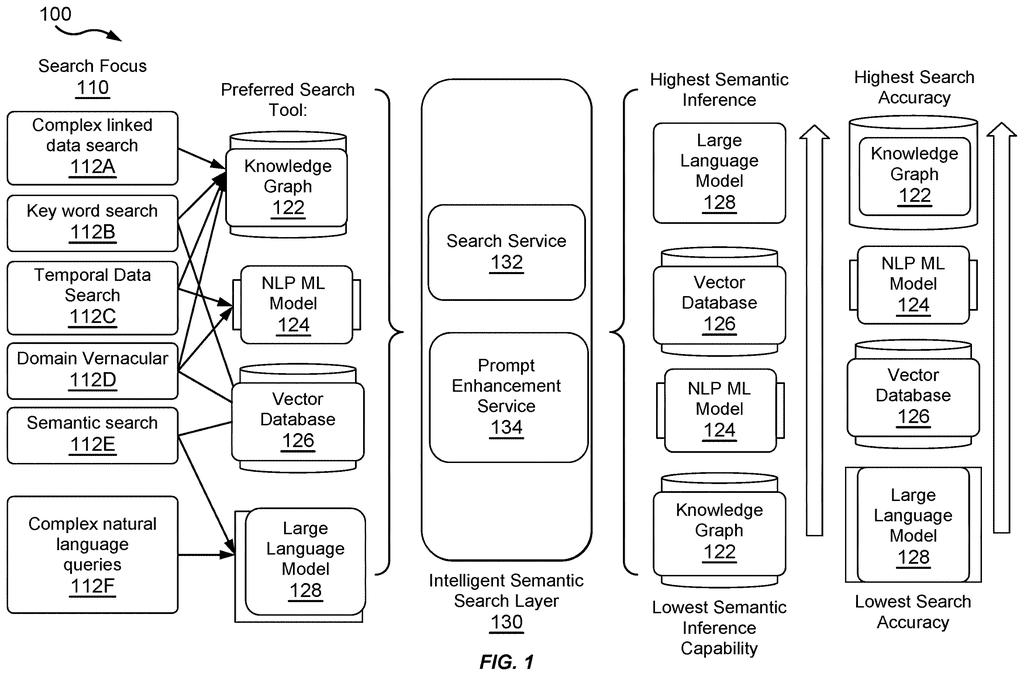
How Disney's AI search handles multi-part questions
Ever tried to describe exactly what you're in the mood to watch, only to get results that ignore half of what you typed? That frustration is what this patent is aimed at.
Disney's idea is to take a complicated search question, the kind with three or four conditions baked in, and break it into individual pieces. Each piece then gets handed to an AI that figures out what that specific piece is asking for. One piece might be about a genre, another about a time period, another about a character. The system handles each one on its own terms before combining the answers.
The result, in theory, is a search that actually respects all your conditions rather than guessing which one you probably meant. It's less like a keyword search and more like asking a knowledgeable human assistant who actually listens.
identifying a complex search query comprising more than two parameters; dividing the complex search query into one or more components; determining a respective intent for each respective component of the one or more components by processing the respective component using machine learning …
Translation: It breaks multi-part searches down and figures out what each piece means using AI.
How the pipeline routes each question fragment through two databases
The patent describes a method for handling what it calls a "complex search query", meaning any question with more than two distinct parameters.
Here's how the process works:
- The system receives a multi-part query and divides it into components, each representing a distinct condition or idea.
- A large language model (LLM) or a natural language processing (NLP) neural network (software trained to understand human language) analyzes each component and assigns it an intent, essentially a label for what the user is trying to accomplish with that piece of the question.
- Each component is then routed through a pipeline (a series of processing steps) that is tailored to its intent.
- The pipeline consults two distinct data stores: a graph database (a system that maps relationships between things, like how characters, shows, genres, and release years connect to each other) and a vector database (a system that finds items based on conceptual similarity rather than exact keyword matches).
At each step in the pipeline, the system generates a query against a knowledge graph (think of it as a structured map of Disney's content universe) to figure out what the next logical processing step should be. The result is a final answer that accounts for all components of the original question.
… generating a result for the search query based on routing each component through a pipeline using the respective intent, the pipeline including both a query against a graph database and a search against a vector database.
Translation: It answers the search by running each piece through specialized databases based on its goal.
What this could mean for Disney's content discovery tools
For a company sitting on decades of films, shows, characters, and theme park content, search quality is a real business problem. If your search tool can't surface the right content when a user describes it in plain language, you lose them to something else.
This patent describes a software-only approach, no new hardware required, which means the shortest path to shipping something like this runs through integrating it with an existing content platform. Disney keeps filing on AI-driven content and search Whether that platform is Disney+, an internal content management tool, or something at the parks level, the underlying technology is the same. For you as a user, the promise is a search bar that stops making you simplify what you actually want.
Disney's second filing we've tracked since September in our AI teams watchlist follows its crowd noise filter patent.
From a shipping standpoint, this is closer to a real product than most patent filings suggest. The core pieces, large AI language models, searchable content libraries, and relationship maps between titles and characters, already exist as tools teams can assemble without building anything from scratch.
The hard prerequisite is the relationship map itself. Disney would need a carefully maintained, structured record of how its content connects, which characters share themes, which titles suit which moods, which franchises overlap. That kind of data infrastructure takes serious time to build and keep accurate, and the patent treats it as a given.
Once that foundation exists, a working prototype is plausibly a matter of months rather than years. The engineering challenge is real but solvable, and that puts this meaningfully ahead of patents that describe impressive outcomes with no obvious path to an actual product.
There are more where this came from
We read every patent application Big Tech publishes and send you the ones worth knowing. Plain English, free, every week.
The drawings
8 drawing sheets from US 2026/0300277 A1 · click any drawing to enlarge


Want this weekly breakdown for a company we don't cover? Patentlyze Pro →
Be the first to weigh in