
Microsoft
Microsoft · AI / ML · Filed May 19, 2025 · USPTO published Oct 8, 2026 · Oct 8 release
Microsoft Files Patent for AI Search Suggestions Written by Several Models at Once
Microsoft has filed a patent application for getting several small AI models to each write one search suggestion at the same time, with each one steered toward a different idea. Researchers cited in the filing recorded an average 25% drop in delay.
- Publication number
- US 2026/0310694 A1(US20260310694A1)
- Applicant
- Microsoft Technology Licensing, LLC
- Filed · Published
- May 19, 2025 · Oct 8, 2026
- Inventors
- Pinkesh BADJATIYA, Rajendra Bhimsen SHINDE
- Status when we published
- Waiting for an examiner
- Document
- 20 claims
- US classification
- 704/9
What Microsoft's parallel search suggestions do
Imagine typing 'best hiking boots' into a search box and seeing a list of follow-up searches appear almost instantly, each one pointing in a different direction. That sounds simple, but when an AI writes the list, it usually does it one suggestion at a time.
The old way makes the AI reread everything it has already written so it won't repeat itself, so every extra suggestion takes longer than the last. Microsoft's patent application splits the job. Several small AI models each write one suggestion at the same moment, and each has been trained to lean in its own direction, so they don't all land on the same idea.
The filing says the variety is built in ahead of time, during training, instead of being worked out every time you search. Researchers recorded an average 25% drop in delay with no loss in quality.
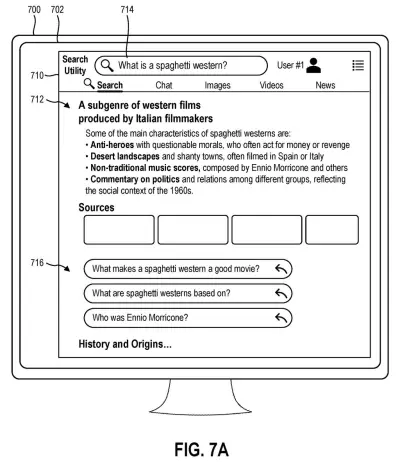
… utilizing a suggestion item system to quickly, accurately, and efficiently generate suggestion items using generative artificial intelligence (AI) models and multiple embedding groups.
Translation: The technology uses multiple AI systems together to instantly create unique search suggestions.
How each model gets its own lane of ideas
The system has two phases. First comes training, done once and offline. Microsoft starts with a table of sample searches, each paired with several different good suggestions (produced by a slower AI that writes them one after another). It then splits that table into subsets: subset one pairs every sample search with its first suggestion, subset two pairs each with its second, and so on.
A small model is trained on each subset. Because each one sees a different answer for the same search, it learns to head in its own direction. That learned direction is stored as an embedding group (a set of numerical patterns the AI uses to represent meaning), and each group gets its own identifier tag.
Then comes the live part, which is what the claims cover:
- Your typing is turned into several prompts that are identical except for the identifier tag.
- Each prompt goes at the same moment to a separate small language model (a compact AI; the filing's example uses 1.5 billion parameters, the adjustable settings inside an AI, versus 7 billion for a large one).
- Each model returns one suggestion, and the results come back as a list.
The models can also share a single memory lookup instead of each making their own. The filing says the same approach could produce autocomplete phrases, related searches, or follow-up prompts for an AI chatbot.
Why faster suggestions matter while you type
Suggestions only help if they show up before you finish typing. Each extra item a single AI has to write adds delay, which the filing says makes generative AI hard to use for long lists of suggestions. Writing them side by side means you could see more options, sooner, and each one would point somewhere new.
It also lowers the computing cost, and the filing says the savings grow as the list gets longer. That matters for any company running AI on every keystroke, since cheaper suggestions are easier to put in front of everyone. The filing names web search boxes, AI-written search results, and chat windows as places it could appear.
Microsoft's 39th filing we've tracked since May on AI agents working in teams follows one about rewriting instructions for other AI and one about hiding many agents behind one window.
Source: US 2026/0310694 A1 at the USPTO (PDF). Full patent text and figures are in the official publication.
Get our take in your Top Stories
Liked this breakdown? Add Patentlyze as a preferred source on Google, and our plain-English take shows up more often in your Top Stories the next time Microsoft patent news breaks.
Add Patentlyze on Google
One click.
There are more where this came from
We read the new patents from Big Tech, carmakers and more and send you the ones worth knowing. Plain English, free, every week.
The drawings · 10 sheets
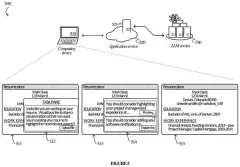
10 drawing sheets from US 2026/0310694 A1 · click any drawing to enlarge


Show the other 2 sheets


More from Microsoft
All 681 Microsoft patents →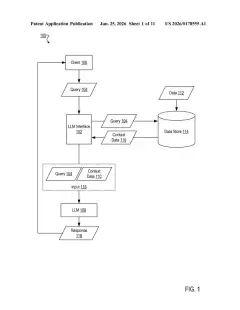
More in AI / ML
All 2,745 AI / ML patents →
Disney
Disney Patents an AI Search System That Breaks Complex Questions Into Pieces
Google
Google Patents a Two-Model AI System for Ranking Search Results
Google
Google Patents a Document-Search Layer That Picks the Right AI Task for You
Google
No comments yet