
Apple Files Patent for Tiny Check-In Signals to Ease Satellite Traffic Jams
As much as 40% of the messages a satellite network sends down to phones can be wasted on phones that already went offline. Apple's filing tries to stop that with a tiny check-in signal.
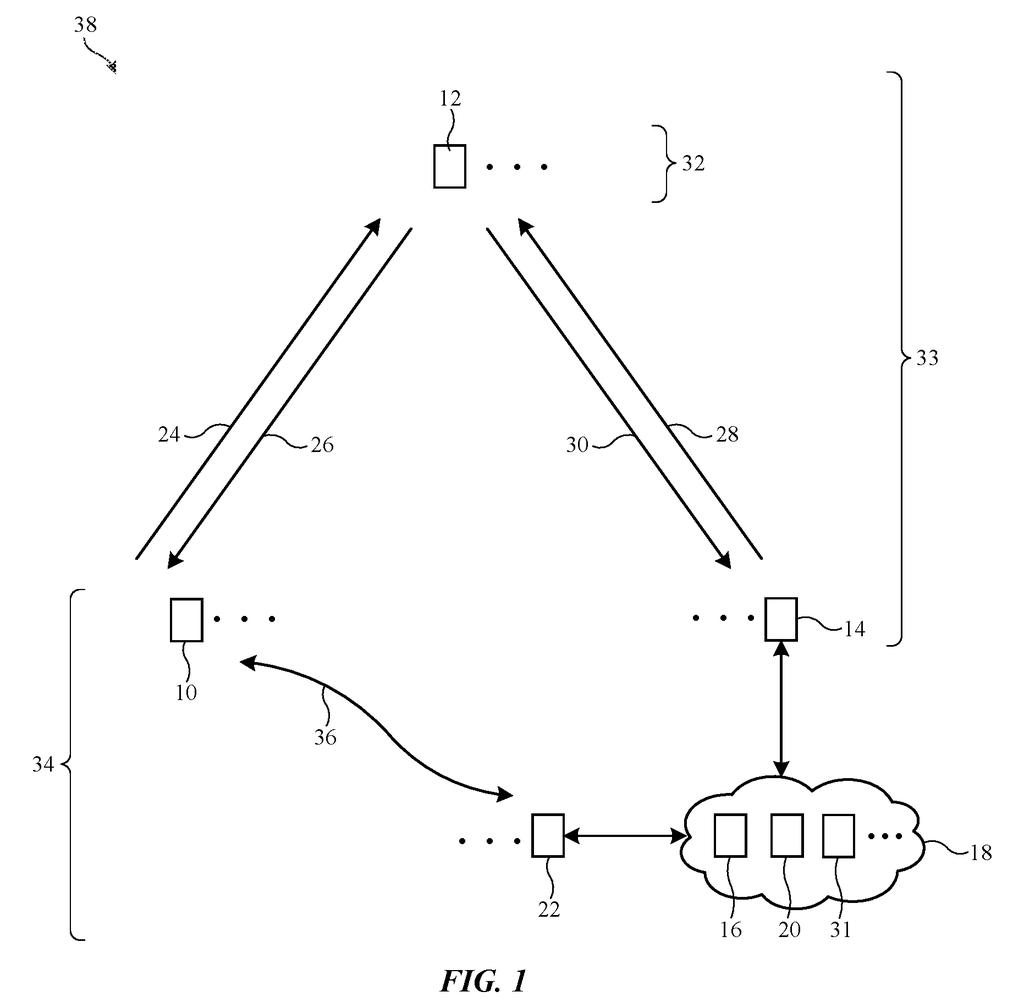
What Apple's satellite check-in signal does
Imagine you're hiking far from any cell tower and you send a text over satellite, but thousands of other phones are competing for the same satellite at the same moment. Everything slows down, and some of the traffic is pure waste.
Here's the waste: the network sometimes sends messages to phones that have already gone offline, whether switched off, out of range, or with the app closed. The filing says these useless messages can make up as much as 40% of the traffic heading down to phones.
Apple's fix is a tiny check-in. When the satellite is crowded and your phone has nothing to send, it sends a short heartbeat every minute or so. The network treats phones that keep checking in as alive and moves their messages to the front of the line, while messages for silent phones wait.
… periodically transmitting, using the radio during the communications session, heartbeat signals to the core network via the satellite constellation while the congestion level exceeds a threshold and while a reverse link message queue of the radio is empty.
Translation: Phones in crowded satellite areas will send tiny pulse signals to prove they are still connected.
How the network ranks messages by who's alive
When your phone registers with a satellite network, it gets a session that lasts a set time, for example 10 to 60 minutes in the claims. During that window the network (called the core network) can't tell whether your phone is still listening, so it may keep sending messages into the void. The filing calls these orphan forward messages.
On the phone side, the satellite broadcasts a congestion level as a four-bit number (16 possible levels, from 0 to 15). Once the level passes a threshold and your phone has nothing queued to send, it transmits a heartbeat, a short signal with no data, every 30 to 120 seconds in the claims. It carries a temporary ID that is good only for that session, and the network doesn't send a reply, which saves bandwidth.
On the network side, three things happen:
- Any signal from your phone, a message or a heartbeat, resets a timer.
- When a message for your phone arrives, the network checks the timer. If less than one heartbeat period has passed, the message moves up in the queue. If more has passed, it stays at the default priority or drops.
- Each failed delivery attempt bumps a counter, and past a set limit the message is removed from the queue.
When the CN receives a forward link message for the UE device, the CN may place the message into a queue. The CN may increase a priority of the queued message when less than the heartbeat period has elapsed and may decrease priority of the queued message when longer than the heartbeat period has elapsed since the timer was reset.
Translation: The system adjusts message delivery priority based on how recently the phone checked in.
What this means for texting by satellite
If you've ever been stuck with one bar at a crowded stadium, you know shared networks slow down when everyone piles on. Satellites have it worse, since a small number of them serve huge areas. This patent tries to give the limited downlink to phones that can actually use it, so your replies could arrive sooner when the sky is busy. The filing lists texting, location sharing, roadside assistance and emergency messaging as services that share these links.
For Apple, it's a bookkeeping fix that matters more as more people use satellite features. If the 40% orphan-traffic figure in the filing is in the right ballpark, trimming even part of it could free real capacity without adding hardware in orbit. It is a patent application, so nothing here says it's running in any product today.
Apple's 541st filing in our Apple coverage since May follows the voicemail AI patent and the shared multi-angle audio patent as the company keeps applying around smarter, more connected experiences.
Every fix has a price, and this one charges it to phones that go quiet. A heartbeat only proves your phone was alive a minute or two ago, so a phone that dips out of coverage for a moment can get bumped to the back of the line. Its messages then get retried and eventually dropped from the queue after a set number of tries.
The design also spends a little of the scarce uplink to save a lot of downlink. The heartbeats carry no data and get no reply, and they only run when the satellite is crowded and your phone has nothing else to send. Even then, the filing has the phone roll weighted dice before sending one, so a heartbeat can be skipped and a healthy phone can look dead for a stretch.
The trade looks worth it. The cost lands as short delays for a few phones, while the benefit goes to everyone waiting behind messages that were never going to be read. The filing also treats emergency traffic separately and gives it top priority, which keeps the worst case away from the most urgent messages.
Get our take in your Top Stories
Liked this breakdown? Add Patentlyze as a preferred source on Google, and our plain-English take shows up more often in your Top Stories the next time Apple patent news breaks.
There are more where this came from
We read every patent application Big Tech publishes and send you the ones worth knowing. Plain English, free, every week.
The drawings
11 drawing sheets from US 2026/0322724 A1 · click any drawing to enlarge


Show the other 3 sheets


Want this weekly breakdown for a company we don't cover? Patentlyze Pro →
Be the first to weigh in